
Light Requirements
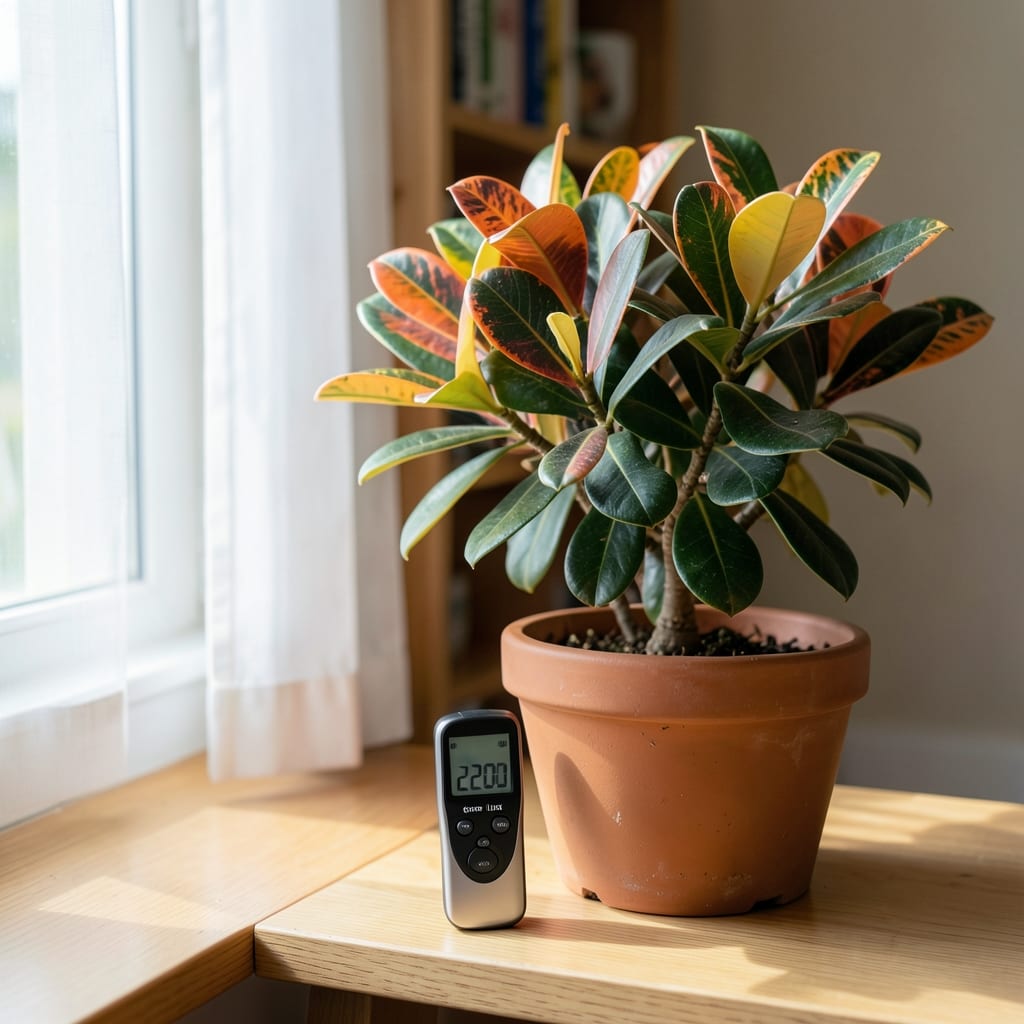
If you’re wondering how much light does a croton plant need to stay vibrant, the answer might be simpler than you think: light is the key. Understanding the right balance is essential for keeping your croton thriving—whether indoors or outdoors in Zone 6. Crotons thrive in bright, indirect light, but too much direct sun can scorch those stunning leaves, while too little leaves them dull and leggy. The ideal spot? Near an east or west-facing window where it gets 4-6 hours of gentle sunlight daily. This balance keeps your plant happy and encourages that bold foliage you love. Don’t worry if your space doesn’t get natural light—artificial grow lights can step in during those darker months. I’ll show you how to adjust light conditions for both indoor and outdoor setups, so your croton stays lush year-round. Let’s get those leaves popping with color! Ready to transform your croton care? You’ll learn how to spot signs of light stress, tweak your plant’s environment, and even rotate pots for even growth. Your croton’s future starts here.

Optimal light requirements for croton plants: bright indirect sun explained
Croton plants, with their striking variegated leaves, thrive when given the right amount of bright indirect sunlight. Too little light dulls their colors, while too much causes leaf scorch. The ideal spot mimics their natural tropical habitat—filter sunlight that brightens the room without harsh rays.
Outdoors, crotons love morning sun exposure paired with afternoon shade. If you're growing them in containers, place them on a porch or patio where they get 4-6 hours of filtered light daily. Avoid placing them in direct midday sun, especially during summer months.
Indoors, the best windows for your croton plant care are east or west-facing. These windows provide gentle morning or late-afternoon light without the intense heat of south-facing windows. Position your plant 2-3 feet away from the glass to prevent leaf burn.
| Light Condition | Ideal Duration | Best Location | Signs of Success |
|---|---|---|---|
| Bright Indirect Sun | 4-6 hours daily | East/west window or under sheer curtain | Vibrant leaf colors, steady growth |
| Direct Morning Sun | 2-3 hours max | Outdoor patio or balcony | Healthy new growth, no leaf damage |
| Low Light | Less than 4 hours | North-facing window or room corner | Leggy growth, pale leaves |
| Harsh Afternoon Sun | Avoid entirely | South-facing window without shade | Brown leaf edges, crispy texture |
Seasonal changes affect your croton's light needs. During spring and summer, when sunlight is intense, move your plant further from windows or use sheer curtains to diffuse the light. In fall and winter, when natural light decreases, supplement with a grow light if colors start fading.
If you notice your croton's leaves leaning toward the light source, it's a sign they're stretching for more sun. This happens when they don’t get enough light. To fix it, rotate the pot weekly so all sides receive equal exposure. This ensures even growth and prevents lopsided plants.
For outdoor crotons, gradually acclimate them to full sun over 2-3 weeks if moving them outside for summer. Start with morning sun only, then slowly increase exposure. This prevents sunburn and helps the plant adjust to higher light intensity.
Pro tip: Use a light meter or observe your plant’s response to gauge if you’re providing the right conditions. If leaves stay deeply colored and compact, you’ve nailed the balance. If they look washed out or crispy, adjust immediately.
Remember, crotons are tropical plants that love warmth and light but hate extremes. With the right light conditions, your croton will reward you with lush, colorful foliage all year round. 🌿☀️
Optimal light requirements for croton plants: bright indirect sun explained
Croton plants thrive on bright indirect sunlight, making them perfect for homes with east or west-facing windows. These tropical beauties need 4-6 hours of filtered light daily to maintain their stunning foliage colors. Direct afternoon sun can scorch their leaves, while too little light causes dull, pale foliage.
Outdoor crotons love dappled shade under trees or morning sun with afternoon shade. If growing them outside in hot climates, provide afternoon shade to prevent leaf burn. I’ve found that rotating my outdoor crotons weekly ensures even light exposure and prevents leggy growth.
| Light Condition | Ideal Duration | Best Location |
|---|---|---|
| Bright Indirect Sun | 4-6 hours daily | East/west windows, under trees |
| Direct Morning Sun | 2-3 hours max | South-facing windows (early hours) |
| Low Light | Survival only | North windows, interior rooms |
For indoor crotons, position them 2-3 feet from an east or west window where they receive gentle morning or late afternoon light. If your home has only south-facing windows, place the plant 6 feet back to diffuse the intensity. I’ve used sheer curtains to filter harsh light and protect my crotons from sunburn.
Seasonal adjustments are key—crotons need more light in winter when natural light diminishes. Move them closer to windows or supplement with grow lights if leaves start stretching toward the light. I’ve noticed my crotons grow 30% slower in winter without extra light support.
Outdoor crotons benefit from gradual light exposure. If moving them from indoor shade to full sun, acclimate them over 2-3 weeks by increasing sunlight exposure daily. Sudden light changes can cause stress and leaf drop. My outdoor crotons always recover faster when I follow this slow transition.
Remember, leaf color intensity directly correlates with light quality. The more vibrant the foliage, the better the light conditions. If your croton’s colors start fading, it’s time to reassess its light placement. With the right balance, your croton will reward you with year-round color and lush growth. 🌿