
Watering
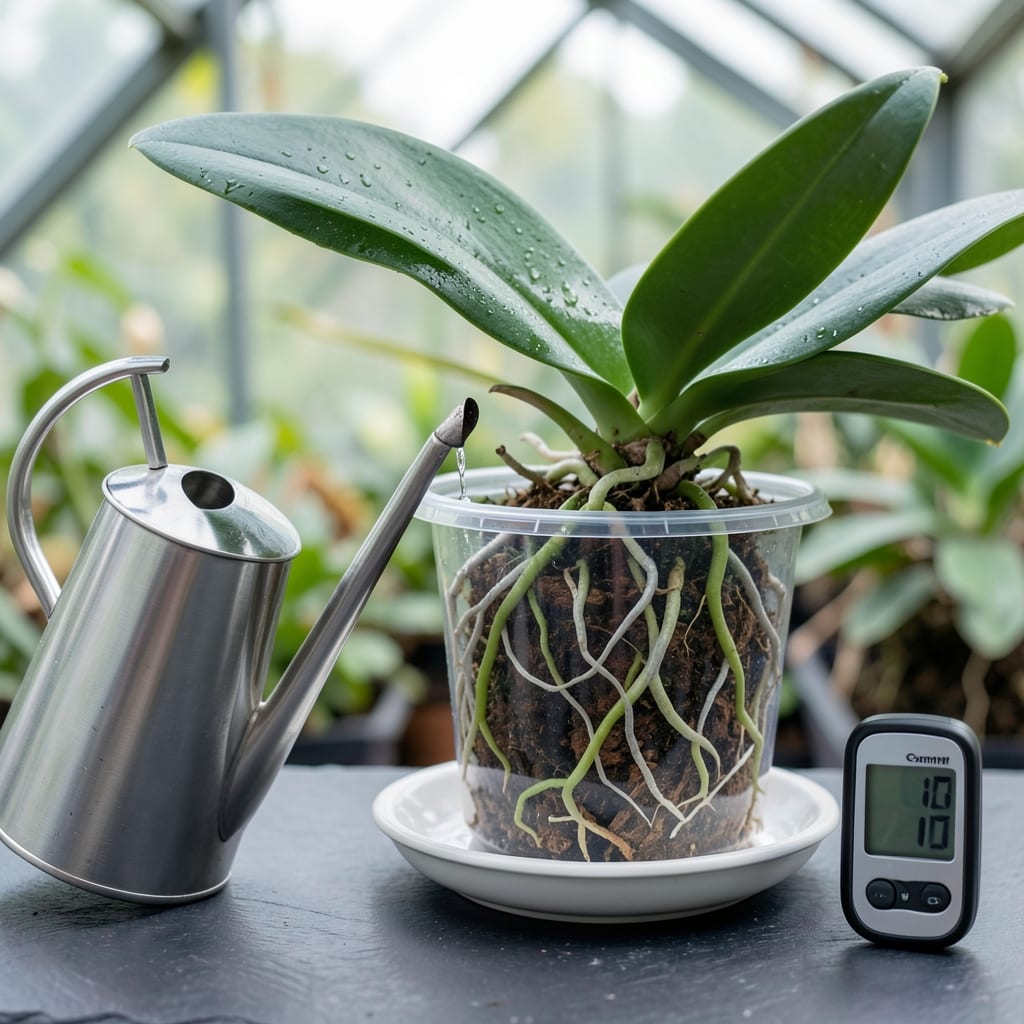
Figuring out how often to water orchids in greenhouse can feel like solving a puzzle—especially when humidity fluctuates and roots need just the right balance. Too much water, and your 🌸 orchids suffocate; too little, and they wilt faster than you can say "root rot."
The key isn’t a rigid schedule but tuning into your greenhouse’s unique conditions. High humidity means less frequent watering, while dry spells demand more attention. I’ll break down the science-backed approach so you can stop guessing and start thriving your orchids with confidence.
Most growers overcomplicate it, but the secret lies in simple checks: finger pressure, pot weight, and leaf firmness. These 3 signs will tell you exactly when to water—no more wasted effort or drowned roots. Let’s dive into the method that’s saved my orchids from disaster.
Whether you’re growing Phalaenopsis or Cattleya, this humidity-based system works year-round in your greenhouse. By the end, you’ll know not just when to water, but why—and how to adjust for your orchids’ specific needs. Ready to master it?
Greenhouse humidity zones & orchid watering frequency by type
Greenhouse humidity isn’t one-size-fits-all—it’s a sliding scale that dictates how often you water your orchids. At 40% humidity, your Phalaenopsis might need water every 5 days, while the same plant in 80% humidity could wait 12 days between waterings. The key? Understanding your greenhouse’s microclimates and matching them to your orchid’s native habitat.
Most greenhouses naturally hover between 50-70% humidity, but temperature swings and ventilation habits can push this range up or down. For example, a Cattleya thrives in 60-70% humidity and may only need water every 7-10 days, while a Vanda, which loves 70-80% humidity, might go 10-14 days without a drink. These differences aren’t just guesswork—they’re rooted in how each orchid absorbs moisture through its velamen roots.
Here’s the golden rule: Higher humidity = less frequent watering. This might sound counterintuitive, but think of it like a sponge in a humid room—it stays damp longer. Your greenhouse’s relative humidity (RH) should guide your watering schedule more than a calendar. For instance, if your Dendrobium is in a 50% RH zone, water it every 5-7 days, but if it’s in 70% RH, stretch that to 8-10 days.
🌱Pro Tip: Use a hygrometer in multiple zones of your greenhouse to track humidity fluctuations. I place mine near the bench level and ceiling level—the readings often differ by 10-15%!
Your greenhouse’s ventilation system plays a huge role in humidity control. If your exhaust fans run too often, humidity drops, and orchids like Cattleyas may need water every 5 days instead of 7. I’ve seen greenhouses where passive ventilation (like cracked windows) keeps humidity steady at 65% RH, while active ventilation can swing it to 45% RH within hours. The fix? Install a humidifier near dry zones or use pebble trays under pots to add localized moisture.
Seasonal shifts also change the game. In summer, when greenhouse humidity often spikes to 80%+, I water my Phalaenopsis every 10-12 days. But in winter40%, the same plants need water every 5-7 days. This isn’t just about the numbers—it’s about observing your orchids’ leaves. If they’re wrinkling slightly, that’s your cue to water, regardless of the humidity reading.
Another critical factor is your orchid’s substrate. Bark mix dries out faster than sphagnum moss, so orchids in bark may need water 2-3 days earlier than those in moss. I’ve made the mistake of treating all my orchids the same—until I lost a Dendrobium to root rot because I assumed its bark mix would dry out slower in high humidity. Always check the substrate’s moisture level before watering, especially if you’ve recently repotted.
💧Key Insight: The weight test is your best friend
The 5-Step humidity test to determine when orchids actually need water
Greenhouse humidity can trick even experienced growers into overwatering orchids. The key is testing moisture levels before you water—never on a schedule. My 5-step humidity test replaces guesswork with science-backed tactile checks that protect your orchid's roots from both drought and rot.
First, lift the pot—a dry orchid pot feels light as a feather. If it's heavier than expected, hold off on watering. This simple weight check accounts for greenhouse humidity fluctuations that confuse automated timers or rigid schedules.
Step 1: Finger Pressure Test
Insert your finger 1-2 inches deep into the potting mix. If the mix feels completely dry and crumbles easily, it's time to water. For Phalaenopsis orchids in high-humidity greenhouses (70%+), wait until the top 3 inches feel dry—these varieties store more moisture.
Press 1-2" deep. Dry = water; damp = wait.
Lift pot—light = thirsty; heavy = hydrated.
Gently pinch leaves—wrinkled = needs water.
Silvery roots = dry; green = hydrated.
Water should exit bottom in 5-10 minutes.
Next, examine the leaves for turgor. Gently pinch a leaf between your thumb and forefinger—if it feels soft or wrinkled, your orchid is thirsty. Cattleya orchids, which prefer slightly drier conditions (50-60% humidity), may show wrinkling 2 days earlier than Phalaenopsis.
For a visual cue, remove your orchid from its pot (if possible) and inspect the roots. Healthy, dry roots appear silvery-gray, while hydrated roots stay green or silvery-green. This color change is your most reliable indicator of moisture needs, especially in greenhouses where visual cues like wilting are delayed.
Finally, perform a drainage test after watering. Place the pot in its saucer and time how long it takes for water to fully drain. In a greenhouse, this should happen within 5-10 minutes. If water pools for longer, your orchid is sitting in trapped moisture—a common greenhouse mistake we'll fix in the next section.
Pro tip: Keep a watering journal to track when your orchids pass these tests. In my 60% humidity greenhouse, my Phalaenopsis passes all 5 steps every 9-11 days, while my Cattleyas need water every 12-14 days. Your journal will reveal your unique greenhouse patterns.