
Light Requirements
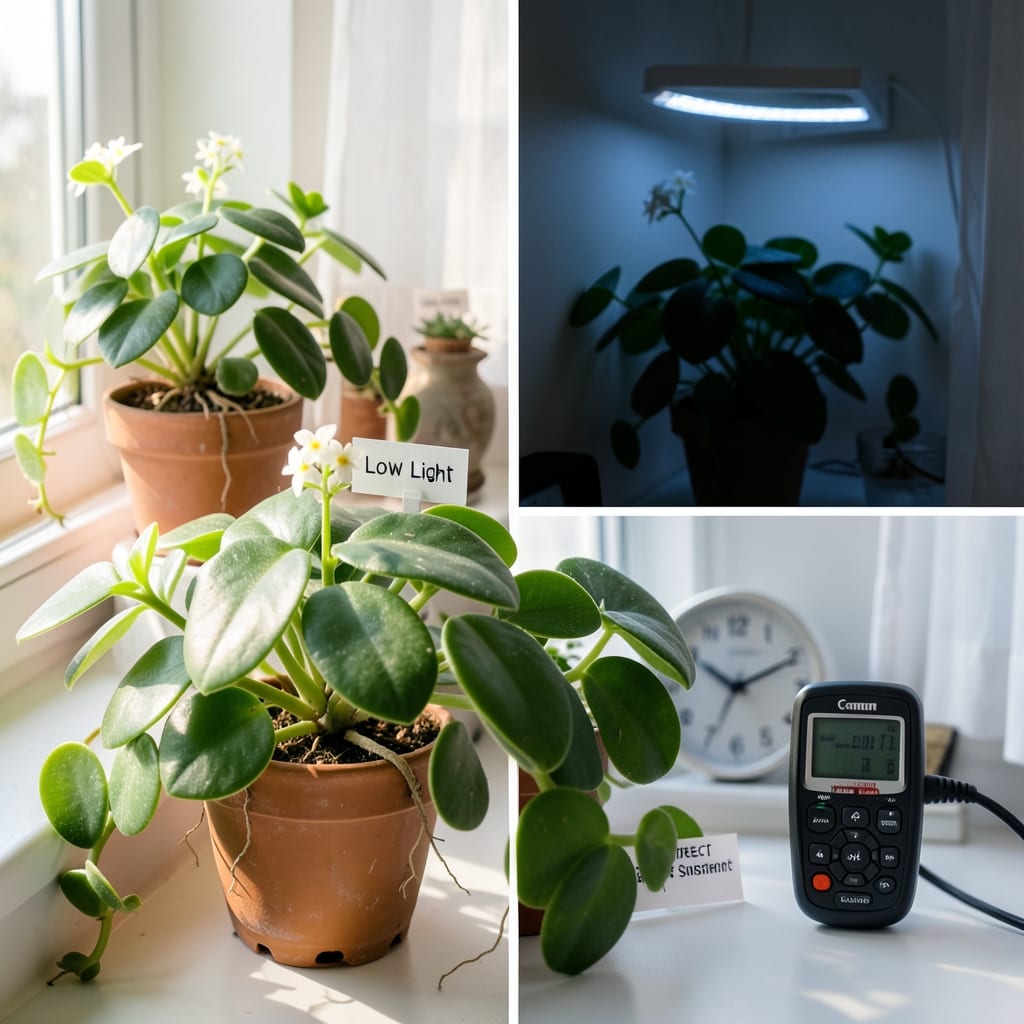
If your Hoya 🌿 plant looks more like a sad vine than a thriving tropical beauty, chances are its light needs aren't being met. The right amount of brightness isn't just about survival—it's the key to those showstopping blooms and glossy leaves you're dreaming of.
Most Hoyas thrive in bright indirect light**, but too much direct sun can scorch their delicate foliage, while too little leaves them stretching pitifully toward any light source. The good news? With just a few simple adjustments, you can create the perfect light environment—whether you're working with a sunny windowsill or a dim corner.
I'll break down exactly how many hours of light your Hoya needs, how to spot when it's getting just right (or not), and practical tips to adapt for indoor spaces. No more guesswork—just vibrant growth and happy plants.
Let's turn those leggy stems into lush, blooming masterpieces by mastering the light game once and for all.

Hoya light requirements by variety: bright indirect vs. low light tolerance
Not all Hoya varieties are created equal when it comes to light needs. While most Hoyas thrive in bright indirect light, some varieties like Hoya carnosa can handle slightly lower light conditions, while others like Hoya obovata demand more intensity to bloom. Understanding these differences is key to avoiding common issues like yellowing leaves or stunted growth.
The general rule for Hoyas is 4-6 hours of bright indirect light daily. This mimics their natural habitat under the dappled light of tropical forests. However, some Hoyas can tolerate as little as 2-3 hours of indirect light if placed in a well-lit room without direct sun exposure.
For indoor growers, the best windows are east or north-facing, where sunlight is softer and less intense. A west-facing window can work too, but only if you use a sheer curtain to filter the harsh afternoon sun. South-facing windows are generally too intense unless you're dealing with a shade-tolerant variety like Hoya linearis.
Here’s how different Hoya varieties handle light—pay special attention to the light tolerance column to avoid over- or under-exposing your plants:
If your Hoya starts showing signs of light stress, like crispy brown edges or leaves stretching toward the light (a condition called etiolation), it’s time to adjust its position. For example, moving a Hoya obovata from a south-facing window to an east-facing one with a sheer curtain can make all the difference in preventing leaf burn.
Pro tip: Rotate your Hoya plant quarter-turn every 2-3 weeks to ensure even growth. This prevents one side from becoming lopsided or overly exposed to light. Uneven light exposure is a common issue in indoor setups where plants lean toward the brightest side of the room.
For outdoor Hoyas, provide morning sun and afternoon shade during the hottest months. If you notice leaves turning yellow or developing brown patches, it’s a clear sign your plant is getting too much direct sunlight. In these cases, a 30-50% shade cloth can save your Hoya from sun damage while still allowing enough light for photosynthesis.
Remember, the goal isn’t just to keep your Hoya alive—it’s to encourage those stunning waxy blooms** that make Hoyas so beloved. The right light balance is the first step to turning your plant into a flowering powerhouse.
How to measure and adjust light for your Hoya plant’s success
First, let’s diagnose your Hoya’s current light situation with the shadow test. Place your hand near your plant during peak sunlight hours—if your hand casts a sharp, dark shadow, the light is too intense. For bright indirect light, the shadow should be soft and diffuse, like on a cloudy day. This is your Hoya’s sweet spot.
Most Hoyas need 4-6 hours of bright indirect light daily, but this varies by variety. Hoya carnosa can handle slightly more light, while Hoya obovata prefers gentler conditions. If your plant is stretching toward the window or developing yellow leaves, it’s begging for more light. Conversely, brown leaf tips or crispy edges mean it’s getting too much direct sun.
⚠️ CALLOUT WARNING
🌡️ Danger Zone: Direct Sun vs. Low Light
Hoya leaves can scorch in minutes under direct midday sun (12 PM–3 PM). If your plant is near a south-facing window, move it 3+ feet back or use a sheer curtain to diffuse the light. On the flip side, north-facing windows often provide consistent indirect light—perfect for most Hoyas.
Pro Tip: Rotate your plant quarter-turn weekly to ensure even light exposure and prevent lopsided growth.
For indoor setups, east-facing windows are ideal—they offer gentle morning light without the harsh afternoon sun. If your space lacks natural light, a grow light (LED or fluorescent) can supplement. Place it 6-12 inches above the plant and provide 12-14 hours of light daily to mimic daylight cycles. Avoid cool-white bulbs—opt for full-spectrum LEDs designed for plants.
Outdoor Hoyas? Start by placing them in dappled shade (under trees or a 50% shade cloth) for 2-4 weeks to acclimate. Gradually increase exposure to morning sun only before moving to partial shade. Hoya kerrii, for example, loves bright indirect light outdoors but will struggle if left in full sun during summer’s peak intensity.
Watch for these tell-tale signs of light success: Deep green, glossy leaves and compact growth mean your Hoya is thriving. If it’s producing buds or flowers, you’ve nailed the light balance! Adjust gradually—sudden light changes can shock your plant, leading to dropped leaves or stress. Patience pays off with vibrant blooms and lush vines.
Remember, every home’s light varies—test, observe, and adjust. Your Hoya’s health is the best barometer. With these tweaks, you’ll create the perfect light haven for your plant to thrive and bloom like never before. 🌿