
Light Requirements
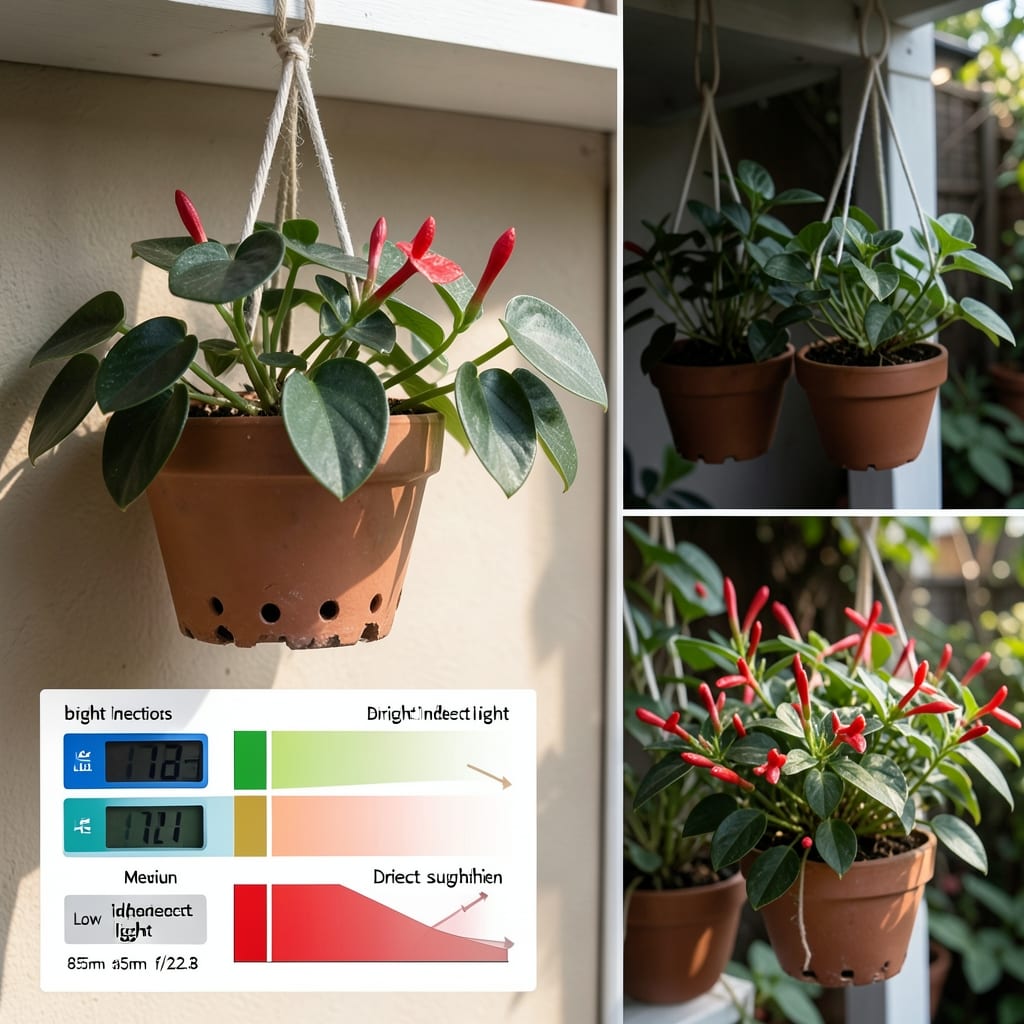
If you’ve ever wondered how much light this Lipstick Plant 🌸 (Aeschynanthus radicans) truly needs to stay vibrant and full of life, the answer might be simpler—and closer—than you think. This stunning foliage star thrives on the perfect balance of light to keep its leaves glossy and flowers popping, but too much or too little can turn your plant into a leggy, underwhelming shadow of its former self.
The good news? Getting the light right isn’t rocket science. Your Lipstick Plant loves bright indirect sunlight, making it a great choice for homes with limited direct sun exposure. Think of it as the Goldilocks of houseplants—not too harsh, not too dim, but just right to keep it happy and blooming. Too little light, and you’ll notice stretched-out stems and sparse flowers; too much, and those gorgeous leaves might start to crisp at the edges.
I’ve grown mine for years, and the difference between a plant that’s barely surviving and one that’s thriving comes down to a few simple adjustments—like rotating it occasionally or moving it closer to an east-facing window. Whether you’re dealing with a dim corner or a sunlit spot, I’ll show you exactly how to create the ideal lighting conditions for your Lipstick Plant to shine.
Ready to transform that lackluster leafy friend into a lush, blooming beauty? Let’s dive into the light secrets that’ll have your Lipstick Plant looking its best all year round.

Ideal light requirements for lipstick plant growth and blooming
Your lipstick plant (Aeschynanthus radicans) craves bright indirect light to fuel its vibrant foliage and dramatic red blooms. Think of it like a diva—it needs just enough stage lighting to shine without getting scorched. The ideal spot delivers 4-6 hours of filtered sunlight daily, mimicking its natural understory habitat in tropical forests.
Direct sunlight can burn delicate leaves, causing crispy edges and bleached spots, while too little light leads to leggy growth and sparse blooms. The key is balancing intensity with protection, much like how a sheer curtain softens harsh afternoon rays. This balance ensures your plant stays compact, glossy, and flower-filled year-round.
In summer months, when sunlight is most intense, move your lipstick plant slightly farther from windows or use a light sheer curtain to diffuse harsh rays. During winter's low-light months, supplement with a grow light for 6-8 hours daily to maintain its energy levels. This seasonal adjustment keeps your plant thriving through every change.
The blue and red spectrums of light are especially critical for your lipstick plant. Blue light promotes leaf growth and compactness, while red light triggers flowering and photosynthesis. A south-facing window with filtered light provides both, but east or west exposures work beautifully too. Avoid north-facing windows unless you supplement with artificial light.
Your plant’s foliage color is a dead giveaway for light needs. Deep green, glossy leaves signal perfect lighting, while dull, pale leaves mean it’s craving more brightness. Meanwhile, dark green with purple undertones often indicates too much direct sun. These visual cues help you fine-tune placement without guesswork.
For outdoor growers, lipstick plants thrive in partial shade gardens with dappled sunlight. Pair it with taller plants like ferns or hostas to create natural shade, or place it under 30-50% shade cloth for consistent protection. Just remember: outdoor plants still need morning sun exposure to prevent etiolated (stretched) growth.
If your home lacks natural light, LED grow lights with a 6500K color temperature (cool white) are perfect for lipstick plants. Position the light 6-12 inches above the plant and run it for 12-14 hours daily to mimic daylight. This setup works wonders in basements or offices with no windows.
| Light Condition | Effect on Plant | Solution |
|---|---|---|
| Bright Indirect Light (4-6 hrs) | Vibrant foliage, frequent blooms, compact growth | East/west window, sheer curtain |
| Low Light (<4 hrs) | Leggy stems, sparse flowers, pale leaves | Move closer to window or add grow light |
| Direct Sun (>6 hrs) | Brown leaf tips, bleached spots, stunted growth | Use shade cloth or move to indirect spot |
| Artificial Light (LED) | Healthy growth, consistent blooming | 6500K LED, 12-14 hrs/day, 6-12" away |
Pro tip: Rotate your lipstick plant quarter-turn every 2 weeks to ensure even light exposure. This prevents lopsided growth and keeps all sides reaching for the light equally. Pair this with regular pruning to maintain a bushy shape, and you’ll have a plant that’s always picture-perfect.
When in doubt, observe your plant’s growth patterns. If it’s stretching toward the light like a sleepy cat reaching for the sun, it’s time to adjust its position. With the right light balance, your lipstick plant will reward you with glossy leaves and nonstop blooms that turn every room into a tropical oasis. 🌸
Ideal light requirements for lipstick plant growth and blooming
The lipstick plant (Aeschynanthus radicans) thrives in bright indirect light, mimicking its natural understory habitat in tropical forests. This means it needs 4-6 hours of filtered sunlight daily—like the dappled light under tall trees. Direct sun can scorch its delicate leaves, while too little light causes leggy growth and sparse blooms. The key is balancing intensity and duration to keep those signature red lipstick-like flowers vibrant.
Think of it like a ballet dancer—it needs enough light to perform (bloom) but not so much it gets overheated. In summer, morning sun with afternoon shade works best, while winter’s weaker light may require supplemental grow lights. The foliage color also shifts: deeper greens in bright light, paler tones in low light. For peak performance, aim for 60% of full sunlight intensity—like standing near a window with sheer curtains.
Seasonal adjustments are crucial. During spring and fall, when sunlight is gentler, your lipstick plant can handle direct morning sun for 2-3 hours without risk. But in summer’s intense heat, even east-facing windows may need sheer curtains to diffuse the light. In winter, supplement with a grow light 12 inches away for 6 hours daily to prevent dormancy. The light spectrum matters too: focus on blue and red wavelengths (400-500nm and 620-750nm) to trigger photosynthesis and flowering.
Pro tip: Rotate your plant quarter-turns weekly to ensure even light exposure. This prevents one-sided growth and keeps the foliage lush. If you notice yellowing leaves on the lower stems, it’s often a sign of too little light—move it closer to the window or add a grow light. Conversely, crispy edges mean it’s getting too much direct sun, so adjust the placement immediately.
For indoor growers, east or west windows are ideal because they provide gentle morning or late-afternoon light without the harsh midday sun. South-facing windows can work too, but only if you use a light diffuser or place the plant 6+ feet away. The goal is to replicate the dappled shade of its tropical home, where it naturally grows beneath taller trees. With the right light balance, your lipstick plant will reward you with continuous blooms year-round.
Remember, every home’s light varies. If your plant isn’t thriving, test different spots for 2-3 weeks before committing. A light meter (100-500 lux range) can help gauge intensity—aim for 500-1,000 lux for optimal growth. With patience and observation, you’ll find the perfect light sweet spot for your dramatic lipstick plant. 🌿