
Light Requirements
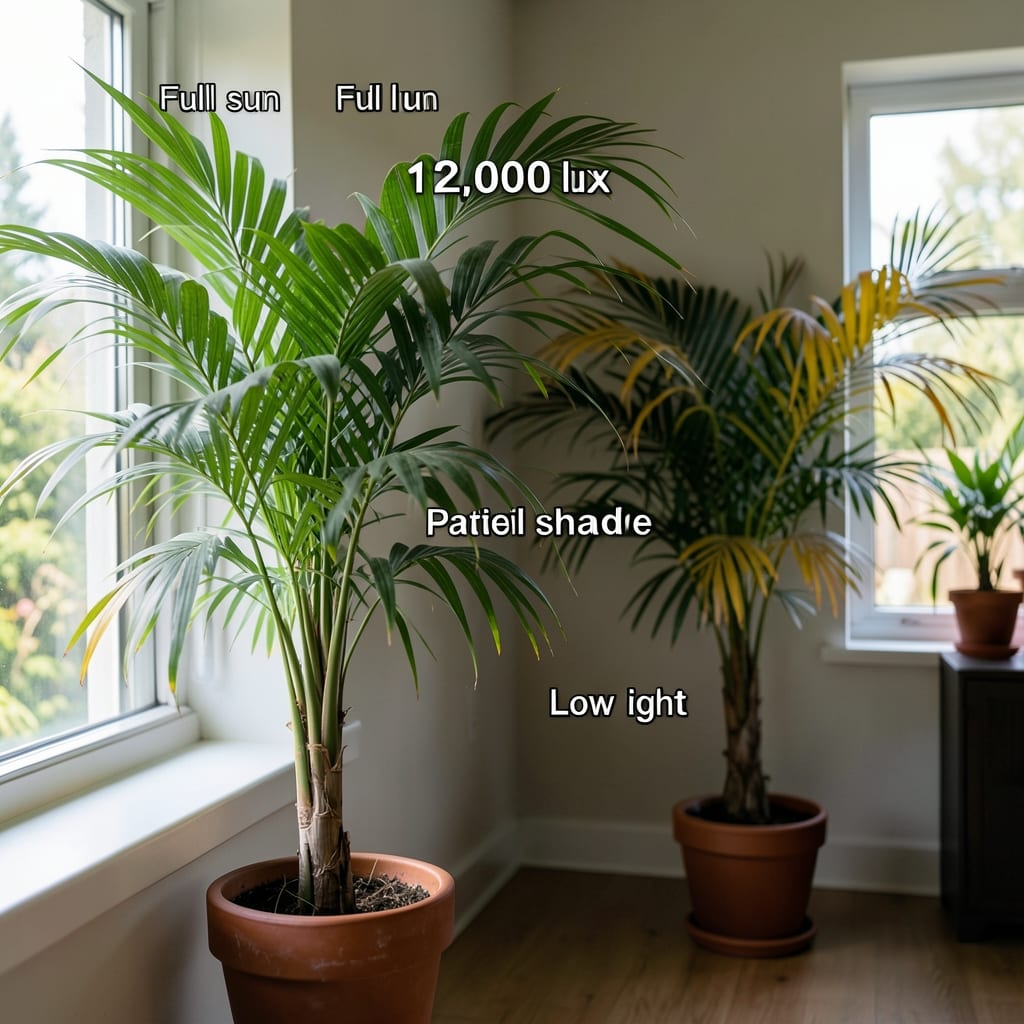
Wondering how much light does a palm plant need to thrive? You’re not alone—many plant parents struggle with this, and it’s the #1 reason palms turn yellow or stop growing. Whether you’re nurturing a 🌴 Areca indoors or a Majesty palm outdoors, getting the light right makes all the difference.
Palms are tropical divas, and they crave bright, indirect light—think 6-8 hours daily for most varieties. Too little, and they’ll stretch pitifully toward the window; too much, and those fronds will crisp like overcooked bacon. The good news? I’ll break down exactly what each type needs, from low-light Kentias to sun-loving Canary palms.
If your palm’s leaves are yellowing or growing sparse, it’s probably a light issue. We’ll troubleshoot common mistakes—like why your indoor palm is struggling near a north-facing window—and show you how to adjust care for healthy growth, whether you’re rotating pots or supplementing with grow lights.
Ready to give your palm the perfect light setup? Let’s dive into the specifics so you can keep your 🌴 beauty lush and happy year-round.

Palm plant light requirements by variety: sun, partial shade, and low-light needs
Palm plants are tropical divas—they crave bright, indirect light but can wilt or burn if you get their light wrong. The key is understanding variety-specific needs, from sun-loving Canary Island palms to shade-tolerant Kentia palms. Too little light? Your palm will stretch awkwardly toward windows. Too much? Brown fronds and crispy tips will appear faster than you can say "sunburn." Let’s break down the light requirements by palm type so you can place yours perfectly.
Most palms thrive in medium to bright indirect light, but hardy varieties like the Mediterranean Fan Palm can handle direct sun for 4+ hours daily. Delicate species, such as the Parlor Palm, prefer low to medium light and will struggle near south-facing windows. The trick? Observe your palm’s leaf color and growth rate—healthy fronds stay vibrant green with even spacing between them.
Here’s the light spectrum for popular palms, from sun-seekers to shade lovers:
| Palm Variety | Ideal Light Conditions | Signs of Stress | Best Placement |
|---|---|---|---|
| Areca Palm | Bright, indirect light (6-8 hrs) | Yellowing fronds, slow growth | East or north window |
| Kentia Palm | Low to medium light (2-4 hrs indirect) | Brown tips, sparse fronds | North-facing room or under trees |
| Majesty Palm | Medium light (4-6 hrs indirect) | Stunted growth, pale leaves | West or east window with sheer curtain |
| Canary Island Palm | Full sun (6+ hrs direct) | Crispy frond edges, sun scorch | Outdoor in full sun or south-facing patio |
| Parlor Palm | Low light (1-2 hrs indirect) | Leggy growth, weak stems | North room or 10+ feet from window |
| Bismarck Palm | Bright indirect (5-6 hrs) | Yellow patches, slow growth | East or west window with diffused light |
Notice how tropical palms like the Areca and Majesty need bright indirect light, while shade-tolerant palms like the Parlor Palm thrive in low-light conditions. The Canary Island Palm is the exception—it’s one of the few palms that craves full sun and will suffer without it. If your palm’s fronds are stretching toward the light (a condition called etiolation), it’s begging for more brightness. Rotate your plant quarter-turns weekly to ensure even growth.
For indoor palms, avoid placing them directly on glass windowsills—the heat can scorch leaves. Instead, position them 1-2 feet back from the window. If your home has limited natural light, consider a grow light (LED or fluorescent) for 12-14 hours daily. Just ensure the light stays 6-12 inches above the fronds to prevent leaf burn.
Outdoor palms? Morning sun is ideal—it’s less intense than afternoon rays. In hot climates (Zones 9-11), provide afternoon shade to prevent heat stress. Mulch around the base with organic matter to retain moisture and regulate soil temperature. If you’re in a cooler climate (Zones 7-8), choose hardy palms like the Windmill Palm or Pygmy Date Palm, which tolerate partial shade and cooler
How to adjust light conditions for different palm species: fixing yellow leaves and stunted growth
If your palm’s fronds are turning yellow or brown or growing spread too far apart, it’s likely a light-related issue. Most palms show visible stress signs when their light needs aren’t met—whether they’re getting too much sun or not enough. The good news? Adjusting light conditions is often as simple as moving the plant or adding a sheer curtain. Let’s troubleshoot the most common light problems and fix them for healthy growth.
Start by observing your palm’s leaf color and growth pattern. Pale, sparse fronds mean it needs more light, while crispy brown edges signal sunburn. If your palm is leaning dramatically toward a window, it’s stretching for light (a condition called etiolation). These visual cues help you determine whether to increase or decrease light exposure. For example, a Majesty Palm in direct afternoon sun will develop scorched tips, while a Kentia Palm in a dim corner will grow weak and leggy.
🚨 WARNING: Overcorrecting light exposure can harm your palm just as much as getting it wrong. For instance, moving a Parlor Palm from low light to bright direct sun overnight can cause leaf burn. Always adjust light conditions gradually, giving your palm 1-2 weeks to acclimate to changes. If you’re unsure whether to move your palm closer to or farther from a window, start with small adjustments and monitor its response.
- Placing palms directly on south-facing windowsills (risk of heat scorch).
- Assuming all palms need full sun—most prefer indirect light.
- Ignoring seasonal light changes (e.g., shorter winter days).
- Using harsh artificial lights too close to fronds (causes burn).
Pro tip: Rotate your palm quarter-turns weekly to ensure even growth and prevent lopsided development.
For indoor palms struggling with low light, consider these quick fixes:
- Move the plant closer to a window (but not touching the glass).
- Use a reflective surface (like a mirror) to bounce light into the room.
- Supplement with a grow light (LED or fluorescent) for 12-14 hours daily, keeping it 6-12 inches above the fronds.
- If your home has limited natural light, choose a shade-tolerant palm like the Parlor Palm or Kentia Palm.
Outdoor palms often suffer from too much sun, especially in hot climates (Zones 9-11). If your palm’s fronds are crispy or yellowing, provide afternoon shade using:
- A lightweight shade cloth (30-50% coverage).
- A large umbrella or patio cover to filter harsh rays.
- Mulching around the base with organic matter to retain moisture and regulate soil temperature.
For cooler climates (Zones 7-8), ensure your palm gets morning sun and partial afternoon shade to prevent cold stress.
If your palm is already showing severe light damage, don’t panic—it can often recover with proper care. Trim dead or brown fronds with sterilized pruning shears, and adjust its light exposure gradually. For indoor palms, a sheer curtain can diffuse harsh sunlight while still providing bright indirect light. For outdoor palms, drip irrigation can help cool the soil and reduce heat stress during peak sunlight hours.
Remember, palms are adaptable—with the right adjustments, you can help them thrive in almost any light condition. Start by identifying the problem, then make small changes and monitor progress. Soon, your palm will be lush and healthy, with vibrant green fronds and strong, even growth! 🌿