
Light Requirements
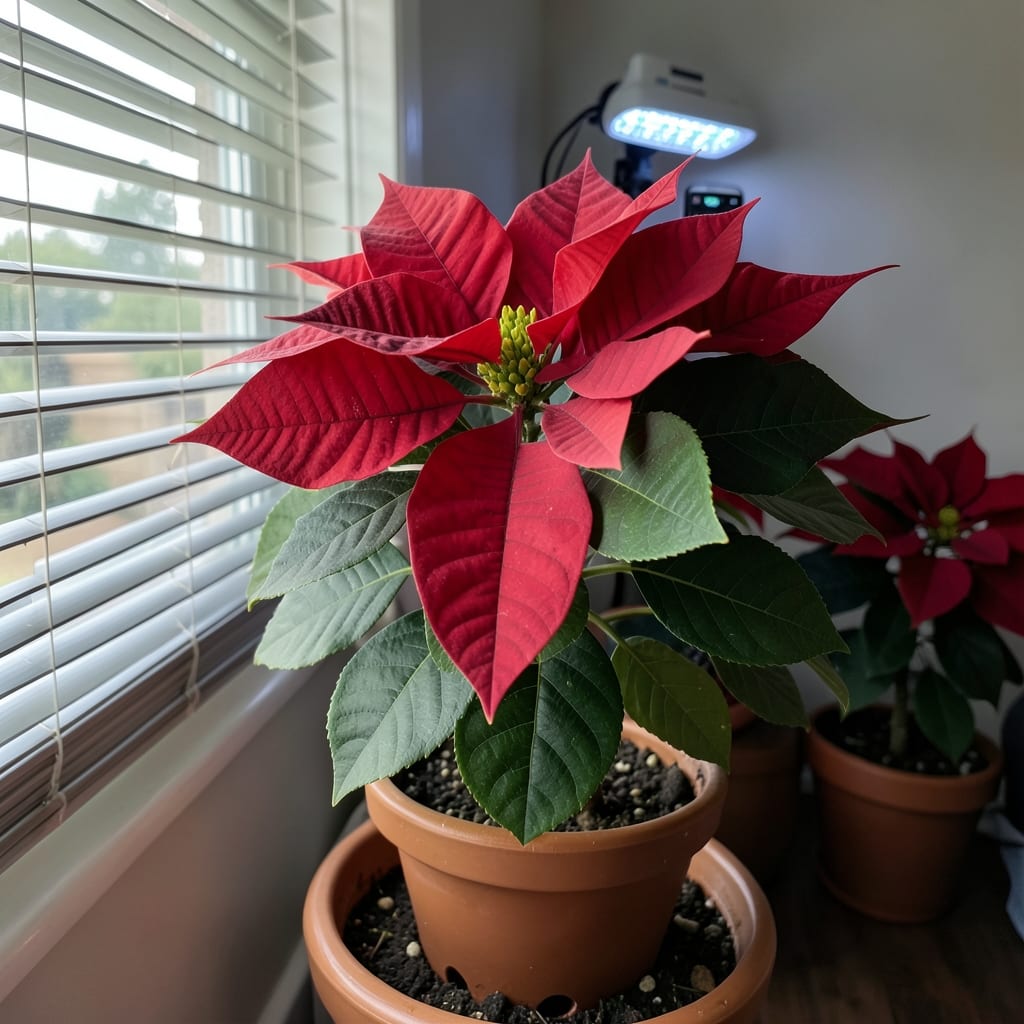
Optimal light requirements for poinsettia growth and color
Poinsettias thrive with bright indirect sunlight—the key to those stunning red bracts. Too little light dulls their color, while too much causes leaf scorch. Aim for 6 to 8 hours daily of filtered light, especially during their fall blooming season. South-facing windows can be intense, so position your plant 3-4 feet away to diffuse harsh rays.
Indoor grow lights work wonders if natural light is scarce. Use LED grow bulbs (6000K-6500K color temperature) for 12-14 hours daily during short winter days. Place lights 6-12 inches above the plant to mimic natural sunlight patterns. This mimics their native tropical understory habitat where they receive dappled light.
Seasonal adjustments are crucial. In summer months, poinsettias need morning sun + afternoon shade to prevent stress. Move them outdoors to a protected patio (avoid direct midday sun) for gradual acclimation. By September, bring them back indoors to trigger blooming with 12+ hours of darkness daily.
| Light Condition | Ideal Duration | Seasonal Notes | Effect on Plant |
|---|---|---|---|
| Bright Indirect | 6-8 hours | Fall/Winter | Vivid color, compact growth |
| Partial Shade | 4-6 hours | Summer | Slower growth, pale bracts |
| Direct Sun | >2 hours | Year-round | Leaf burn, stunted blooms |
| Low Light | <2 hours | Winter | Leggy growth, poor color |
Window placement makes all the difference. East-facing windows provide gentle morning light, while west-facing offers afternoon warmth without harsh midday rays. Avoid north-facing windows—they're too dim for consistent color development. For office or basement plants, supplement with a full-spectrum LED bulb (10,000K) for 14 hours daily to maintain vibrancy.
Light intensity affects color development dramatically. Poinsettias need moderate light levels (measured at 1,000-2,000 foot-candles) to produce their signature pigments. In low-light conditions, their bracts may turn pale pink or greenish instead of deep red. Rotate your plant quarter-turns weekly to ensure even light exposure and prevent lopsided growth.
Outdoor poinsettias (in zones 9-11) need afternoon shade during summer. Plant them where they receive morning sun + filtered afternoon light under trees. Mulch heavily to protect roots from temperature fluctuations. Remember, poinsettias are tropical plants—they can't handle frost and must be brought indoors before first frost (typically late October).
For holiday displays, extend daylight with grow lights if natural light drops below 6 hours daily. Fluorescent bulbs work for basic needs, but LEDs are 50% more efficient and last longer. Position lights 12-18 inches above the plant and keep them on for 12-14 hours during winter's short days to maintain energy for blooming.
Light quality matters too. Poinsettias prefer blue and red spectrum light (400-500nm and 600-700nm wavelengths) which promote photosynthesis and color development. If using grow lights, choose bulbs with high CRI (Color Rendering Index) ratings (80+). This ensures your plant's leaves and bracts display their true vibrant colors rather than appearing washed out.
Pro tip: Use a light meter app to monitor intensity in your space. Aim for 1,500-2,000 foot-candles during active growth (spring-fall) and 1,000-1,500 during blooming season. This precision prevents both underlighting (leggy growth) and overlighting (burned leaves) that can ruin your holiday centerpiece.
Optimal light requirements for poinsettia growth and color
Poinsettias thrive in bright indirect sunlight, which mimics their natural understory habitat in Mexico. These plants need 6 to 8 hours of light daily but avoid harsh midday rays that can scorch their delicate bracts (the colorful leaves). Too little light causes pale, weak growth, while too much direct sun bleaches their signature colors.
For peak red coloration, poinsettias require 12+ hours of darkness daily for 4-6 weeks before blooming. This triggers their natural flowering cycle—think of it as their version of a seasonal cue. Without this darkness, they may produce fewer or less vibrant bracts, leaving you with a green, underwhelming plant.
Seasonal adjustments matter too. In summer months, poinsettias benefit from morning sun and afternoon shade, especially in hot climates. During winter, when natural light dims, supplement with a grow light to maintain their energy levels and prevent etiolation (stretchy, weak growth).
🌱 Poinsettia Light Requirements Summary
| Requirement | Specification | Notes |
|---|---|---|
| Light Type | Bright Indirect | Avoid direct midday sun; east/west windows ideal |
| Daily Light Hours | 6-8 hours | Supplement with grow lights in winter |
| Darkness Period | 12+ hours | Critical for color development 4-6 weeks pre-bloom |
| Summer Care | Morning sun + afternoon shade | Prevents leaf burn and wilting |
| Winter Supplement | Grow light 12-14 hrs/day | Maintains energy for next season |
Identifying light deficiencies early saves your poinsettia from irreversible damage. Watch for yellowing leaves or stretched stems—these are classic signs of insufficient light. Conversely, crispy leaf edges or bleached bracts mean it’s getting too much direct sun. The key is balance: poinsettias want brightness without intensity.
Pro tip: Rotate your poinsettia quarter-turns weekly to ensure even light exposure. This prevents lopsided growth and keeps those showstopping bracts uniformly vibrant. Think of it like giving your plant a gentle sunbath—just enough to glow, not fry.
For indoor gardeners, east or west-facing windows are your best friends. South-facing windows can work but require sheer curtains to diffuse harsh rays. If your home lacks natural light, a 10,000-lux LED grow light placed 12-18 inches above the plant mimics ideal conditions perfectly.