
Plants
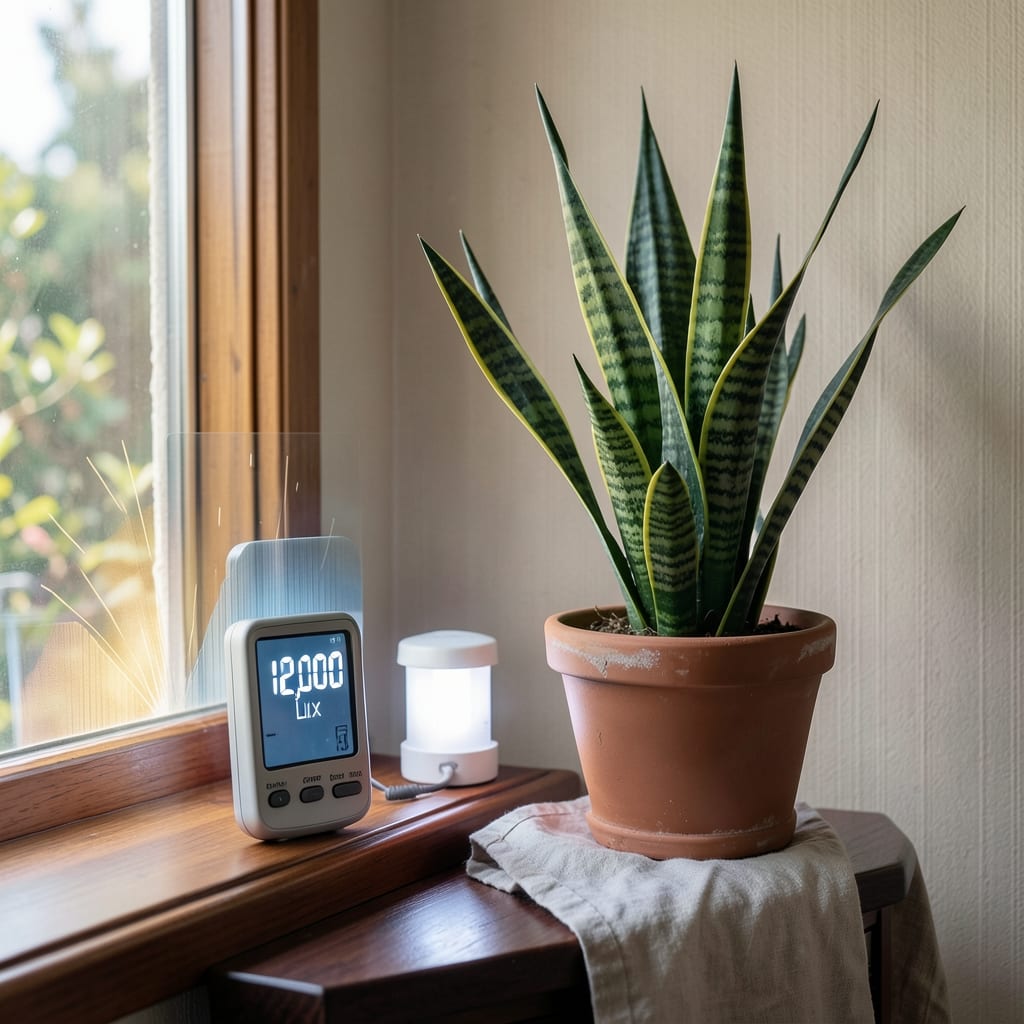
Here’s the truth: rattlesnake plants despise harsh, direct sunlight, yet they won’t survive in dim corners either. The sweet spot? Bright, indirect light that mimics their native understory habitat. Too much sun, and you’ll see crispy edges or bleached leaves. Too little, and the foliage will stretch out weak and pale.
I’ve helped countless plant parents revive their rattlesnake plants by tweaking their light setup—whether that meant moving them closer to an east-facing window or adding a simple grow light. By the end of this guide, you’ll know exactly where to place yours for optimal growth, plus how to spot (and fix) the telltale signs of light stress.
Let’s cut through the guesswork so your rattlesnake plant finally gets the care it deserves—and stays stunning year-round.

Optimal light requirements for rattlesnake plants: low to bright indirect sunlight explained
Your rattlesnake plant (Calathea orbifolia) thrives in low to bright indirect sunlight, making it perfect for indoor spaces with filtered light. Unlike sun-loving plants, this tropical beauty hates harsh direct rays, which can scorch its delicate leaves. The ideal light spectrum falls between 1,000–2,000 foot-candles, similar to the dappled shade of a rainforest understory.
To visualize this, imagine standing under a sheer curtain near an east-facing window—this mimics the plant’s natural habitat. Direct midday sun (especially south-facing windows) acts like a sunburn, causing crispy brown edges on leaves. Meanwhile, dim corners slow growth and dull the plant’s signature striped foliage patterns.
Here’s how to measure your space: Use a light meter app (like "Light Meter" for smartphones) to check foot-candles. Aim for 1,500–2,000 in the morning and 1,000–1,500 in the afternoon. If your reading drops below 500, your rattlesnake plant will struggle to photosynthesize efficiently.
Pro tip: Rotate your plant quarter-turns weekly to ensure even light exposure. This prevents one side from stretching toward the window—a classic sign of light deprivation. Think of it like giving your plant a gentle massage to keep it balanced and bushy.
For gardeners in bright but indirect climates (like the Pacific Northwest), your rattlesnake plant can tolerate 2–3 hours of morning sun if placed 3 feet from a west-facing window. However, avoid afternoon sun, which intensifies and can damage leaves within hours.
| Light Condition | Foot-Candles | Ideal Placement | Plant Response |
|---|---|---|---|
| Bright Indirect | 1,500–2,000 | East/west window, 2–3 ft away | Vibrant foliage, steady growth |
| Low Light | 500–1,000 | North-facing room or shaded corner | Slow growth, pale leaves |
| Direct Sun | 3,000+ | South-facing window, no filter | Brown leaf tips, scorched patches |
If you’re unsure about your home’s light levels, start by placing your rattlesnake plant near a north-facing window—the safest bet for beginners. North light is naturally diffused, reducing the risk of over-exposure. For those with south-facing windows, use a sheer white curtain to filter UV rays while still allowing ample brightness.
Remember, this plant’s striped leaves are its superpower—they’re designed to reflect excess light in its native Brazilian rainforest. Recreate that environment indoors, and you’ll reward your plant with lush, patterned foliage that’s the envy of every plant collector.
Now that you’ve mastered the light basics, let’s tackle the next challenge: spotting signs of light stress** before it’s too late. Yellowing leaves? Crispy edges? I’ll show you how to diagnose and fix these issues in the next section.
Optimal light requirements for rattlesnake plants: low to bright indirect sunlight explained
Your rattlesnake plant (Calathea orbifolia) thrives in bright indirect sunlight, mimicking its natural tropical habitat. Too much direct sun causes leaf burn, while too little leads to weak, pale growth. The ideal light spectrum for this plant falls between 1000-2000 foot-candles, which is roughly the light level near an east or west-facing window.
To measure light in your home, use a light meter or observe nearby plants. If your rattlesnake plant’s leaves are dark green and vibrant, it’s getting the right amount. If they’re fading or stretching toward the light, it needs more brightness. Remember, this plant is sensitive to UV rays, so avoid placing it in south-facing windows where intense sunlight can scorch its leaves.
Direct sunlight is the enemy of rattlesnake plants. Even just 1-2 hours of direct sun per day can cause brown crispy edges on leaves. Think of it like sunburn for your plant—painful and irreversible. Instead, position it where it gets dappled sunlight, like under a sheer curtain or in a spot with filtered light.
| Light Requirement | Specification | Ideal Location |
|---|---|---|
| Bright Indirect Light | 1000-2000 foot-candles | East or west-facing window |
| Low Light Tolerance | 500-1000 foot-candles | North-facing window or shaded room |
| Direct Sun Exposure | 0 hours (toxic) | Avoid south-facing windows |
If your home lacks natural light, consider using grow lights to supplement. A full-spectrum LED grow light placed 12-18 inches above the plant for 12-14 hours a day can mimic natural light conditions. Choose a light with a cool white spectrum (around 5000-6500K) to avoid overheating the leaves.
Rotate your rattlesnake plant quarter-turn every 2-3 weeks to ensure even growth. Since these plants grow toward the light source, one side can become leggy if left unchecked. This simple habit keeps your plant compact and symmetrical, showcasing its stunning patterned leaves.
For best results, avoid placing your rattlesnake plant near air conditioning vents or heating ducts. These create drafts that stress the plant, especially when combined with fluctuating light conditions. Consistency is key—your rattlesnake plant will reward you with lush, healthy foliage when given the right light balance. 🌿