
Light Requirements
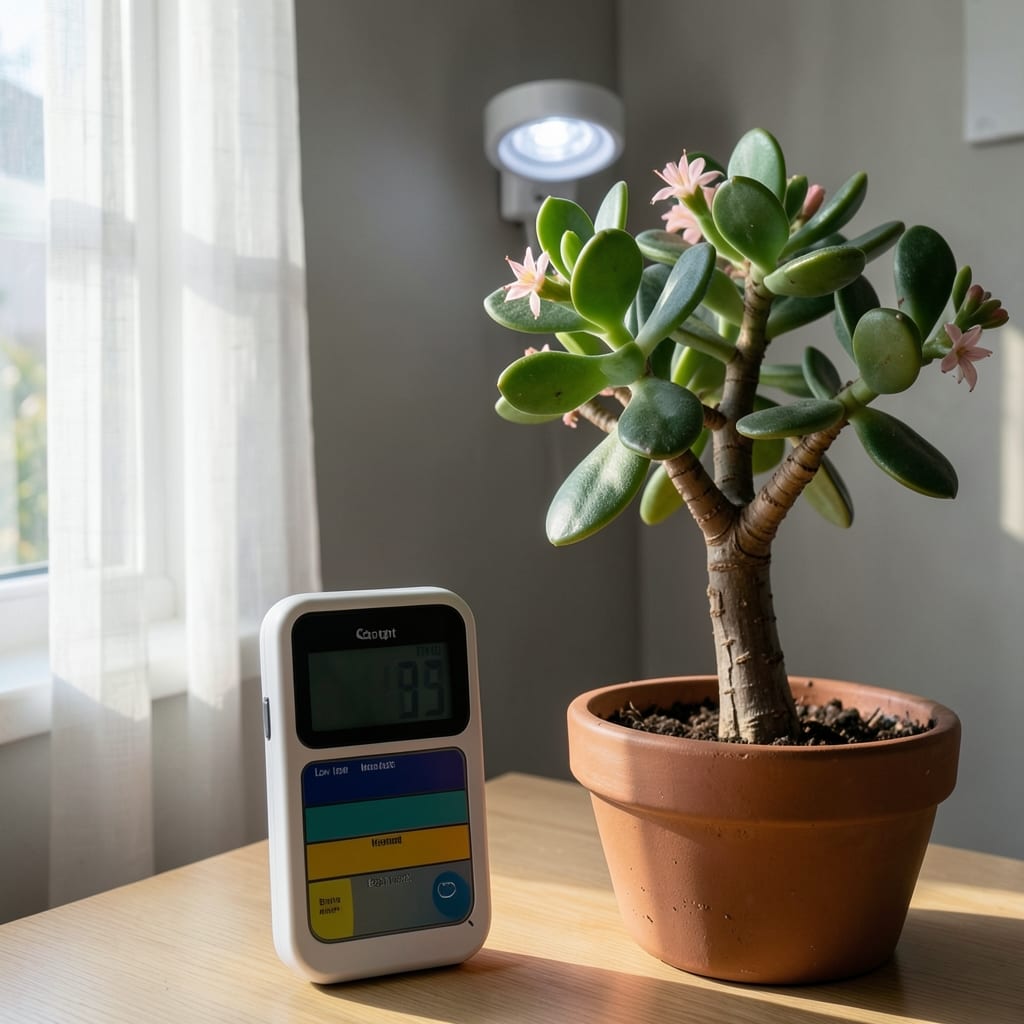
If your Jade Plant 🌿 looks sad—leggy, pale, or crispy—how much light does a Jade Plant need might be the missing puzzle piece. This succulent thrives on bright, indirect sunlight, but too much direct sun can scorch those plump leaves, while too little makes them stretch toward the light like a sleepy cat. The key is finding that sweet spot where your plant gets enough energy to stay happy without getting stressed.
Most Jade Plants do best with 4 to 6 hours of bright, filtered light daily, whether that’s near a south-facing window or under a grow light. In USDA Zone 6a, spring is the perfect time to adjust their light exposure as days get longer. But here’s the catch: direct midday sun can turn those glossy leaves brown, while low light makes them lose their vibrant color and grow weak.
I’ve seen this plant go from wilted to thriving just by moving it a few feet closer to the window—or adding a sheer curtain to soften harsh rays. The goal is to mimic its natural habitat in South Africa, where it grows under trees that filter the sun. Whether you’re dealing with an indoor plant or one in your garden, small tweaks can make a huge difference in its health.
Ready to give your Jade Plant the perfect light setup? Let’s break down exactly how to spot the right conditions and fix common light-related problems—so you can enjoy those lush, healthy leaves all year round.

Ideal light requirements for jade plants: bright indirect sunlight explained
Your jade plant (Crassula ovata) thrives in bright indirect sunlight, but many gardeners accidentally over- or under-expose them. The key is replicating its natural habitat in southern Africa, where it grows under dappled sunlight and rocky outcrops. Too little light causes leggy growth, while too much leads to sunburned leaves. Let’s break down the perfect lighting conditions for your succulent superstar.
Jade plants need 4-6 hours of bright indirect light daily. Think of it like a south-facing window with a sheer curtain—enough light to keep leaves vibrant but filtered to prevent harsh rays. In outdoor settings, place them in partial shade (morning sun + afternoon shade) for best results. If you’re unsure about your space, start with 3-4 hours of light and adjust based on leaf color and growth patterns.
Here’s the light spectrum your jade plant loves:
| Light Type | Daily Duration | Ideal Conditions | Leaf Response |
|---|---|---|---|
| Bright Indirect | 4-6 hours | South window with sheer curtain | Thick, glossy, green leaves |
| Direct Sun | 2-3 hours max | Morning sun only (avoid afternoon) | Brown patches or sunburn |
| Low Light | <2 hours | North window or shaded room | Stretched, pale, weak stems |
Many gardeners mistakenly think jade plants love full direct sunlight, but this leads to leaf scorch—those ugly white or brown patches. If you notice these, move your plant further from the window or add a light sheer curtain. For outdoor jade plants, avoid placing them in hot afternoon sun (after 2 PM), especially in summer months when UV rays are strongest.
Seasonal adjustments are crucial. During winter months, when natural light dims, supplement with a grow light for 12-14 hours daily to prevent etiolation (stretched, weak growth). In summer, if your jade plant gets too much sun, watch for yellowing leaves or crispy edges—these are red flags. Rotate the pot quarter-turns weekly to ensure even light exposure and prevent lopsided growth.
Pro tip: Test your light conditions with the "shadow test". Place a piece of paper near your plant for a few hours. If the shadow is sharp and dark, the light is too direct. If it’s soft and fuzzy, you’ve got the perfect bright indirect light your jade plant adores. Adjust the position until you hit that sweet spot!
For indoor growers, the best window placements are south-facing or east-facing. West-facing windows can work but may require afternoon shade during peak sun hours. If your home lacks natural light, consider a sunny balcony or conservatory—just avoid reflective surfaces like glass doors that magnify sunlight and risk burning leaves.
Remember, jade plants are succulents, not desert plants. They evolved to handle bright but filtered light, not the harsh 1000W sun of a desert. Mimic their natural environment, and you’ll reward yourself with thick, vibrant leaves that’ll make your green thumb shine brighter than the sunlight itself. 🌿
Signs your jade plant isn’t getting the right light (and how to fix it)
Your jade plant silently signals light struggles through its leaves—don’t ignore these warning signs! Stretched, leggy growth (called etiolation) means it’s reaching for more light, while yellowing or brown patches signal sunburn or stress. Even pale, washed-out leaves scream for brighter conditions.
First, check your plant’s leaf orientation. Leaves growing toward the light? That’s a clear sign of insufficient brightness. Jade plants should stand upright with leaves facing outward. If yours leans or bends, it’s begging for a better spot.
Here’s how to diagnose the issue quickly:
For under-lighted jade plants, move them to a south-facing window or rotate the pot quarter-turn weekly for even growth. If that’s not possible, supplement with a grow light 6-12 inches above for 12-14 hours daily.
If your plant shows sunburn symptoms, immediately shift it to bright indirect light (like 2-3 feet from an east or west window) and avoid harsh afternoon sun. Use a sheer curtain to diffuse light if needed.
Pro tip: Healthy jade leaves are thick, glossy, and deep green. If yours look dull or rubbery, adjust the light and watch for improvement in 2-4 weeks. Patience pays off—your plant will thank you with bold new growth!
🌿