
Light Requirements
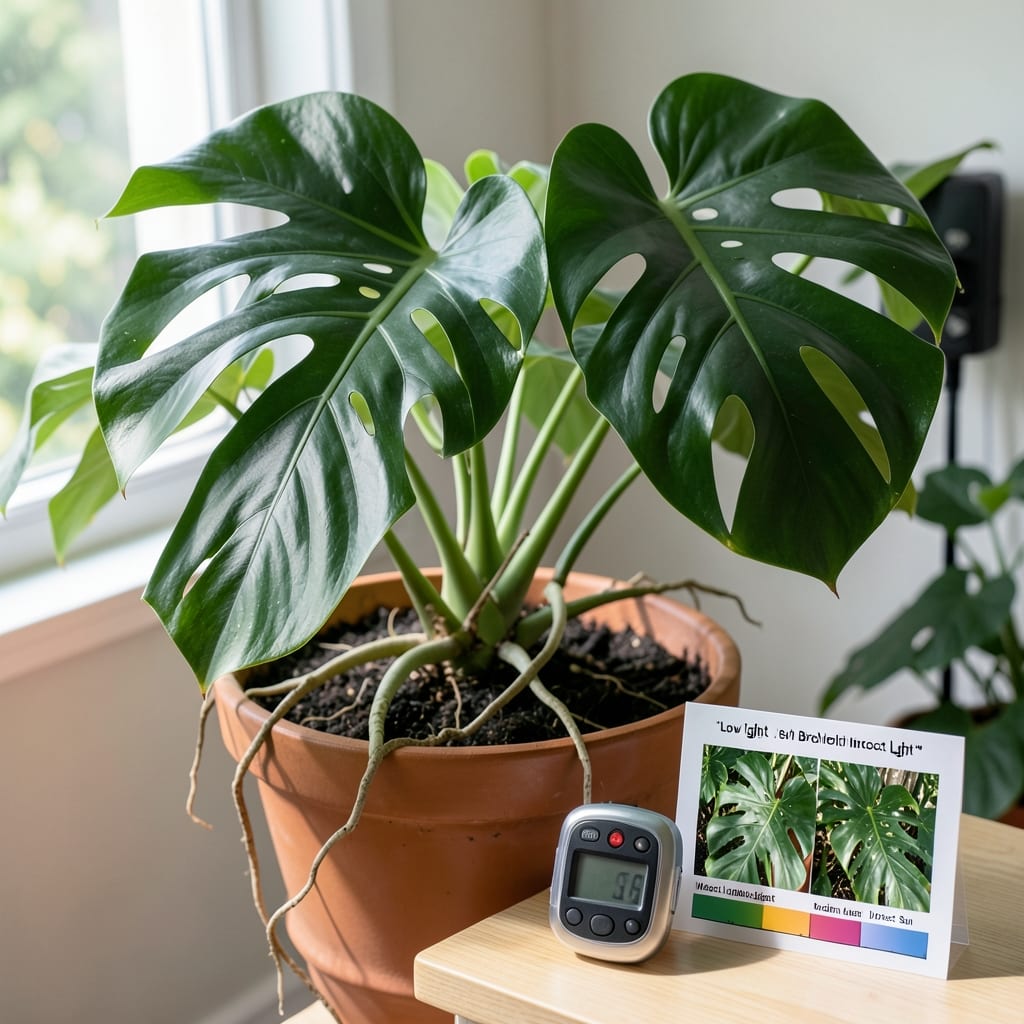
Figuring out how much light for Swiss Cheese Plant success can feel like solving a puzzle—too little and it loses its iconic perforated leaves, too much and you’ll end up with crispy brown patches. The good news? This striking 🌿 Swiss Cheese Plant thrives in bright but indirect light, making it the perfect indoor companion for most homes in USDA Zone 6a and beyond.
If you’ve ever watched your plant stretch toward the window like it’s begging for more light—or seen its leaves turn dull and yellow—you’re not alone. The key is replicating its natural understory habitat, where dappled sunlight filters through the canopy. I’ll show you exactly where to place it (and what to avoid) so you can keep those gorgeous fenestrated leaves looking their best year-round.
Whether you’re dealing with a south-facing window that’s too harsh or a dim corner that’s slowing growth, this guide breaks down the science behind light needs. You’ll learn how to spot the signs of light stress, adjust your plant’s placement for seasonal changes, and even use artificial lighting when natural light falls short.
By the end, you’ll have a crystal-clear picture of the ideal light conditions—no more guesswork, just lush, healthy growth. Let’s get your Swiss Cheese Plant the perfect spot to shine.

Optimal light requirements for Swiss cheese plant growth (and how to measure it)
Your Swiss Cheese Plant (Monstera deliciosa) thrives in bright indirect light, mimicking its natural tropical understory habitat. Think of it as the Goldilocks of houseplants—not too dim, not too harsh, but just right. In my own home, I’ve found the sweet spot is 4-6 hours of filtered sunlight daily, which keeps those iconic fenestrated leaves vibrant and healthy.
Direct sunlight, especially afternoon rays, can scorch leaves, leaving behind unsightly brown patches. Meanwhile, low-light conditions cause leggy growth and dull, pale foliage. The key is replicating the dappled light found under a forest canopy, where sunlight is diffused through leaves above. This balance isn’t just about aesthetics—it’s essential for photosynthesis and overall plant health.
To measure light levels accurately, I recommend using a light meter (available for under $20) or simply observing your plant’s response. Place your meter near the plant’s leaves during peak daylight hours (10 AM–2 PM). Aim for 1,000–3,000 foot-candles—this range mirrors the bright indirect light your Swiss Cheese Plant craves. If you don’t have a meter, no worries: your plant’s leaves will tell you everything you need to know.
| Light Condition | Foot-Candles | Leaf Response | Best For |
|---|---|---|---|
| Bright Indirect Light | 1,000–3,000 fc | Vibrant green leaves with fenestrations | Ideal growth, healthy foliage |
| Low Light | <500 fc | Leggy stems, small leaves, pale color | Slow growth, weak structure |
| Direct Sunlight | >3,000 fc | Brown crispy patches, yellowing | Sunburn, leaf damage |
| Artificial Grow Light | 2,000–4,000 fc | Healthy growth, consistent fenestrations | Winter supplement, low-light spaces |
Seasonal adjustments are crucial, especially if you’re growing your Swiss Cheese Plant indoors. During summer months, when sunlight is intense, move your plant 2-3 feet away from south-facing windows to avoid direct exposure. In contrast, winter’s shorter days often require supplementing with a grow light to maintain those 4-6 hours of bright light your plant needs.
I’ve noticed that my plant’s growth slows dramatically in winter, even with supplemental lighting. This is normal—Swiss Cheese Plants enter a dormant phase during cooler months. However, maintaining consistent light exposure helps prevent the leggy growth that often plagues indoor plants during the off-season. A simple LED grow light on a timer (12–14 hours daily) can work wonders for keeping your plant thriving year-round.
Pro tip: Rotate your plant quarter-turn weekly to ensure even light exposure on all sides. This prevents uneven growth and helps the plant develop a fuller, bushier shape. I’ve seen dramatic improvements in my own plants after implementing this simple habit—no more lopsided growth or sparse foliage on one side.
If you’re unsure whether your current spot is ideal, watch for these visual cues: healthy leaves should be dark green with visible fenestrations (those signature Swiss cheese holes). New growth should appear upright and compact, not stretched or weak. These signs confirm you’ve nailed the light balance your Swiss Cheese Plant craves.
For outdoor growers in USDA Zone 6a, your Swiss Cheese Plant can thrive outside during spring and summer, but only in partial shade. A patio or shaded balcony with morning sun and afternoon shade is perfect. Just be sure to acclimate your plant gradually to outdoor conditions to avoid shock—start with a few hours of shade and slowly increase exposure over 1–2 weeks.
Remember, every home’s lighting is unique. What works for my east-facing window might not be ideal for your south-facing space. The key is observation and adjustment. If you notice your plant’s leaves darkening or stretching toward the light, it’s time to tweak its position. With a little patience and attention, you’ll find that perfect bright indirect spot where your Swiss Cheese Plant will flourish for years to come.
Signs your Swiss cheese plant isn’t getting enough (or too much) light
Your Swiss Cheese Plant sends clear visual cues when its light needs aren’t met. The most obvious warning sign is leaves losing their variegation—those stunning white or yellow patterns fade to solid green when starved for light. Even worse, new growth may appear long and leggy, stretching desperately toward any nearby light source. This "etiolation" isn’t just unsightly; it weakens the plant’s structure and makes it more prone to falling over.
On the opposite end, too much direct sunlight causes dramatic leaf damage. You’ll spot crispy, brown or white patches on leaves exposed to harsh afternoon rays, especially on south-facing windows. These areas often feel dry to the touch and may develop a papery texture. In severe cases, entire leaf sections can curl or die back, leaving your plant looking ragged. The key difference? Light deprivation makes leaves pale and stretched, while overexposure creates sharp, defined burn marks.
• Leggy growth with tiny leaves = Not enough light
• Crispy brown patches = Too much direct sun
• Yellowing between veins = Possible light + water imbalance
Don’t overlook growth patterns as another indicator. A healthy Swiss Cheese Plant produces large, fenestrated leaves (those with the signature cheese-like holes) spaced evenly along sturdy stems. When light is insufficient, you’ll notice smaller leaves with fewer perforations, almost like a "baby" version of the mature plant. Even the rhizomes (those aerial roots) can tell the story—when light is lacking, they’ll grow more aggressively in search of support, while too much light causes them to brown and wither.
Here’s my quick diagnostic test: Hold your plant 2-3 feet from an east-facing window between 10 AM and 2 PM. If the leaves show no visible shadows on the surface, you’ve likely found the perfect light balance. For a more precise check, use your phone’s light meter app (most have built-in lux readers) to aim for 1,000-2,000 lux—the sweet spot for this tropical beauty. If you’re consistently reading below 500 lux, it’s time to relocate.
Seasonal changes complicate things, especially in USDA Zone 6a where winter light drops dramatically. I’ve seen Swiss Cheese Plants that thrived all summer suddenly develop purple-tinged stems in December—a classic sign of light starvation during shorter days. The fix? Rotate your plant quarter-turns weekly to ensure even growth, and supplement with a 12-hour grow light if natural light falls below 3 hours daily. Trust me, your plant will reward you with bold, healthy new leaves within weeks.
Remember, light stress is reversible if caught early. Move your plant to a brighter spot (but never direct sun) and watch as new growth perks up within 2-4 weeks. For severe cases, a leaf flush with a balanced fertilizer (like 10-10-10) can help revive weakened foliage. The key is acting before the damage becomes permanent—your Swiss Cheese Plant’s dramatic foliage is worth the effort to get the light right!