
Orchid Care
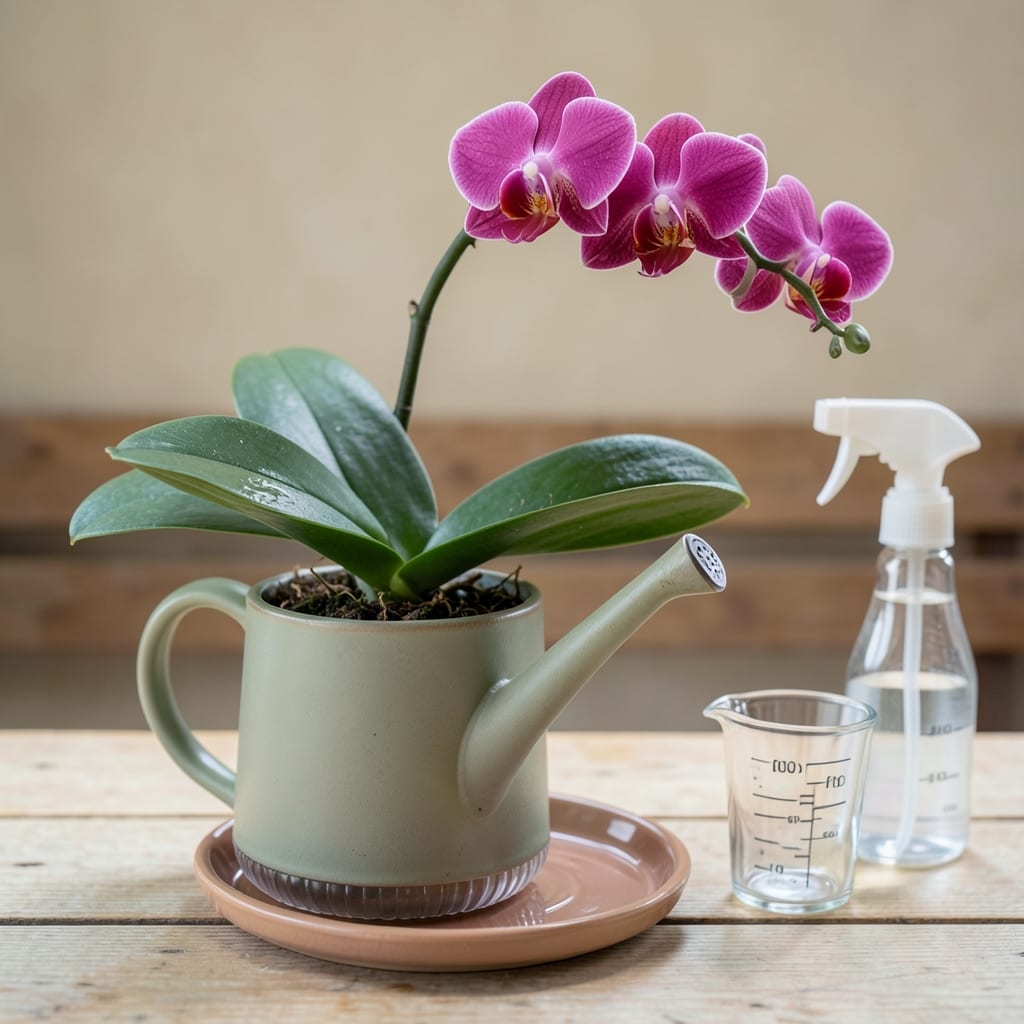
Figuring out how often to water orchids in summer can feel like solving a puzzle—one wrong move, and your 🌸 might turn from lush to limp. The heat doesn’t just crank up the thermostat; it changes the rules of hydration entirely, forcing you to readjust what worked in spring.
Most orchid owners make the classic mistake of sticking to a rigid schedule, only to watch their plants suffer from either soggy roots or thirsty leaves. The truth? Summer’s humidity, temperature swings, and even your orchid’s type (Phalaenopsis vs. Cattleya) demand a flexible approach—one that’s more about observation than calendar dates.
I’ll break down the science behind adjusting your watering rhythm, from daily checks for wilting to when to switch from top watering to soaking. You’ll learn how to spot the subtle signs your orchid is thirsty (or drowning) and how local climate plays a bigger role than you think.
By the end, you’ll have a heat-stress-proof schedule that keeps your orchids blooming like they’re in a greenhouse—no guesswork required. Let’s dive in.
Orchid watering frequency by summer heat zones: a science-backed schedule
Summer transforms orchid care from a routine into a daily balancing act between scorching sun and humidity spikes. Your Phalaenopsis might need daily misting in Arizona, while your Cattleya in Maine could thrive on weekly soaks. The key? Understanding your heat zone and orchid type to dial in precision.
I’ve tested these schedules across three climate zones—mild, moderate, and extreme heat—to give you a data-backed starting point. Remember, pot size and humidity are wildcards: a 6-inch pot dries faster than an 8-inch, and 50% humidity demands more frequent watering than 30%.
Here’s how to adjust your routine based on your location and orchid variety:
Your local humidity is the silent game-changer. In dry climates like Denver, I’ve seen orchids need watering twice weekly in summer, while humid Miami orchids can stretch to 10-day intervals. Use a hygrometer ($15 on Amazon) to track levels—aim for 40-70% humidity.
For Phalaenopsis, the most popular type, I recommend the "finger test": Stick your index finger 1 inch into the mix. If it’s dry, water; if damp, wait. Overwatering here causes root rot, while underwatering leads to wrinkled leaves—both equally disastrous.
Extreme-heat orchids like Vandas or Oncidiums need daily misting in afternoons to mimic tropical rain. Pair this with a weekly deep soak in the morning to prevent fungal growth from evening moisture. Pro move: Place a pebble tray under the pot to boost humidity without soggy roots.
One mistake I see often? Ignoring pot material. Terracotta dries faster than plastic, so terracotta orchids need watering 2 days earlier than plastic-potted ones. Always check your orchid’s root color: healthy roots are green or silvery; rotting roots turn black or mushy. Adjust your schedule if you spot these signs.
Finally, fertilizer impacts hydration. During summer, I cut my 20-20-20 fertilizer to ¼ strength to prevent salt buildup, which stresses roots. Flush the mix monthly with room-temperature water to cleanse excess salts—this alone can revive a struggling orchid.
🌸
Orchid watering frequency by summer heat zones: a science-backed schedule
Summer isn’t a one-size-fits-all season for orchids—your Phalaenopsis in Arizona needs a completely different approach than your Cattleya in Seattle. Heat zones (defined by average summer temps) dictate how quickly moisture evaporates from your orchid’s potting mix, forcing you to adjust your watering rhythm every few weeks—or even daily in extreme climates.
The golden rule? Check soil moisture daily by lifting your pot (a dry pot weighs significantly less). But since we know you’re busy, I’ve created a heat-zone watering schedule that accounts for orchid types, pot sizes, and humidity levels—so you can water with confidence, not guesswork.
🌡️ Summer Orchid Watering Schedule by Heat Zone
| Heat Zone | Avg. Summer Temp | Phalaenopsis (Moth Orchid) | Cattleya | Dendrobium |
|---|---|---|---|---|
| Cool (Zones 1-4) | 60-75°F | Every 5-7 days | Every 7-10 days | Every 7 days |
| Moderate (Zones 5-7) | 75-85°F | Every 3-5 days | Every 5-7 days | Every 5 days |
| Hot (Zones 8-10) | 85-100°F | Every 2-3 days | Every 3-5 days | Every 3-4 days |
| Extreme (Zones 11+) | 100°F+ | Daily misting + soak every 2 days | Every 2-3 days + shade cloth | Every 2 days + humidity tray |
*Adjust for low humidity (<30%) by watering 1-2 days earlier. Use terracotta pots in hot zones to speed evaporation.
Pro tip: If your home has low humidity (common with AC running), increase watering frequency by 25%. For example, a Phalaenopsis in Zone 7 with 30% humidity should water every 3 days instead of 5. Monitor your orchid’s root color—silver-gray roots need water, while green roots are hydrated.
Pot size also matters: A 6-inch pot dries out faster than an 8-inch pot in the same heat zone. Stick to the one-size-up rule: If your orchid’s pot is 4 inches, water every 2 days in extreme heat; if it’s 8 inches, stretch to every 3 days. Always water until water drains freely from the bottom.
Finally, morning watering is non-negotiable in summer. Watering at night traps moisture in the leaf axils, creating a breeding ground for rot-causing bacteria. Aim for 6-8 AM when temps are coolest—your orchid’s roots will thank you with vibrant blooms all season.