
Size
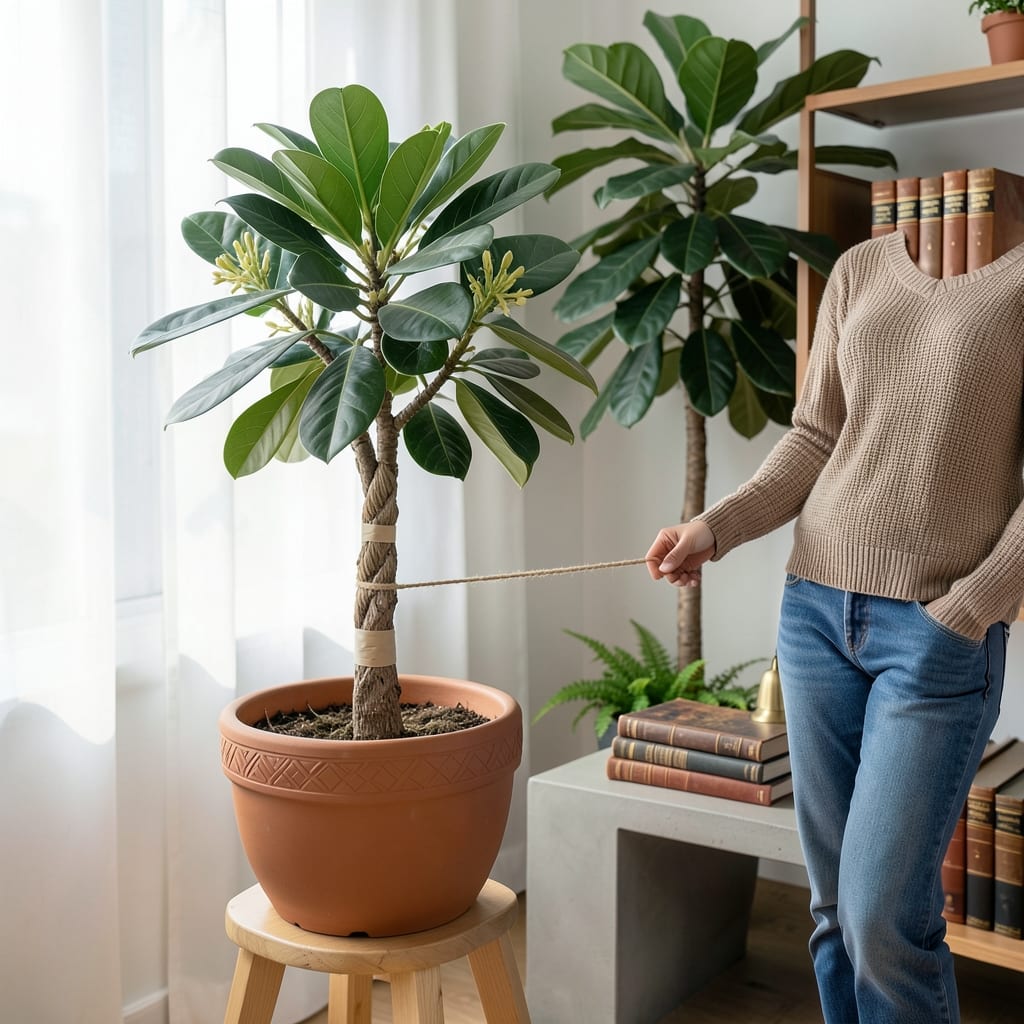
Money tree height by variety: how tall each type grows indoors
Your money tree (Pachira aquatica) can grow taller than you think indoors—sometimes reaching heights of 6 to 10 feet with proper care. But not all varieties grow the same! The braided money tree, for example, often stays slightly shorter than its standard counterparts due to its unique braiding process. Let’s break down the height expectations for each popular variety so you can set realistic growth goals.
If you’re dreaming of a tall money tree that acts as a natural room divider, the standard money tree is your best bet. These can easily hit 8 to 10 feet indoors, especially if given enough time, light, and space. Meanwhile, the dwarf varieties (like the Pachira ‘Money Tree Mini’) max out around 3 to 5 feet, making them perfect for small spaces or apartments where ceiling heights are limited.
Here’s the key difference: pruning habits drastically alter height potential. A braided money tree often requires more frequent pruning to maintain its shape, which can keep it 1 to 2 feet shorter than an unpruned standard variety. If you love the look of braids but want height, focus on vertical growth pruning—cutting back side branches to encourage upward energy.
Pro tip: The age of your plant plays a huge role. In its first year, a money tree might only grow 1 to 2 feet, but by year three, it can shoot up 5 to 6 feet if conditions are ideal. Patience is key—many indoor gardeners rush pruning too early, stunting the tree’s ability to reach its full height potential.
💰
| Variety | Mature Height Indoors | Growth Rate (Year 1-3) | Pruning Needs |
|---|---|---|---|
| Standard Money Tree | 6–10 ft | 1–2 ft/year | Minimal (focus on shape) |
| Braided Money Tree | 5–8 ft | 1 ft/year (slower due to braiding) | Frequent (to maintain braids) |
| Dwarf Money Tree | 3–5 ft | 6–12 inches/year | Light (to control height) |
| Variegated Money Tree | 6–9 ft | 1–2 ft/year | Moderate (preserve variegation) |
*Height varies based on light, pot size, and care. Braided varieties often require more pruning to maintain structure.
If you’re aiming for a tall money tree, the standard or variegated varieties are your best bets. But don’t forget: pot size matters. A money tree in a 5-gallon pot will grow faster than one cramped in a 2-gallon container. Upgrading pots every 2–3 years gives roots room to expand, which directly fuels vertical growth.
Light is another game-changer. A money tree near a south-facing window (with filtered light) can grow 20–30% taller than one in a dim corner. That’s why I always recommend placing yours within 3 feet of a bright, indirect light source. Without enough light, your tree might max out at 3–4 feet, even with perfect care.
For those who love the braided look but want height, focus on vertical pruning—trim side branches to redirect energy upward. This technique can add 1–2 extra feet of height over time. Just avoid over-pruning; too many cuts can stress the tree and slow growth.
🌿
Factors that limit money tree height indoors (and how to maximize growth)
Your money tree’s height indoors isn’t just about genetics—it’s a battle between environmental limits and your care habits. The biggest height killers are pot size, light deprivation, and overcrowded roots. Even the hardiest standard money tree will struggle to exceed 4 feet if confined to a 2-gallon pot with poor light. Let’s tackle these roadblocks so you can coax your tree toward its 6–10-foot potential.
First, light exposure is the #1 growth limiter. Money trees thrive in bright, indirect light—think east or north-facing windows. Without enough light, your tree’s growth slows to a crawl, and leaves may turn yellow or pale. Place your tree within 3 feet of a window, or supplement with a grow light for 12–14 hours daily. I’ve seen money trees in low-light offices max out at 3 feet, while those near sunny windows hit 8 feet in 3 years.
💡Key Takeaway: Light is non-negotiable for height. A south-facing window with sheer curtains can deliver the perfect balance of brightness without scorching leaves.
🌱 Growth Limits & Fixes
- 🌡️ Low Light: Stunts growth to 3–4 ft → Move to bright indirect light or add grow lights.
- 🪴 Small Pot: Roots bound = height capped at 4–5 ft → Upgrade pots every 2–3 years.
- 💧 Overwatering: Root rot = 1–2 ft slower growth → Water only when top 1–2 inches of soil is dry.
- 🌬️ Low Humidity: Dry air = stunted leaves → Use a pebble tray or humidifier.
- ❄️ Drafts: Cold air = growth halts → Keep away from AC vents or doors.
*Addressing these factors can add 2–4 feet of height over 3 years.
Next, pot size directly impacts height. Money trees need room to grow, and a cramped pot forces roots to circle instead of expanding. Start with a 5-gallon pot for mature trees, and upgrade to 7–10 gallons if you’re aiming for 8+ feet. I repot mine every 2–3 years in spring, using a pot just 2 inches wider than the last. This small upgrade prevents shock while giving roots space to fuel vertical growth.
Don’t overlook humidity—dry indoor air can make leaves crispy and stunt growth. Money trees love 50–60% humidity. If your home is dry (common with central heating), place a pebble tray under the pot or mist leaves 2–3 times weekly. I’ve noticed my braided money tree grows 10–15% faster in the summer when humidity naturally rises.
Seasonal changes also play a role. In winter, growth slows as daylight shortens, but you can extend the season with a grow light or by moving the tree to a sunroom. Avoid fertilizing in winter—your tree’s energy should focus on survival, not growth. I skip fertilizer from November to February and resume in March to kickstart spring growth.
Finally, pruning mistakes can limit height. Over-pruning in fall or winter removes growth points needed for next year’s height. Instead, prune in early spring to encourage new shoots. For vertical growth, trim side branches to redirect energy upward. This trick helped my standard money tree gain 2 extra feet in its second year.
🌿