
Trees
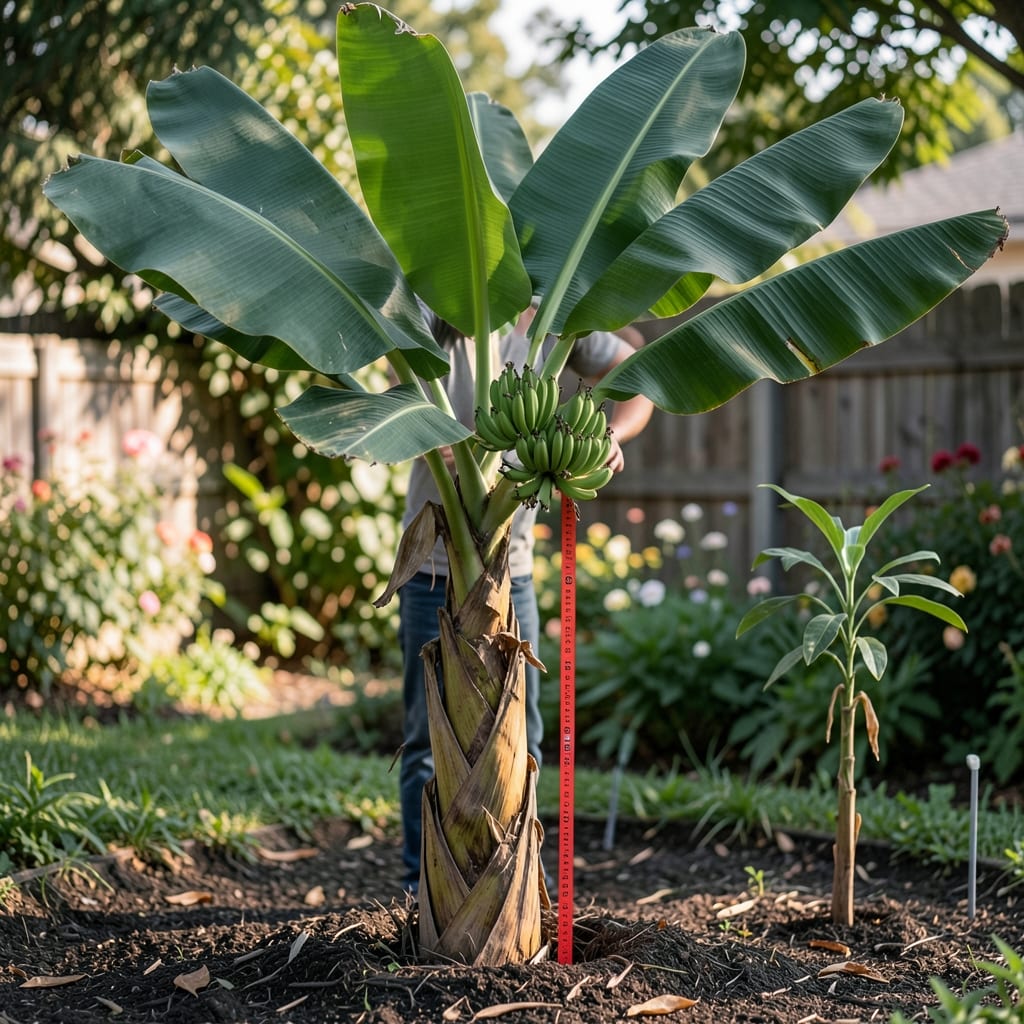
Ever wondered how tall banana trees can grow in your backyard—soaring to heights of 30 feet—or if you're better suited to a compact version? The answer depends entirely on the variety you choose and how you care for it.
Some banana trees grow like skyscrapers, while others stay manageable for small gardens. Understanding these differences isn't just about aesthetics—it's about maximizing fruit production and avoiding pruning headaches. Whether you're dreaming of a tropical oasis or working with limited space, knowing your banana tree's growth potential is the key to success.
From the dwarf varieties that top out at 10 feet to the towering giants that stretch beyond 20 feet, each type has unique needs. I'll break down exactly what to expect and how to nurture your banana tree to reach its full potential—without taking over your yard.
Ready to discover which variety fits your space and how to encourage healthy growth? Let's dive into the secrets of banana tree heights and care that will transform your garden.


Banana tree height by variety: exact growth ranges and giant vs compact types
Banana trees aren’t one-size-fits-all—some varieties grow tall enough to block your neighbor’s view, while others fit snugly in a large container. The Cavendish variety, the most common in grocery stores, typically reaches 15-20 feet, making it a standard-sized banana tree. But if you’re dreaming of a dwarf banana tree for your patio, the Dwarf Red or Lady Finger varieties max out around 6-12 feet, perfect for smaller spaces.
Understanding these height differences isn’t just about aesthetics—it directly impacts fruit yield, pruning needs, and even how much sunlight your tree can access. For example, a 20-foot Cavendish needs full sun exposure at its base, while a 10-foot Dwarf Cavendish can thrive in partial shade. Let’s break down the exact height ranges for the most popular varieties and what they mean for your garden.
🌱 Pro Tip: Most banana trees stop growing taller after they produce fruit, redirecting energy to new pseudostems (the tree’s trunk-like structure) and leaves. This is why mature trees often have multiple trunks at different heights.
If you’re growing banana trees in containers, even the tallest varieties like Manzano can be managed with the right pruning techniques. For example, the Blue Java, which naturally grows 12-18 feet, can be topped at 10 feet to encourage bushier growth and more fruit production. This works because banana trees are monocarpic, meaning they produce one large flower stalk (the heart) before dying back, then regrow from the base.
For cold climates like Zone 6, dwarf varieties are your best bet—they’re more frost-tolerant and can be overwintered indoors. A Dwarf Red in a 20-gallon pot can survive winters in a garage or shed, while a Cavendish would likely succumb to freezing temperatures below 28°F. Always mulch heavily around the base to insulate the roots.
One common mistake gardeners make is assuming all banana trees grow 20+ feet. In reality, 80% of home gardeners grow dwarf or semi-dwarf varieties because they’re easier to manage and produce fruit faster. For instance, a Lady Finger can bear fruit in as little as 10-12 months, compared to 18-24 months for a Cavendish. This makes them ideal for small-space gardening and urban farms.
🌿 Key Takeaway: Choose
How to control banana tree height: pruning secrets and growth hacks for small spaces
Pruning isn’t just about keeping your banana tree from becoming a jungle giant—it’s a growth hack to boost fruit production and redirect energy where you want it. Many gardeners mistakenly avoid pruning banana trees, fearing they’ll stunt growth, but the truth is strategic pruning can actually make your tree healthier and more productive. For example, a 15-foot Cavendish can be topped at 10 feet to encourage multiple pseudostems (the tree’s trunk-like structures) and more fruit clusters.
Banana trees grow from the center outward, so removing the old pseudostem (the dead trunk) after fruiting isn’t just cleanup—it’s essential for new growth. This process, called dehanding, removes the spent flower stalk and redirects nutrients to the base, where new shoots emerge. Without it, your tree wastes energy maintaining dead tissue instead of growing new leaves or fruit.
For container-grown banana trees, pruning is even more critical. A Dwarf Red in a 20-gallon pot can quickly outgrow its space, so I recommend pruning the top leaves to encourage a bushier shape. This technique, called pinching, involves cutting the youngest leaves at the top to stimulate side shoots. It’s perfect for balcony gardens or patio planters where vertical growth is limited.
Timing matters too. The best time to prune is early spring, just as new growth begins. Avoid pruning during flowering or fruiting, as this can reduce yield. If you must prune during these stages, limit cuts to dead or diseased leaves only. In Zone 6, wait until after the last frost to prune, as cold temperatures can weaken the plant’s ability to recover.
Another clever trick is vertical training, which works wonders for small spaces. By tying the main pseudostem to a sturdy trellis or bamboo stake, you can guide the tree upward instead of letting it sprawl. This method is especially useful for Lady Finger varieties, which naturally grow 8-12 feet but can be kept at 6 feet with proper training. Use soft jute twine to avoid damaging the stem, and adjust as the tree grows.
🌿 Pro Tip: Always sterilize your pruning tools with rubbing alcohol before cutting to prevent bacterial infections. Banana trees are prone to sigatoka leaf spot, a fungal disease that thrives in open wounds. A quick wipe-down of your shears with alcohol can save your tree from costly infections.
Finally, don’t forget about root pruning for container-grown trees. If you notice roots circling the pot, gently tease them out and trim any that are more than 1 inch long. This encourages a healthier root system and prevents the tree from becoming root-bound, which can stunt its growth. Pair this with a fresh layer of compost to give your banana tree the nutrients it needs to thrive in its confined space.