
Trees
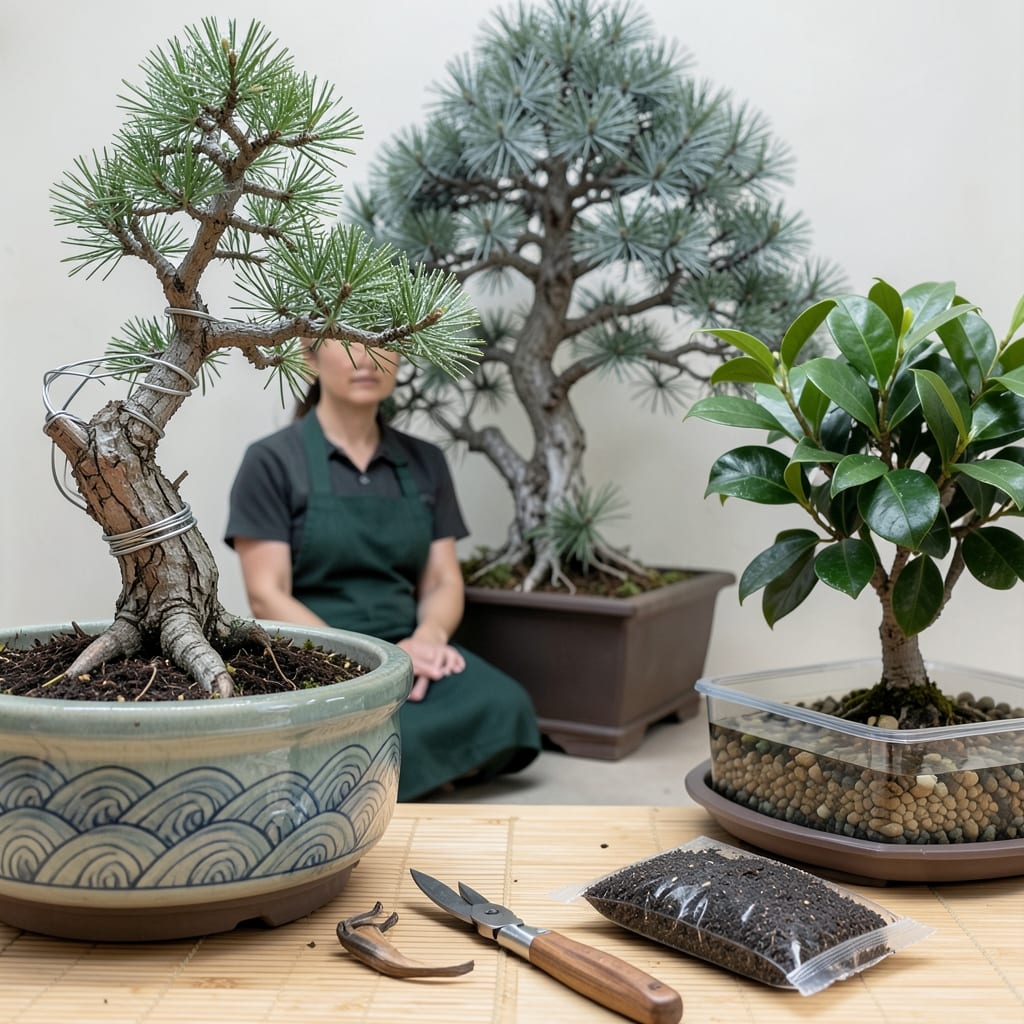
Have you ever stared at your bonsai tree 🌳 and wondered just how tall it could grow—or if you’re keeping it too small? The answer isn’t as simple as you might think, because the height of a bonsai depends on its species, your pruning skills, and even the pot you choose.
Some bonsai varieties stay tiny forever, barely reaching 6 inches tall, while others can stretch toward the sky if left unchecked. The key lies in understanding which species lean toward dwarf or giant growth and how to guide them with techniques like wiring and root pruning.
In this guide, I’ll break down the natural height limits of popular bonsai trees, from the pint-sized junipers to the towering ficus varieties. You’ll also discover 3 pruning secrets that keep your bonsai at your desired height—whether that’s tabletop tiny or floor-filling grand.
Ready to transform your bonsai from a wild overgrowth into a carefully crafted masterpiece? Let’s dive into the science (and art) of controlling height so your tree stays exactly the size you love.

Bonsai tree height limits: dwarf vs. giant species compared
Bonsai trees are famous for their miniature size, but their natural height potential varies wildly depending on the species. While most bonsai enthusiasts aim for tabletop-sized trees (1-3 feet), some species can grow into towering giants (10+ feet) if left unrestrained. The key lies in understanding each species' growth habits and how they respond to bonsai techniques.
For example, juniper bonsai—a popular beginner choice—typically tops out at 2-3 feet when trained properly, but its wild counterpart can reach 40 feet tall. Meanwhile, ficus bonsai (like the ginseng ficus) often stay under 2 feet, while its outdoor relative grows as tall as 50 feet. These extremes show how pruning and root restriction shape a bonsai's final height.
The smallest bonsai species include dwarf junipers and miniature azaleas, which can be kept under 12 inches with careful maintenance. On the opposite end, bonsai maples and pine bonsai often grow between 3-6 feet when mature, requiring more aggressive training to maintain proportions.
Here’s how natural growth rates compare across popular bonsai species—including their wild-type heights and achievable bonsai sizes:
If you’re aiming for a tiny bonsai (under 12 inches), focus on species like dwarf junipers or miniature azaleas. For a statement-piece bonsai (3–6 feet), maples or pines are ideal but require more patience and skill. Always start with a young tree—grafting mature branches onto dwarf rootstock can also shrink a species’ growth potential.
One common misconception is that all bonsai stay small naturally. In reality, bonsai height is 90% technique. Even a fast-growing ficus can be kept under 2 feet with regular pruning and root trimming, while a slow-growing juniper might still outgrow its pot if neglected. The secret? Root restriction—limiting root growth forces the tree to allocate energy to foliage and trunk thickness instead of height.
For outdoor bonsai, seasonal changes also affect height. Species like maples and pines
How pruning and training control bonsai tree height
Controlling your bonsai’s height isn’t just about hacking away at branches—it’s a delicate balance of pruning techniques, root restriction, and seasonal timing. The right approach can keep your tree at a manageable 6-inch tabletop size or transform it into a 3-foot statement piece. Let’s explore the tools and methods that give you full control.
First, defoliation is your secret weapon for dwarf bonsai. By removing leaves (or needles) in late spring, you trigger smaller, denser regrowth—ideal for keeping varieties like juniper or pine under 12 inches. I recommend using sharp scissors to pinch off 50-70% of foliage at once, then monitor for new growth in 3-4 weeks.
🌿 Step-by-Step Height Control Guide
- Step 1: Prune branches – Trim 1/3 of new growth in spring/summer to slow vertical expansion.
- Step 2: Root prune – Repot every 2-3 years to restrict root growth (use 1 size larger pot max).
- Step 3: Wire branches – Bend upward-growing limbs downward using aluminum or copper wire to redirect energy.
- Step 4: Defoliate – Remove 50-70% of leaves in late spring for compact regrowth.
- Step 5: Adjust lighting – Move to bright indirect light to slow growth if tree outpaces your goals.
For taller bonsai like ficus or elm, focus on structural pruning—removing entire branches to maintain proportions. I once had a 10-foot ficus bonsai that I reduced to 6 feet in 2 years by pruning 20% of height annually and using root restriction during repotting. The key? Never prune more than 25% of total height in one session to avoid shock.
Seasonal timing matters too. Spring pruning encourages dense growth, while summer/winter cuts control height. I prune my juniper bonsai in early June to shape it for winter displays—this prevents uncontrolled vertical shoots that ruin the miniature look.
Pro tip: Combine techniques for best results. For example, wire + defoliate a pine bonsai in spring, then prune again in late summer. This 3-step combo keeps my 18-inch black pine at perfect proportions year-round.
Remember, patience is critical. A 5-year-old bonsai can take 2-3 years to fully respond to training. Track your progress with photos—you’ll spot growth patterns you’d miss otherwise. With consistent care, you’ll master the art of keeping your bonsai at exactly the height you envision.