
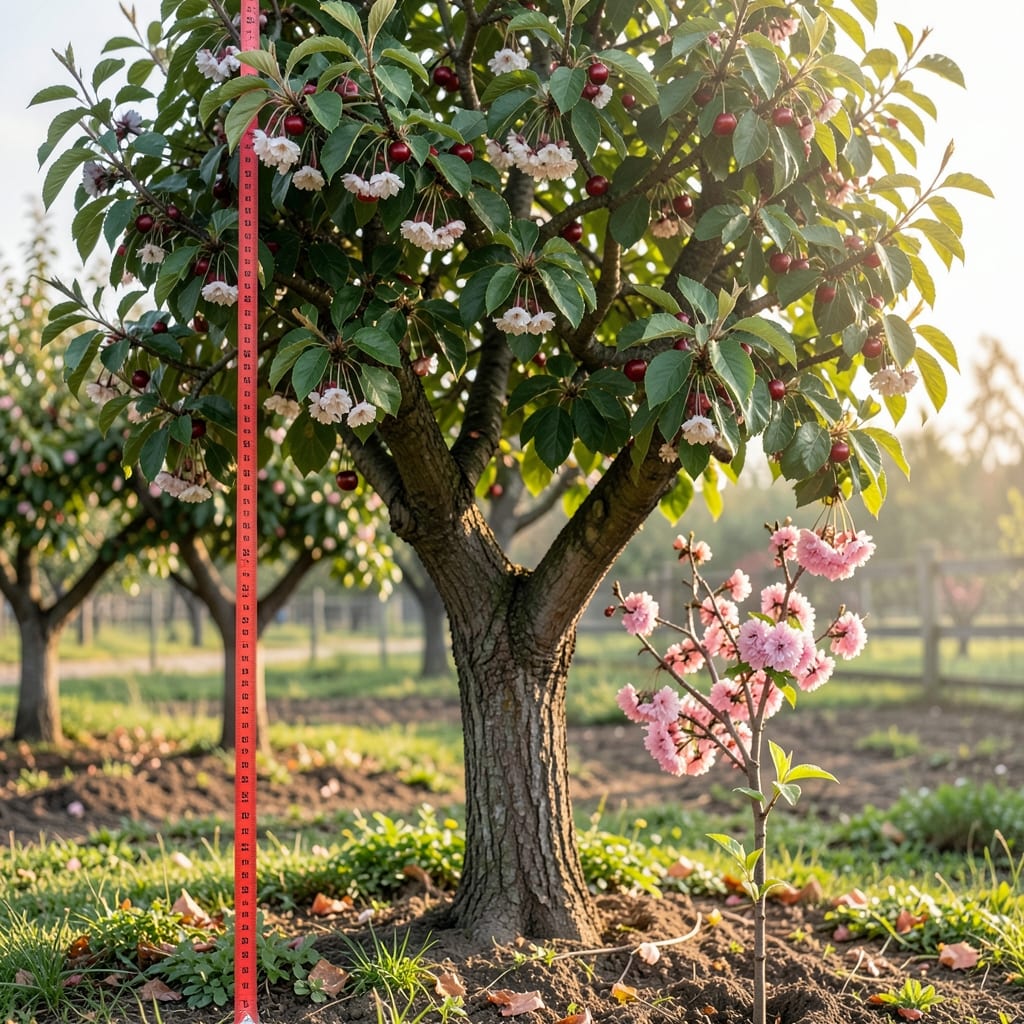
How Tall Can Cherry Trees Grow: Dwarf to 60-Foot Giants Explained

Size

How Tall Can Cherry Trees Grow: Dwarf to 60-Foot Giants Explained

Wondering how tall can cherry trees grow before they become a backyard giant? The answer might surprise you—these trees can range from compact 8-foot dwarfs to towering 60-foot giants, depending on the variety and care you provide.

If you're dreaming of a 🍒 cherry tree that fits neatly in your landscape, dwarf varieties are your best bet. But if you're okay with a statement piece, standard varieties can grow taller than your house! The key lies in choosing the right type for your space and understanding what influences their height.

In this guide, I’ll break down the height differences between ornamental and fruit-bearing cherry trees, plus the factors that determine how big they’ll get. Whether you’re planning a small urban garden or a sprawling rural yard, you’ll find the perfect fit.

Ready to pick the right cherry tree for your space? Let’s dive into the details so you can make an informed choice that works for your garden and your lifestyle.

Cherry Tree Tree Height Range
15 ftto60 ft
0 ft 3 ft 6 ft 9 ft 12 ft
🌱 Very Very Tall Tree

Cherry tree height by variety: from dwarf to monumental giants

If you're imagining a cherry tree in your garden, the first question is almost always: how tall will it grow? The answer depends entirely on the variety you choose. Some cherry trees stay compact enough for containers, while others become towering giants that dominate your landscape. Let me break down the height ranges you can expect from dwarf to monumental varieties, so you can pick the perfect fit for your space.

Cherry trees belong to the Prunus genus and include both fruit-bearing varieties (like sweet and sour cherries) and stunning ornamental types. Their mature heights can vary from just 8 feet for dwarf varieties to an astonishing 60 feet for full-sized trees. The key difference lies in their rootstock and genetic traits, which we'll explore later.

For now, let's focus on the varieties you're most likely to encounter. Whether you're dreaming of a backyard orchard or a single decorative specimen, knowing these height ranges will help you plan your garden layout with confidence.

🌱

Variety Type Mature Height Growth Rate Best For
Stella® (Dwarf) Sweet Cherry 8–12 ft Slow to moderate Containers, small yards
Montmorency (Semi-Dwarf) Sour Cherry 12–18 ft Moderate Backyard orchards
Bing (Standard) Sweet Cherry 20–30 ft Fast Large properties
Black Tartarian (Standard) Sour Cherry 25–35 ft Moderate Traditional orchards
Yoshino Cherry (Ornamental) Flowering Cherry 30–40 ft Fast Landscaping, parks
Autumn Brilliance (Ornamental) Flowering Cherry 15–25 ft Moderate Small to medium yards
Empress™ (Columnar) Sweet Cherry 12–16 ft (narrow) Moderate Small spaces, urban gardens
Royal Ann (Standard) Sweet Cherry

How to choose the right cherry tree height for your space

Selecting the perfect cherry tree height isn’t just about aesthetics—it’s about creating a sustainable, functional space in your garden. If you’ve got limited yard room, a dwarf variety like Stella® (8–12 ft) could be your best bet, while larger properties can accommodate standard varieties like Bing (20–30 ft) or Yoshino (30–40 ft). The key is matching the tree’s mature height to your landscape’s scale and your long-term maintenance goals.

Before you plant, measure your space and visualize how the tree will grow. A 20-foot cherry tree will easily outgrow a small suburban backyard, while a 60-foot giant needs acres of open space. Even ornamental varieties like Autumn Brilliance (15–25 ft) can become unwieldy if planted too close to structures or power lines. Always leave room for the spread of the branches—cherry trees often grow as wide as they are tall!

🌳

🌱

Key Takeaways for Choosing Cherry Tree Height

  • Dwarf varieties (8–12 ft) are ideal for containers or small yards with limited space.
  • Semi-dwarf varieties (12–18 ft) work well in backyard orchards or medium-sized gardens.
  • Standard varieties (20–60 ft) need large properties or open landscapes to thrive.
  • Consider columnar varieties like Empress™ (12–16 ft) for urban gardens or narrow spaces.
  • Always check mature height and spread before planting to avoid overcrowding.

Another critical factor is your climate zone. Cherry trees thrive in USDA zones 5–8, but taller varieties may struggle in windy or storm-prone areas. If you’re in a high-wind region, opt for a shorter, sturdier variety or use staking and pruning to manage height. Even in ideal conditions, standard cherry trees can grow faster than expected—so plan ahead!

For fruit-bearing varieties, height also affects harvesting ease. A 20-foot tree might require a ladder, while a 12-foot semi-dwarf keeps cherries within arm’s reach. If you’re growing cherries for fresh eating, prioritize a variety that fits your comfort level. For ornamental cherries, height influences seasonal impact—taller trees create dramatic spring blooms but may need more maintenance.

Pro tip: If you’re unsure about long-term growth, start with a smaller variety and use pruning to shape it over time. Young cherry trees respond well to pruning, allowing you to control height and encourage a fuller canopy. Just avoid heavy pruning in the first few years, as this can stress the tree and slow its establishment.

Finally, think about future expansion. If you plan to add more plants or structures, leave extra space around your cherry tree. A 30-foot Yoshino Cherry won’t just grow tall—it’ll develop a wide canopy that needs room to breathe. With the right variety and planning, your cherry tree will be a stunning, low-maintenance centerpiece for years to come.

★★★★★4.5(15 reviews)
Categories Size