
Trees
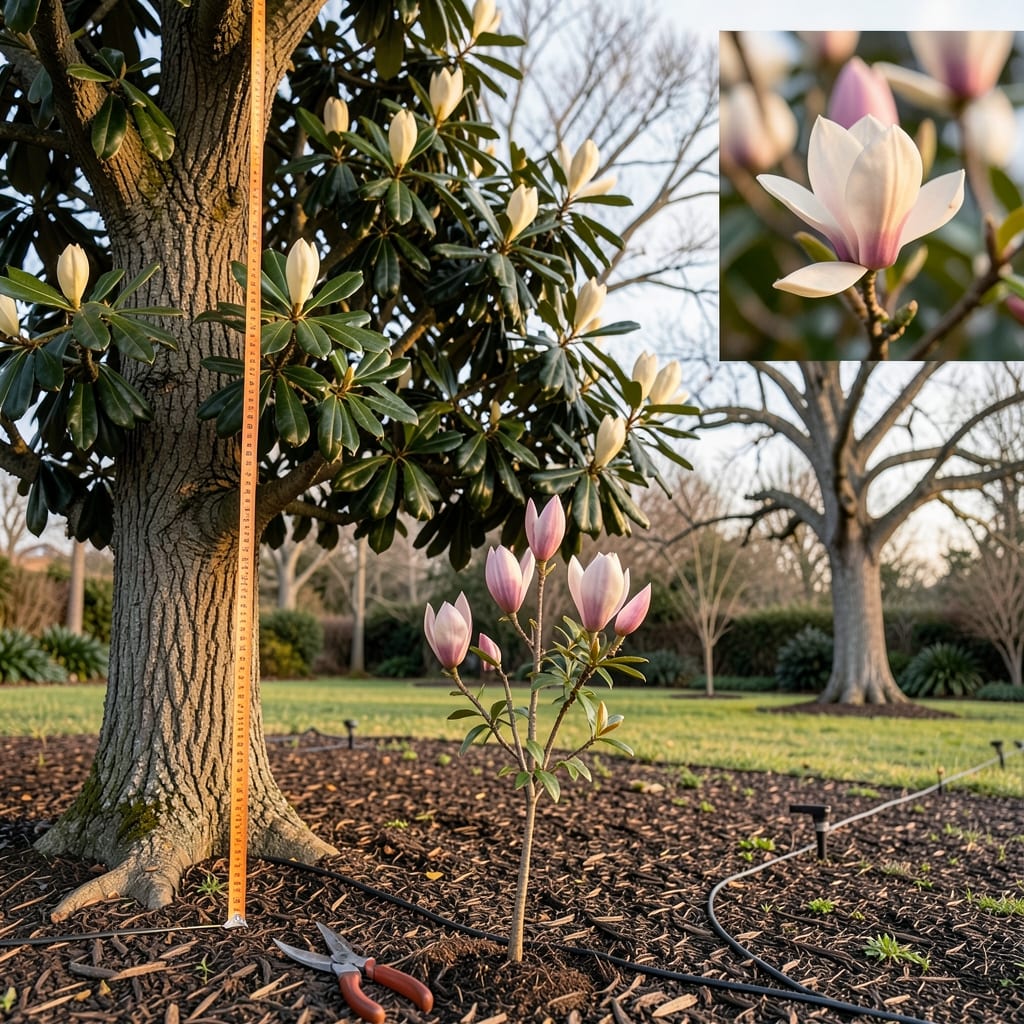
If you're dreaming of a majestic magnolia tree in your yard, you might be wondering—just how tall can these stunning trees grow? The answer varies wildly by species, from dwarf varieties perfect for small gardens to towering giants that dominate landscapes.
Picture this: a 🌸 Magnolia Tree reaching heights of 80 feet or more, casting shade over your entire property like a natural cathedral. But don't worry—there are smaller options too, like the charming 'Little Gem' that stays under 12 feet. The key is understanding your space and climate needs before planting.
In this guide, I'll break down the height ranges for popular magnolia species, including growth rates and seasonal factors that influence their development. Whether you're in USDA Zone 6a or another region, you'll learn how to choose the perfect variety for your landscape.
Ready to transform your outdoor space? Let's explore how to select, care for, and even control the height of your magnolia tree for a stunning, long-lasting addition to your yard.


Magnolia tree height by species: from dwarf varieties to towering giants
When planning to add a magnolia tree to your landscape, understanding its mature height is crucial. Some varieties stay compact enough for small yards, while others become towering specimens that require careful placement. The Southern Magnolia (Magnolia grandiflora), for example, can reach heights of 60-80 feet, making it a statement piece in large properties. Meanwhile, dwarf magnolias like 'Little Gem' stay between 15-25 feet, perfect for urban gardens.
Magnolia heights vary dramatically by species, with some reaching skyscraper-like proportions while others remain manageable for suburban homes. The key is selecting a variety that matches both your available space and your climate zone. For instance, Kadampa magnolias grow 30-50 feet tall, ideal for medium-sized yards, while Star Magnolias (Magnolia stellata) typically max out at 15-20 feet, perfect for foundation plantings.
Here’s a quick comparison to help you visualize: a 60-foot magnolia is roughly the height of a 5-story building, while a 12-foot dwarf fits comfortably under a 2-story home’s eaves. Your choice will impact not just aesthetics but also pruning requirements, root space, and even neighborhood HOA regulations in some areas.
| Variety | Mature Height | Growth Rate | Ideal Climate |
|---|---|---|---|
| Southern Magnolia (M. grandiflora) | 60-80 ft | Slow (1-2 ft/year) | Zones 6-10 |
| Little Gem (M. grandiflora) | 15-25 ft | Moderate (2-3 ft/year) | Zones 7-10 |
| Star Magnolia (M. stellata) | 15-20 ft | Moderate (1-2 ft/year) | Zones 4-9 |
| Saucer Magnolia (M. × soulangeana) | 20-30 ft | Fast (3-4 ft/year) | Zones 4-9 |
| Kadampa Magnolia (M. × kadampa) | 30-50 ft | Moderate (2-3 ft/year) | Zones 5-9 |
| Black Tulip (M. campbellii) | 6-12 ft | Slow (1 ft/year) | Zones 5-8 |
| Jane (M. × loebneri) | 15-25 ft | Moderate (2 ft/year) | Zones 5-9 |
If you live in a small urban yard, prioritize dwarf varieties like 'Black Tulip' or 'Little Gem', which thrive in containers or tight spaces. For rural properties or large estates, the Southern Magnolia or Kadampa will create a dramatic focal point. Always check your USDA hardiness zone—some magnolias, like the Star Magnolia, tolerate colder climates (Zones 4-9), while others, like the Southern Magnolia, prefer warmer regions (Zones 6-10).
Another critical factor is canopy spread. A 60-foot-tall magnolia might have a 20-30-foot spread, meaning it needs ample room to avoid crowding nearby structures or power lines. Always measure your available planting space and account for the tree’s mature width, not just height. For example, the 'Ann' magnolia stays under 15 feet tall
How Fast do Magnolia trees grow? Growth rates by species and seasonal factors
Magnolia trees are known for their stunning blooms and lush foliage, but their growth rates can vary dramatically depending on the species and growing conditions. On average, most magnolias grow about 12 to 24 inches per year, though some dwarf varieties grow just 6 inches annually. Fast-growing species like the Kadampa magnolia can reach 3 feet per year in ideal conditions.
Understanding these growth rates helps you plan your landscape design and set realistic expectations. For example, a Southern magnolia might take 20 years or more to reach its full 60-80 foot height, while a 'Little Gem' magnolia could mature in just 10-15 years at 12-15 feet. The key factors influencing growth speed include sunlight exposure, soil quality, water availability, and climate.
Seasonal growth cycles also play a critical role. Most magnolias experience their fastest growth during spring and early summer, when temperatures are mild and moisture levels are high. In fall and winter, growth slows significantly as the tree enters dormancy. This seasonal pattern means you can expect 70-80% of annual growth to occur between March and July in most climates.
🌱 Did You Know? Magnolias planted in USDA Zone 7 or warmer often grow faster due to longer growing seasons. In cooler zones like Zone 6a, growth may be slower but more consistent over time.
- 🌿 Fastest Growers: 'Kadampa' (3 ft/year), 'Yellow Bird' (2 ft/year)
- 🌳 Moderate Growth: 'Southern Magnolia' (1-2 ft/year), 'Star Magnolia' (1 ft/year)
- 🌱 Slowest Growers: 'Little Gem' (6 in/year), 'Black Tulip' (8 in/year)
- ☀️ Sunlight Impact: Full sun = 20-30% faster growth vs. partial shade
- 💧 Water Needs: Deep watering 2x/week in first year boosts early growth by 50%
Soil quality is another critical factor. Magnolias thrive in well-draining, slightly acidic soil (pH 4.5-6.0). Amending clay or sandy soil with compost or peat moss can significantly improve growth rates. Additionally, mulching around the base of the tree helps retain moisture and regulate soil temperature, which supports steady growth throughout the season.
If you're planting a magnolia in a smaller yard, consider faster-growing varieties like 'Ann' or 'Jane' magnolias, which reach 15-25 feet in 10-15 years. For larger landscapes, species like 'Kadampa' or 'Yellow Bird' offer dramatic height increases while maintaining manageable growth rates. Always check the specific variety's growth habits before planting to avoid surprises.
🌳 For the fastest results, plant in early spring when roots can establish before the summer heat. With the right conditions, your magnolia could be a stunning centerpiece in just a few years—whether you're aiming for a towering giant or a compact beauty!