
Size
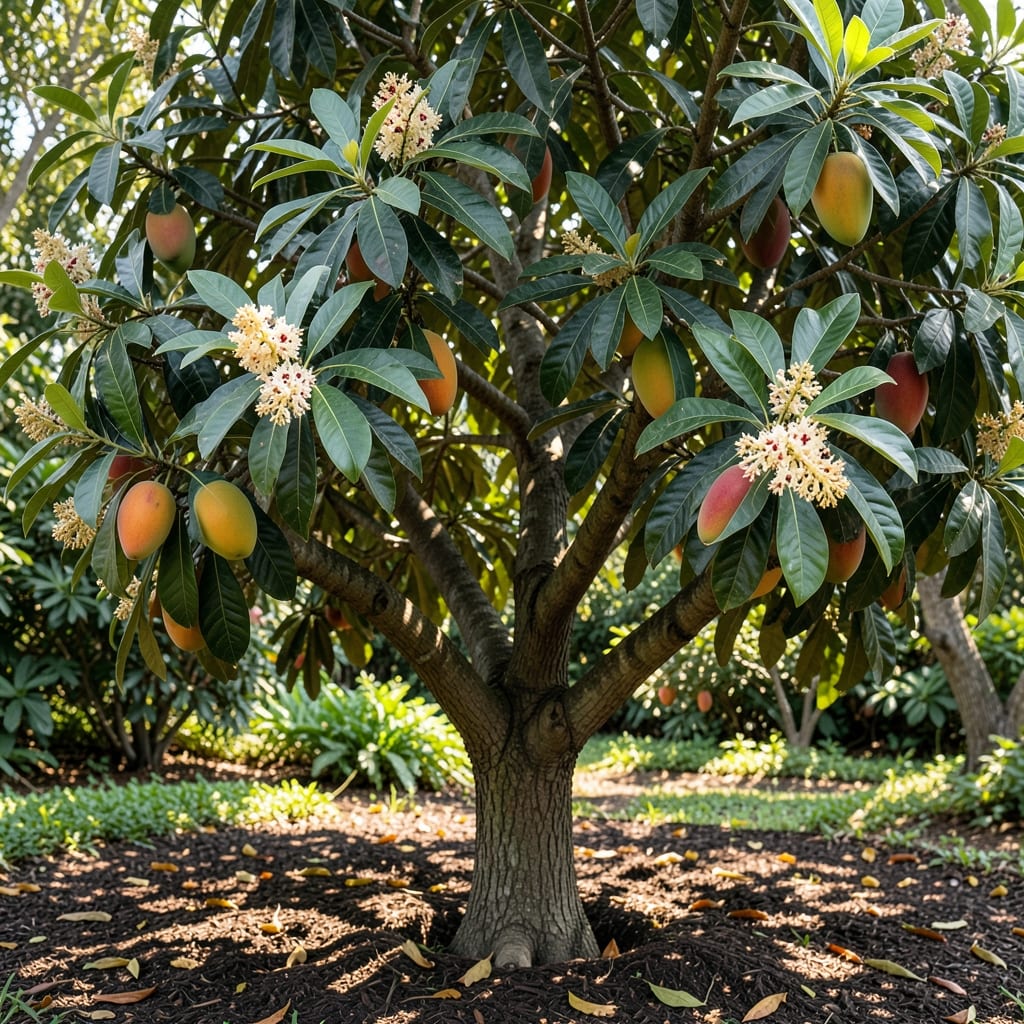
Mango tree height by variety: dwarf to giant species compared
If you're wondering how tall mango trees grow, the answer depends entirely on the variety you choose. Some mango trees can reach heights of 50-100 feet, while others stay compact enough for containers or small backyards. The key is selecting a variety that matches your space and climate. Let’s explore the range from dwarf varieties to towering jungle giants.
Standard mango trees, like the popular Haden or Valencia Pride varieties, typically grow 50-100 feet tall in ideal conditions. These giants need ample space and regular pruning to manage their size. Meanwhile, dwarf mango trees, such as Cogshall or Julie, max out at 10-20 feet, making them perfect for patios or urban gardens.
Here’s a quick comparison of how different mango varieties stack up in height:
| Variety | Mature Height | Growth Rate | Best For |
|---|---|---|---|
| Cogshall | 10-15 ft | Slow to moderate | Containers, small yards |
| Julie | 12-20 ft | Moderate | Patios, urban gardens |
| Haden | 50-80 ft | Fast | Large properties, orchards |
| Valencia Pride | 60-100 ft | Fast | Tropical climates, rural areas |
| Keitt | 40-60 ft | Moderate | Subtropical gardens |
Dwarf varieties like Cogshall or Julie are ideal if you’re limited on space. These can thrive in large containers (at least 24-inch diameter) and still produce fruit. Meanwhile, standard varieties like Haden or Valencia Pride are better suited for rural properties or tropical climates where their full height can be accommodated.
If you’re in a USDA Zone 10-11, you’ll have the best luck with taller varieties, as they thrive in warm, frost-free conditions. Even in these zones, though, pruning is essential to manage height and improve fruit production. For example, a Haden mango tree can reach 80 feet without pruning, but regular trimming keeps it at a more manageable 30-40 feet.
Another factor to consider is rootstock. Dwarf varieties are often grafted onto dwarfing rootstock, which naturally limits their height. Standard varieties, however, grow on their own roots or seedling rootstock, allowing them to reach their full potential height.
For container growing, choose Julie or Cogshall—both are well-suited to pots and can be kept pruned to 8-10 feet for easy harvesting. Just ensure your container has drainage holes and is large enough to support the tree’s root system as it grows.
No matter which variety you pick, remember that height isn’t the only factor. Fruit quality, disease resistance, and climate adaptability also play crucial roles in your choice. For example, Keitt mangoes are disease-resistant but may not thrive in cooler microclimates, while Haden varieties are more cold-tolerant but require more space.
Ready to pick the perfect mango tree for your space? Start by assessing your yard or patio size, then match it to one of these varieties. With the right care, even a 10-foot dwarf can produce 50+ pounds of fruit annually—just like its towering cousins!
Factors that determine how tall your mango tree will grow
Your mango tree’s height isn’t set in stone—it’s shaped by a mix of natural conditions and care choices. In tropical climates like USDA Zones 10-11, standard varieties can reach 50-100 feet with proper conditions, while cooler regions may limit growth to 20-30 feet. Understanding these factors helps you plan for the perfect-sized tree, whether you want a backyard giant or a patio-friendly dwarf.
Climate and location play the biggest role. Mango trees thrive in warm, frost-free zones with year-round sunshine. Even a single frost can stunt growth or kill the tree, so if you’re outside Zone 10, consider container growing or dwarf varieties like 'Cogshall' or 'Julie'. Temperature swings and humidity levels also affect growth rates—high humidity speeds up development, while dry air can slow it down.
🌱
Soil quality is another game-changer. Mango trees demand well-draining, slightly acidic soil (pH 5.5-7.0). Heavy clay or compacted soil restricts root growth, capping your tree’s height at 20-30 feet even if the variety could grow taller. Amend your soil with compost or sand to improve drainage, and avoid waterlogged areas—root rot is a silent height killer.
Your watering habits directly impact growth speed. Young trees need deep watering 2-3 times per week, while mature trees thrive on weekly deep soaks. Skimping on water slows growth, but overwatering causes root suffocation. In containers, check moisture daily—small pots dry out faster, limiting height potential. Pro tip: Mulch around the base to retain moisture and encourage deeper root systems.
Finally, pruning and container size give you control. Prune in late winter or early spring to shape the tree and remove dead branches. For height control, cut back suckers and water sprouts—these compete for nutrients. If growing in containers, upgrade pots every 2-3 years to accommodate root growth; a 30-gallon pot can support a 15-20 foot tree, while a 5-gallon pot keeps it under 10 feet.
🌿