
Shrubs
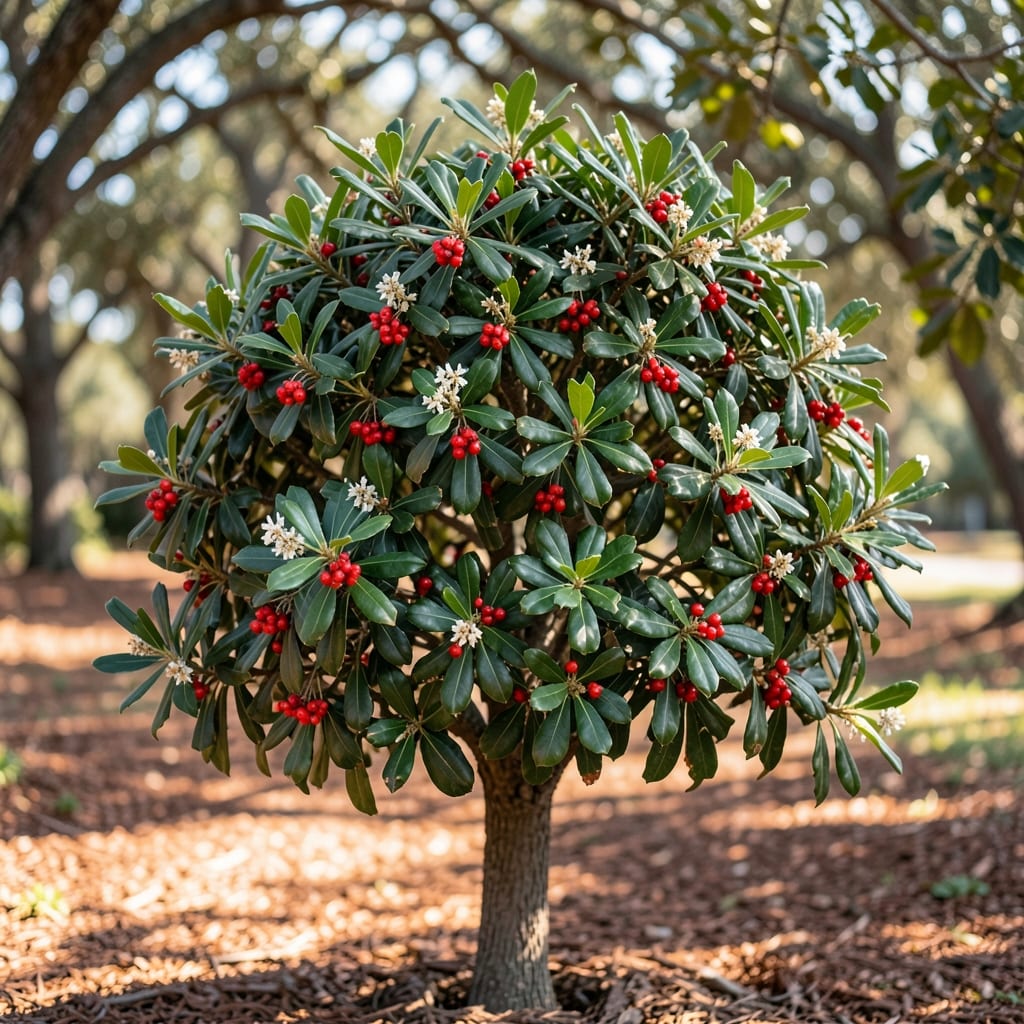
If you're wondering how tall can yaupon grow, the answer might surprise you—this native shrub 🌳 can stretch from a modest 3-foot hedge to a towering 20-foot tree, depending on where you live and how you care for it.
What makes yaupon so versatile is its adaptability. In warmer climates like Zone 7 and beyond, it naturally grows taller, while in cooler regions like Zone 6a, it stays more compact. This flexibility means you can use it for everything from privacy screens to ornamental focal points in your garden.
But here's the key: with the right pruning and cultivar selection, you can control its height to fit your space perfectly. Whether you want a low-maintenance hedge or a statement shrub, yaupon delivers—without the fuss of fast-growing invasives.
Ready to discover how to manage its growth? I'll walk you through the best practices for keeping yaupon at your ideal height, no matter your climate or garden style.


Yaupon holly height variations by region: from Dwarf to giant
Yaupon holly (Ilex vomitoria) is one of the most adaptable native shrubs in the U.S., but its mature height can vary dramatically depending on where you live. In USDA Zones 7–10, this versatile plant can transform from a 3-foot hedge to a 20-foot tree, all while thriving in your backyard. The key factors? Your local climate, soil conditions, and whether you're growing it wild or as a cultivated landscape plant.
In cooler climates (Zone 7), yaupon typically stays on the shorter side—10 to 15 feet tall—unless given ideal growing conditions. Meanwhile, in warmer zones (Zone 9–10), it can easily reach 15 to 25 feet, especially when left unpruned. Even in the same region, a wild yaupon might grow taller than one you carefully prune for a manicured look.
Here’s how yaupon’s height breaks down by region, including how to predict its growth in your garden:
| Region (USDA Zone) | Wild Growth Height | Cultivated Height (Pruned) | Climate Influence |
|---|---|---|---|
| Zone 7 (Cool) | 10–15 ft | 3–8 ft (as hedge) | Slower growth; pruning critical |
| Zone 8 (Moderate) | 12–18 ft | 5–10 ft (semi-dwarf) | Balanced growth; adaptable |
| Zone 9–10 (Warm) | 15–25 ft | 8–12 ft (standard) | Fast growth; needs pruning |
*Height ranges assume average soil and sunlight; drought or poor soil can reduce growth.
If you’re in Zone 7, expect slower growth—yaupon may take 5–7 years to reach 10 feet unless you’re growing a fast-growing cultivar like 'Schilling'. In Zones 9–10, you might see 3–5 feet of growth per year if left unpruned, making it a quick privacy screen. The good news? Even in wild conditions, yaupon rarely exceeds 25 feet, so it won’t outgrow most residential landscapes.
Another factor is sunlight exposure. Yaupon grown in full sun (6+ hours daily) will naturally grow taller and bushier than one in partial shade, where it might stay compact and leggy. For example, a yaupon in a sunny Texas garden could hit 20 feet, while the same plant in a shady North Carolina woodland might max out at 12 feet.
Soil drainage also plays a role. Yaupon hates soggy roots, so in areas with heavy clay, it may grow slower or develop root rot if not amended with compost. Amending the soil with sand or organic matter can encourage healthier, faster growth—sometimes adding 2–3 extra feet to its mature height over time.
Pro tip: If you’re planting yaupon for a privacy screen, space 3–4 feet apart for a dense hedge in Zones 7–8, or 5–6 feet apart in Zones 9–10 to prevent overcrowding as they mature. Over time, this spacing ensures each plant has room to reach its genetic height potential without competing for nutrients.
For those in cooler climates, consider dwarf cultivars like 'Nana' (3–5 feet) or 'Stokes Dwarf' (4–6 feet) if you want a low-maintenance, compact yaupon. These varieties are bred to stay small, making them perfect for foundation plantings or container gardening on patios and decks.
One common misconception is that yaupon will always grow into a large tree. In reality, 90% of cultivated yaupon stays under 12 feet when pruned regularly. The key is annual pruning in late winter to shape it and control its height before the growing season kicks in.
🌳
How to control yaupon growth: pruning and cultivar selection
If you're wondering how to keep your yaupon at a manageable height, the good news is you have full control over its growth. Unlike some fast-growing shrubs, yaupon responds beautifully to pruning—making it perfect for shaping into hedges, topiaries, or even a single-stemmed tree. The secret lies in timing and technique, which I’ll break down for you.
For most gardeners, the best time to prune yaupon is late winter or early spring, just before new growth begins. This gives you a clean slate to shape the plant while avoiding the stress of summer heat. However, light pruning can be done throughout the growing season to maintain your desired shape. Just avoid heavy pruning in late summer or fall, as this can stimulate tender new growth that won’t survive winter.
Here’s a pro tip: if you want a dwarf yaupon, look for cultivars like 'Nana' or 'Stokes Dwarf,' which typically stay between 3 and 5 feet tall. These are ideal for foundation plantings or small gardens where space is limited. For a more traditional look, the standard 'Yaupon' can reach 10 to 20 feet if left unpruned, making it a great choice for privacy screens or natural fences.
🌿 Pruning & Cultivar Pros & Cons
- Encourages bushier growth
- Prevents overcrowding
- Shapes plant for aesthetics
- Requires regular maintenance
- Can stress plant if overdone
- May reduce berry yield
- 'Nana' - 3-5 ft tall
- 'Stokes Dwarf' - 4-6 ft tall
- Low-maintenance options
- 10-20 ft tall if unpruned
- Great for privacy screens
- More berry production
When pruning, always use clean, sharp tools to avoid damaging the plant. Start by removing any dead, diseased, or crossing branches first. For a hedge, prune the outer growth to encourage dense, uniform growth. If you're shaping a single-stemmed tree, focus on removing lower branches to create a clear trunk and open canopy. Remember, yaupon can handle up to one-third of its foliage removed in a single pruning session without stress.
Spacing is another critical factor in controlling height. When planting multiple yaupon shrubs, give them at least 6 to 10 feet of space between plants if you want them to grow into a dense hedge. If you're planting them as single specimens, 10 to 15 feet of clearance will prevent overcrowding and allow them to reach their full potential without competing for resources.
One final tip: if you're growing yaupon for its berries, avoid heavy pruning in the fall. The berries develop on the current year's growth, so leaving the plant slightly wild in its later stages will give you a bountiful harvest. But don’t worry—you can still shape it in the spring without sacrificing too many berries.