
How To
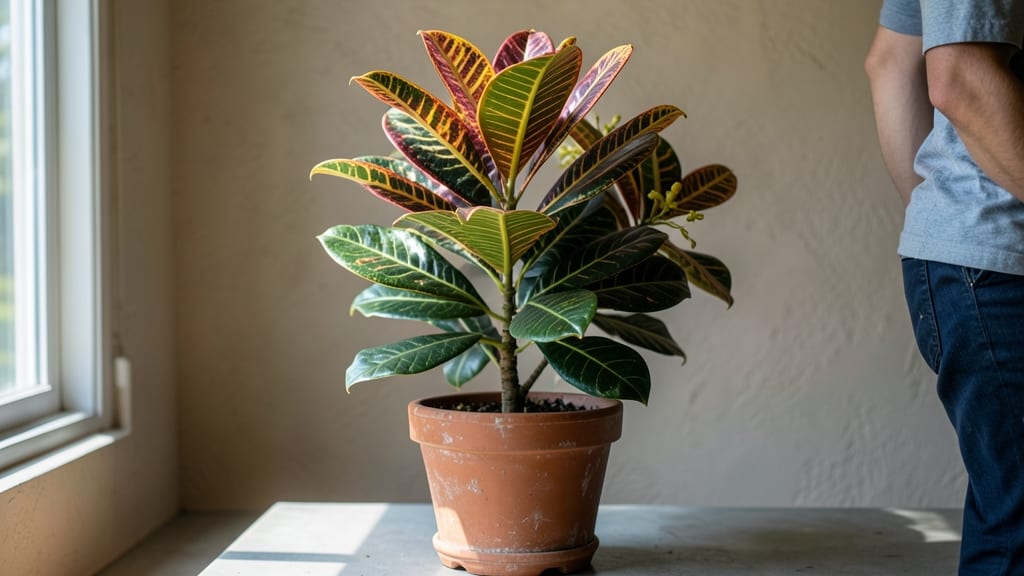
Wondering how tall do croton plants grow before they become a space hog? If you’ve ever eyed a stunning 🌿 croton in a nursery and hesitated because of its potential size, you’re not alone.
Crotons are famous for their bold, colorful foliage, but their height can vary wildly—from compact 1-foot dwarf varieties to towering 6-foot giants. The good news? With the right variety and care, you can keep your croton at just the right size for your home or garden.
In this guide, I’ll break down the height ranges of popular croton types, so you can pick the perfect fit for your space.
Whether you’re dealing with a bushy Petra or a sprawling Mammoth, you’ll learn how light, pruning, and even your pots play a role in controlling their growth.
Ready to find the ideal croton for your home? Let’s dive into the details so you can enjoy its vibrant leaves without the worry of it outgrowing your shelves—or your patience!

Croton plant height by variety: small to towering options
Croton plants (Codiaeum variegatum) are prized for their vibrant foliage and adaptability, but their mature height can vary dramatically depending on the variety. Some stay compact enough for small apartments, while others grow tall enough to rival small trees.
Understanding these differences helps you choose the perfect croton for your space and care style.
For example, the Mammoth croton can reach an impressive 6–10 feet tall in ideal outdoor conditions, making it a statement plant for large patios or tropical gardens. Meanwhile, the Petra croton remains a manageable 2–3 feet tall, perfect for desks or shelves.
These variations ensure there’s a croton for every home, from urban apartments to sprawling greenhouses.
| Variety | Mature Height | Growth Habit | Ideal Environment |
|---|---|---|---|
| Mammoth | 6–10 ft | Upright, bushy | Outdoor, full sun |
| Petra | 2–3 ft | Compact, rounded | Indoor, bright light |
| Golden Cascade | Trailing (1–2 ft) | Hanging, cascading | Indoor, hanging baskets |
| Exotica | 3–5 ft | Bushy, multi-stemmed | Indoor/outdoor, partial sun |
| Dwarf varieties | 1–2 ft | Compact, slow-growing | Indoor, low light |
If you’re growing crotons indoors, container size matters. A Mammoth croton in a 5-gallon pot will stay shorter than one planted in the ground, while dwarf varieties thrive in small pots (5–10 inches wide).
Always choose a pot with drainage holes to prevent root rot, which can stunt growth or cause leaf drop.
The Golden Cascade croton is a unique choice for hanging planters, where its trailing stems create a stunning waterfall effect. This variety typically grows 1–2 feet long but can spread wider if given enough space. Its vibrant yellow and orange leaves make it a showstopper in any room.
For outdoor growers, light exposure directly impacts height. Crotons in full sun (6+ hours daily) grow taller and bushier, while those in partial shade may stay shorter but produce less vibrant foliage.
If you’re in a cooler climate (USDA Zone 9–11), consider overwintering potted crotons indoors to protect them from frost damage.
Color variations also hint at growth potential. Deep red or purple crotons often grow slower and stay more compact, while bright yellow or orange varieties tend to be faster-growing and taller. This isn’t a hard rule, but it’s a useful guideline when selecting plants at the nursery.
Pro tip: Check the leaf size when shopping. Larger leaves often indicate a faster-growing, taller variety, while smaller leaves suggest a dwarf or slow-growing type. Always ask the nursery staff about the specific variety’s growth habits before purchasing.
Whether you want a tall statement plant or a compact desk companion, choosing the right croton variety ensures your space stays balanced and your plant thrives. Next, we’ll explore how to control height through pruning and care—even for the fastest-growing types!
Factors that influence croton plant growth height
Your croton plant’s height isn’t set in stone—it’s shaped by the care you provide. Light exposure, pruning habits, and even container size play starring roles in whether your plant stays compact or stretches toward the ceiling.
Understanding these factors helps you guide growth to fit your space, whether that’s a sunny windowsill or a cozy corner shelf.
Light exposure is the biggest height influencer. Crotons crave bright, indirect sunlight (think south-facing windows). Too little light? Your plant will stretch dramatically, reaching for rays—a condition called etiolation. Too much direct sun? Leaves may scorch, but growth stays bushy. Balance is key for controlled height and vibrant foliage.
Next up: pruning. Regular trims encourage bushier growth instead of a single tall stem. Pinch back new growth in early spring to promote side shoots, keeping your croton full and manageable.
Without pruning, some varieties (like 'Mammoth') can shoot up to 10 feet indoors—way beyond most homes’ ceilings!
Container size also matters. Root-bound crotons grow faster vertically, searching for space. If your plant’s roots circle the pot, it’s time to upgrade containers or prune to slow height spikes. A slightly larger pot (just 1–2 inches wider) gives roots room to spread, promoting wider growth instead of upward.
Don’t overlook watering and humidity. While crotons tolerate brief dry spells, underwatering stresses the plant, stunting growth. Keep soil evenly moist (but not soggy) to support steady, healthy expansion. Low humidity? Your croton may grow slower or develop crispy leaf edges—neither ideal for optimal height control.
Finally, fertilizer fuels growth. A balanced 10-10-10 feed every 4–6 weeks in spring and summer encourages vigorous foliage, but overfeeding can lead to leggy, weak stems.
Reduce feeding in fall and winter when growth naturally slows. Think of fertilizer as a growth accelerator—use it wisely to steer your croton’s size.
🌱 Pro Tip: Want a mini croton? Combine pruning, bright light, and smaller pots for a compact 1–2 foot plant. Need a tall statement piece? Skip pruning, give it full sun, and let it reach its natural 6–10 foot potential.
🌿 Key Takeaway: Control Croton Height with These 3 Levers
- Light: Bright indirect = bushy growth; low light = tall, leggy stems.
- Pruning: Trim tips to encourage width; skip trims for vertical growth.
- Container: Tight pot = slower height; large pot = faster (but wider) growth.
💡 Remember: Crotons reward consistent care with controlled, vibrant growth.
By tweaking these factors, you’ll master the art of croton height control—whether you’re aiming for a tiny tabletop treasure or a room-filling centerpiece. Start with light and pruning, then adjust containers and feeding to fine-tune the results. Your croton’s size is entirely in your hands!