
Trees
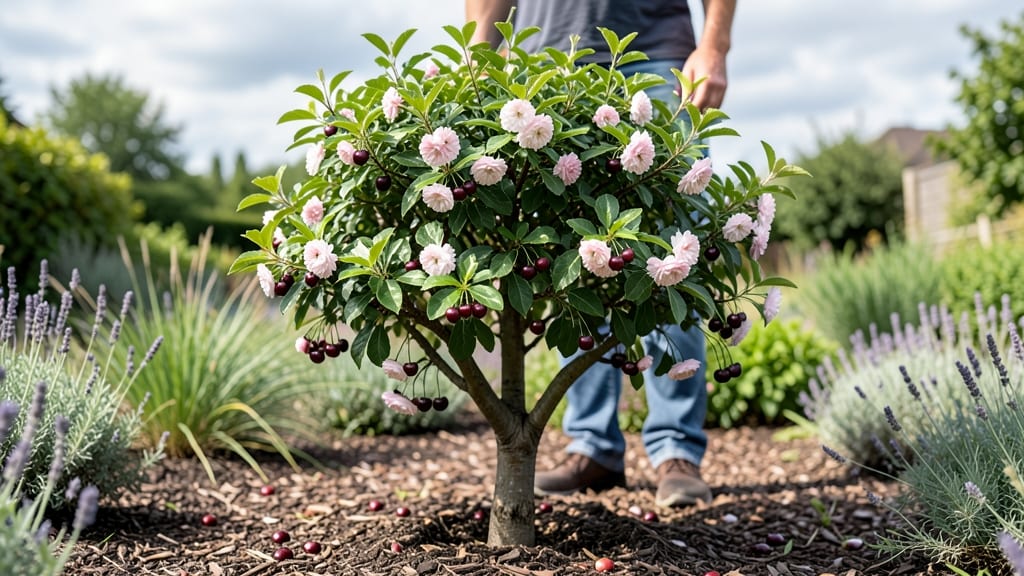
If you're dreaming of a backyard filled with sweet, juicy cherries but don't have room for a towering tree, you're in luck—dwarf cherry trees grow just 6 to 12 feet tall, making them perfect for small spaces.
These compact varieties pack all the flavor of their larger cousins without taking up your entire lawn. But here’s the catch: spacing them correctly is key to keeping them healthy and productive.
Whether you're eyeing the popular 'Stella' or 'Compact Stella' varieties, understanding their mature height and growth habits will help you plan your garden like a pro.
I’ll walk you through the exact spacing rules, how to prune for optimal growth, and even common mistakes that could stunt their size—so you can enjoy a bountiful harvest every year.
Ready to transform your backyard into a cherry-filled paradise without sacrificing space? Let’s dive into the height charts, planting tips, and care secrets that will keep your 🍒 dwarf cherry tree thriving for years to come.
From choosing the right variety for your climate to avoiding overcrowding, you’ll learn everything you need to know to maximize your tree’s potential—so you can finally enjoy fresh cherries without the hassle of a massive yard.

Dwarf cherry tree height guide: variety-specific growth charts
If you're envisioning dwarf cherry trees in your backyard, knowing their mature height is crucial for planning. These compact trees typically reach 6 to 12 feet at maturity, but the exact height depends on the variety.
Some, like the 'Compact Stella', stay under 8 feet, while others like 'Stella' can reach the upper range. Understanding these differences helps you choose the perfect fit for your space and harvest goals.
Dwarf cherry trees are a scaled-down version of their standard counterparts, which can tower up to 20-30 feet. Their smaller stature makes them ideal for urban gardens, patios, or small yards, but their growth habits still require thoughtful planning.
For example, a 6-foot tree needs just as much care as a 12-foot one—just in a tighter space. Let’s explore the most popular varieties and their growth characteristics.
| Variety | Mature Height (ft) | Spread (ft) | Growth Rate | Climate Zone |
|---|---|---|---|---|
| Stella | 8-12 | 6-8 | Moderate | USDA 5-8 |
| Compact Stella | 6-8 | 5-6 | Slow | USDA 5-8 |
| Black Tartarian | 6-10 | 6-8 | Moderate | USDA 5-8 |
| Montmorency | 8-12 | 6-8 | Fast | USDA 4-7 |
| Lapins | 6-10 | 5-7 | Slow | USDA 5-9 |
The 'Stella' and 'Montmorency' varieties are popular choices for their sweet and tart flavors, respectively, but they require more space than their compact counterparts. If you're working with limited space, the 'Compact Stella' or 'Lapins' are excellent options, staying under 8 feet tall.
These varieties also tend to have a slower growth rate, making them easier to manage in containers or small gardens.
When selecting a dwarf cherry tree, consider not just height but also spread. A tree with a 6-foot spread needs just as much horizontal space as vertical.
For example, planting a 'Stella' too close to a fence or another tree can lead to overcrowding, poor airflow, and disease. Always check the spread measurements to ensure your tree has room to thrive without competing for resources.
Another key factor is growth rate. Faster-growing varieties like 'Montmorency' may reach their mature height in 3-5 years, while slower growers like 'Compact Stella' take 5-7 years.
This affects how quickly you’ll enjoy your harvest and how much pruning and maintenance you’ll need to manage in the early years. For instance, a fast-growing tree may require more aggressive pruning to control its size and shape.
Climate also plays a role in how tall your dwarf cherry tree grows. Most varieties thrive in USDA zones 5-8, but some, like 'Montmorency', tolerate cooler zones (USDA 4-7).
If you live in a warmer climate, you might see slightly faster growth, while colder regions could slow it down. Always check the hardiness zone for your specific variety to ensure it will thrive in your area.
For container growing, choose varieties like 'Compact Stella' or 'Lapins', which handle root restriction better. Use a large pot (at least 1
Proper spacing and planting tips to maximize dwarf cherry tree growth
Dwarf cherry trees thrive when planted with the right spacing—too close, and they’ll compete for nutrients; too far, and you’ll miss out on cross-pollination for sweet varieties. Aim for 12–15 feet between trees in rows, with 8–10 feet between rows to ensure airflow and sunlight reach the center.
This spacing also makes pruning and harvesting easier while reducing fungal risks like brown rot.
For container growing, choose large pots (at least 15–20 gallons) with drainage holes. Place containers 6–8 feet apart to mimic in-ground spacing. Use a well-draining potting mix with added compost to prevent root rot. Containers dry out faster, so monitor soil moisture closely during summer months.