
How To
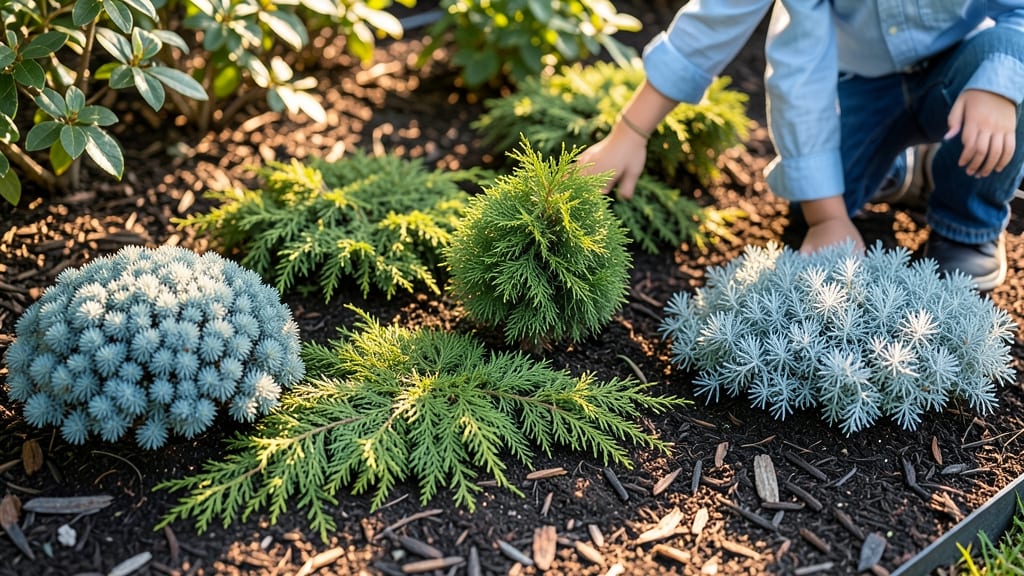
If you’re dreaming of adding a lush, evergreen focal point to your garden but are working with limited space, the first question you need to answer is how tall do dwarf conifers grow.
These compact trees can range from just a few feet to nearly 10 feet tall, depending on the variety, and choosing the right one makes all the difference in creating a balanced, low-maintenance landscape.
Whether you’re designing a cozy container garden for your balcony or planning a layered border in your backyard, understanding how tall these 🌲 dwarf conifers grow will help you avoid overcrowding and maximize your outdoor space.
Some varieties stay as short as 3 feet, perfect for small pots, while others reach 6 feet or more—ideal for adding height without overwhelming your design.
In this guide, I’ll break down the height ranges of popular dwarf conifer species, share tips for selecting the right fit for your space, and even explain how to keep them at your desired size with simple care techniques. Let’s get started!
From the slow-growing Picea pungens 'Glauca Globosa' to the bushy Chamaecyparis lawsoniana 'Ellwoodii', you’ll discover which varieties thrive in USDA Zone 6a and how to plant them in spring for the best results. Ready to transform your space with these versatile, low-maintenance trees?

Dwarf conifer height ranges by species: what to expect at maturity
When planning your garden, understanding the mature height of dwarf conifers is crucial—these trees can range from as short as 2 feet to over 6 feet depending on the variety.
Unlike their full-sized counterparts, dwarf conifers grow slowly, making them ideal for small spaces, containers, or as focal points in tight landscapes. But not all dwarf conifers are created equal; some stay compact forever, while others stretch taller over time.
For example, the Picea pungens 'Glauca Globosa', also known as the Colorado Blue Globe, is a classic dwarf conifer that typically reaches 3 to 5 feet at maturity. Its slow growth rate—about 6 inches per year—makes it perfect for containers or as a centerpiece in a small garden.
Meanwhile, varieties like Chamaecyparis lawsoniana 'Ellwoodii' can grow up to 6 feet tall but maintain a narrow, columnar shape, saving space horizontally.
Here’s the key: height isn’t the only factor—spread matters too. Some dwarf conifers, like Juniperus squamata 'Blue Rug', stay under 2 feet tall but spread 4 to 6 feet wide, making them ideal for ground cover or cascading over edges.
Others, like Thuja occidentalis 'Little Champion', grow 3 to 4 feet tall and wide, offering a balanced, bushy shape perfect for hedges or privacy screens in compact areas.
If you’re working with container gardening, prioritize varieties that stay under 3 feet tall and have a slow growth rate. These include Pinus mugo 'Mops' (2–3 feet) or Chamaecyparis pisifera 'Squarrosa' (3–4 feet).
Always check the mature size label when purchasing, as nurseries sometimes use misleading terms like "miniature" for slightly larger varieties.
If you’re unsure which dwarf conifer fits your space, consider the growth habit alongside height. For instance, prostrate varieties like Juniperus horizontalis 'Blue Rug' sprawl horizontally, making them perfect for slopes or rocky gardens where vertical space is limited.
In contrast, columnar types like Chamaecyparis nootkatensis 'Pendula' (3–5 feet tall) add vertical interest without taking up much room.
One common mistake is assuming all dwarf conifers stay under 2 feet. While some varieties like Picea glauca 'Conica' (the "Dwarf Alberta Spruce") max out at 4 feet tall, others can easily reach 6 feet or more if given ideal conditions.
Always research the specific cultivar you’re interested in, as even slight differences in naming can indicate significant size variations.
For urban balconies or rooftop gardens, opt for varieties that thrive in containers and stay under 3 feet tall. These include Picea pungens '
How to choose the right dwarf conifer for your space: height vs. spread
Selecting the perfect dwarf conifer for your space isn’t just about height—it’s about balancing height vs. spread to create a harmonious design. For example, a 3-foot-tall conifer with a 6-foot spread (like Juniperus horizontalis 'Blue Rug') will look very different in a container than in a ground cover role.
Start by measuring your space and sketching a rough layout to visualize how each variety will fit.
If you’re working with vertical space constraints, prioritize columnar or upright varieties like Chamaecyparis lawsoniana 'Ellwoodii' (4–6 feet tall, 2–3 feet wide). These are ideal for narrow gardens or as privacy screens along fences.
For horizontal spaces, like slopes or rocky areas, choose prostrate or sprawling varieties such as Pinus mugo 'Mops', which stays under 3 feet tall but spreads 3–4 feet wide.
✅ DO This When Choosing Dwarf Conifers
- Match height to your space’s vertical clearance (e.g., under windows or eaves).
- Pair tall and short varieties for layered landscapes (e.g., Picea pungens 'Glauca Globosa' behind Juniperus squamata 'Blue Rug').
- Check growth rates—slow growers (like Picea glauca 'Conica') are better for containers.
- Consider mature spread—even "dwarf" conifers can sprawl widely (e.g., Thuja occidentalis 'Little Champion').
❌ DON’T Make These Mistakes
- Assume "dwarf" means under 2 feet—many reach 4–6 feet tall.
- Ignore spread—some varieties (like Juniperus horizontalis) can dominate ground space.
- Plant too close to structures—leave 1–2 feet of clearance for airflow and maintenance.
- Skip container checks—even dwarf conifers can outgrow pots if not pruned.
For urban balconies or rooftop gardens, focus on container-friendly varieties like Picea pungens 'Glauca Globosa' or Chamaecyparis pisifera 'Squarrosa', which thrive in 15–20 gallon pots and stay under 4 feet tall. Use pots with drainage holes and a well-draining soil mix to prevent root rot.
If you’re planting in ground beds, group conifers by height—tallest in back, shortest in front—to create depth and visual interest.
One pro tip: Calculate growth projections over 5–10 years. Even slow-growing conifers can add 6–12 inches per year, so plan accordingly. For instance, a 3-foot-tall conifer might reach 5 feet in a decade—always leave room for growth!
Also, consider seasonal interest: some varieties (like Pinus mugo) have striking winter foliage, while others (like Chamaecyparis) offer year-round color.
Finally, don’t overlook microclimate factors. Dwarf conifers in full sun (6+ hours daily) may grow slightly faster than those in partial shade. If your space is shady, opt for shade-tolerant varieties like Thuja occidentalis 'Woodwardii', which stays compact (3–4 feet tall) even with less light.
With the right choices, your dwarf conifers will thrive for decades with minimal care!