
How To
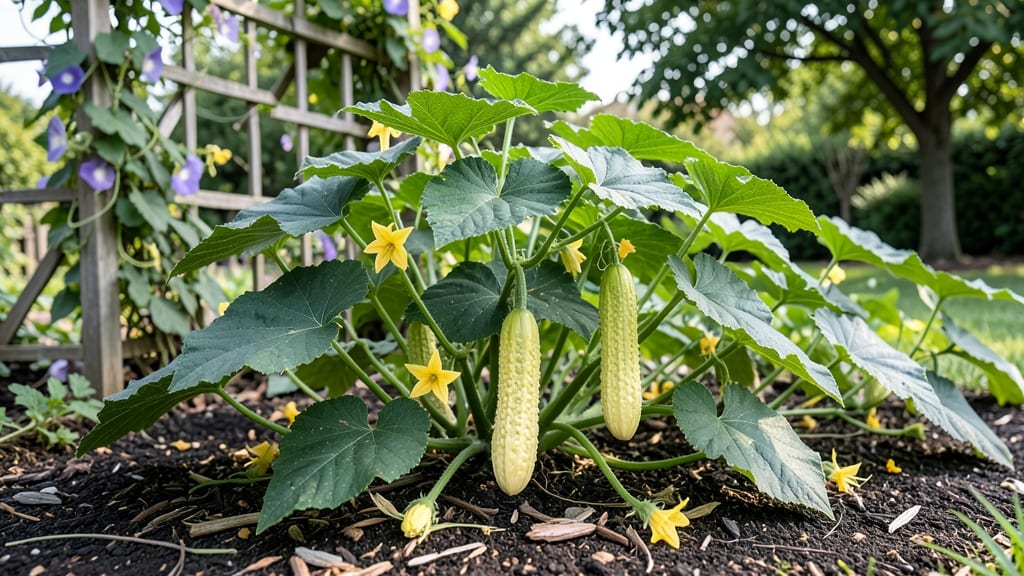
If you're wondering how tall lemon cucumbers grow, you're in for a surprise—these zesty little gems can climb up to 10 feet if given the right support! Unlike their round cousins, lemon cucumbers (🥒) thrive as vigorous vines, making trellises or sturdy cages a game-changer for your garden layout.
But here's the catch: without proper vertical support, those sprawling vines can take over your garden bed, leaving less space for other plants—or worse, fewer cucumbers for you.
The key to maximizing your harvest lies in understanding whether your variety is a bush type (shorter) or a vining type (taller), and how to train them for optimal growth.
In this guide, I’ll break down the science behind lemon cucumber height—from trellis vs. cage setups to spacing secrets that keep your plants happy and productive. Whether you're a beginner or a seasoned gardener, you’ll learn how to give these tangy cucumbers the room they need to shine.
Ready to transform tangled vines into a neat, high-yielding garden feature? Let’s get growing!

Lemon cucumber growth height: trellis vs cage differences explained
Lemon cucumbers (Cucumis melo var. conomon) are notorious climbers, often reaching 6 to 10 feet when given proper support. Unlike their bushy cousins, these vines thrive when trained vertically, but your choice of support—trellis vs. cage—drastically alters their growth pattern, yield, and even fruit quality.
Let’s break down the key differences so you can plan your garden layout like a pro.
When using a trellis system, lemon cucumbers grow taller and straighter, often exceeding 8 feet in ideal conditions. The vines climb upward, maximizing vertical space while improving airflow and reducing disease risk.
In contrast, a cage or bush support limits height to 3 to 6 feet, encouraging a more compact, sprawling growth habit. This can work for small gardens but may sacrifice yield and fruit size.
Why does support matter? Lemon cucumbers are indeterminate vines, meaning they grow continuously throughout the season. Without proper support, vines sprawl across the ground, competing with weeds, attracting pests, and producing smaller, less flavorful fruits. A well-structured trellis or cage directs their energy upward, where it belongs—toward bigger, sweeter cucumbers.
Here’s the game-changer: trellised lemon cucumbers produce 20-30% more fruit than caged or unsupported plants. The vertical growth also makes harvesting easier and keeps fruits cleaner. Plus, trellising reduces soil-borne diseases by keeping foliage off the ground.
If you’re short on space, a 6-foot trellis is your best bet for a high-yield, low-maintenance harvest.
If you’re growing lemon cucumbers in containers or small spaces, a 5-foot trellis is ideal. For ground gardens, aim for 8 feet to maximize production. Pro tip: Use galvanized wire or bamboo stakes for trellises—they’re sturdy and rust-resistant.
Avoid plastic, which can degrade in sunlight and fail under the weight of heavy vines.
Another critical factor is pruning. Lemon cucumbers benefit from regular pruning to remove excess foliage and encourage upward growth. Pinch off side shoots that form below the first 3 leaves to direct energy to the main vine.
This keeps the plant focused on climbing and fruiting rather than sprawling. For cages, prune less aggressively to maintain a bushier habit.
Climate plays a role too. In hot, humid regions, taller trellises improve airflow and reduce fungal diseases like powdery mildew. In cooler climates, a slightly shorter trellis (6 feet) may suffice, as growth slows.
Always monitor your plants and adjust support as they grow—lemon cucumbers grow fast, and a 6-foot vine can become 10 feet in just a few weeks!
For the best results, combine your trellis or cage with mulch to retain moisture and suppress weeds. This keeps the soil healthy and reduces competition for nutrients, helping your lemon cucumbers reach their full height and flavor potential.
With the right support, you’ll be harvesting bright, tangy cucumbers all season long.
Ready to get started? Grab a trellis kit or repurpose materials like chicken wire or old fencing—just ensure it’s at least 6 feet tall for optimal growth. Your lemon cucumbers will thank you with a bountiful harvest!
Lemon cucumber growth height: trellis vs cage differences explained
Lemon cucumbers (Cucumis melo var. conomon) are vigorous climbers that can reach 6 to 10 feet tall when given proper support. Unlike bush varieties, they thrive when trained vertically, producing more fruit and better air circulation.
Without support, vines sprawl, leading to tangled growth and lower yields. Understanding whether to use a trellis or cage is key to managing their height effectively.
The choice between a trellis and cage directly impacts how tall your lemon cucumbers grow. A trellis system encourages upward growth, often pushing vines to their maximum height of 10 feet, while a cage or stake can limit height to 5 to 8 feet if pruned regularly.
Both methods have pros and cons, depending on your garden layout and goals.
| Support Type | Height Range | Fruit Yield | Space Efficiency | Maintenance |
|---|---|---|---|---|
| Trellis | 6–10 ft | High (vertical growth) | Very efficient (saves ground space) | Moderate (requires pruning) |
| Cage/Stake | 3–8 ft | Moderate (limited by structure) | Moderate (occupies ground space) | Low (minimal pruning) |
A trellis is ideal if you want to maximize height and yield, especially in small gardens. For example, a 6-foot trellis will support vines reaching their full potential, while a 4-foot cage will keep growth more compact.
If you’re growing in containers, opt for a 5-foot stake to control height without sacrificing fruit production.
Climate also plays a role in height. In warmer regions (Zones 8-10), lemon cucumbers may grow taller due to longer growing seasons, while in cooler climates (Zones 4-6), vines may stay shorter unless given extra warmth.
Always plant after the last frost and use black plastic mulch to extend the season and encourage upward growth.
Pruning is another tool to manage height. Pinch off side shoots to direct energy upward, keeping vines focused on climbing. For cages, prune aggressively to prevent overgrowth, while trellises benefit from regular training to guide vines along the structure.
This not only controls height but also improves air flow, reducing disease risk.
For best results, combine support with consistent watering and fertilizing. Lemon cucumbers need 1-2 inches of water weekly and a balanced fertilizer every 4-6 weeks to fuel their rapid growth.
With the right care, you’ll enjoy a bountiful harvest of 3-6 inch lemon cucumbers while keeping vines at your desired height.