
Plants
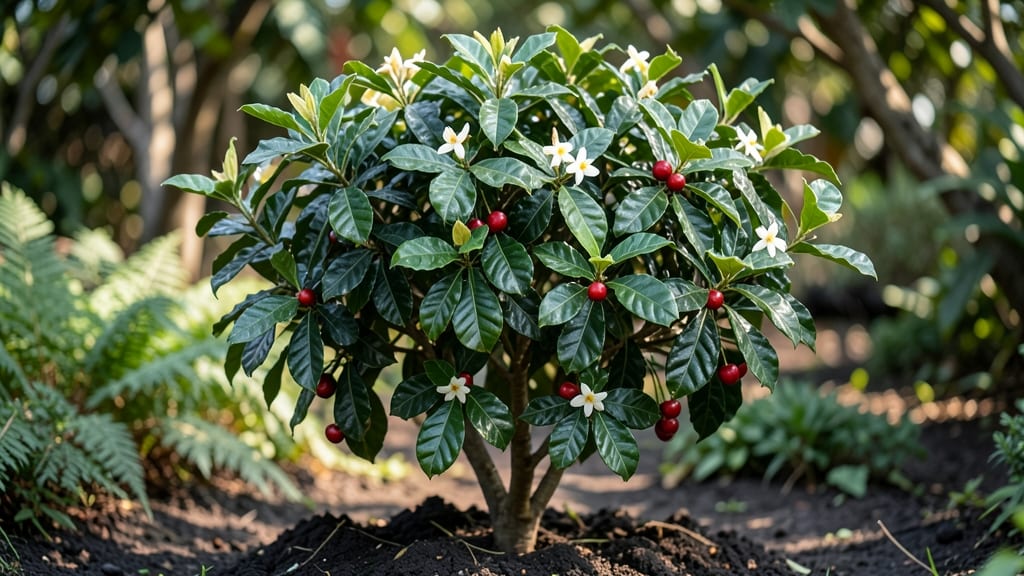
Coffee plant height by variety: Arabica vs Robusta and dwarf options
If you're planning to grow coffee plants at home, understanding their mature height is crucial for space planning. Coffee plants can range from compact shrubs to towering trees, depending on the variety. Arabica and Robusta are the most common types, but their growth habits differ significantly.
Let's explore their heights and how they compare to other plants you might grow.
Most coffee plants reach their full height within 3-5 years, but some varieties can continue growing taller for decades. For example, a Bourbon Arabica might reach 20-30 feet in ideal conditions, while a Patio Arabica stays under 6 feet.
Choosing the right variety ensures your coffee plants fit your garden or container setup perfectly.
| Variety | Mature Height | Growth Rate | Best For |
|---|---|---|---|
| Arabica (Standard) | 15-30 ft | Slow to moderate | Large gardens, farms |
| Robusta | 20-35 ft | Moderate to fast | Tropical climates, high-yield farms |
| Patio Arabica (Dwarf) | 4-6 ft | Slow | Containers, balconies, small spaces |
| Caturra (Semi-Dwarf) | 8-12 ft | Moderate | Home gardens, urban farms |
| Bourbon | 15-25 ft | Moderate | Shade-grown coffee farms |
For context, a Patio Arabica stays about as tall as a standard basketball hoop (10 feet), while a Robusta can rival a two-story house (25-35 feet).
If you're growing coffee in containers, dwarf varieties like Patio Arabica or Caturra are ideal, as they thrive in 5-gallon pots or larger.
Standard varieties like Bourbon Arabica or Typica need ample space, so they're better suited for rural gardens or farms. If you're in an urban setting, consider dwarf varieties or prune standard types to keep them manageable. Always check the specific variety's growth habits before planting.
Another factor to consider is the canopy spread. While height is critical, coffee plants also spread outward. A mature Arabica can have a spread of 10-15 feet, while dwarf varieties stay compact at 3-5 feet.
This spread affects how many plants you can fit in a given space.
If you're growing coffee in containers, choose a variety that fits your pot size. For example, a 5-gallon pot can comfortably hold a Patio Arabica for several years, while a 15-gallon pot might accommodate a Caturra for a longer period.
Always ensure your container has drainage holes to prevent root rot.
For those in cooler climates (like USDA zones 9-10), dwarf varieties are often the only feasible option. They're more cold-tolerant and can be grown in greenhouses or moved indoors during winter. Even in warmer zones, dwarf varieties require less maintenance and are perfect for small spaces.
When selecting a variety, also consider your harvest goals. Dwarf varieties produce smaller yields but are ideal for home use. Standard varieties yield more but need more space and care. If you're growing coffee for personal consumption, a Patio Arabica might be perfect—it's manageable and productive.
Finally, remember that pruning can influence height. Even standard varieties can be kept smaller with regular pruning. This is especially useful if you're growing coffee in a small garden or urban setting. We'll cover pruning techniques in the next section to help you manage your coffee plant's size effectively.
Whether you're a backyard gardener or a small-scale farmer, choosing the right coffee variety ensures your plants thrive while fitting your space. Start with a dwarf variety if you're new to coffee growing, and expand to larger varieties as you gain experience. ☕🌿
How to control coffee plant height naturally: pruning and care tips
Managing your coffee plant’s height starts with understanding its natural growth habits. Without intervention, Arabica varieties can reach 15-30 feet, while Robusta plants may grow slightly taller. But don’t worry—with the right techniques, you can keep your coffee plants at a manageable size, even in small spaces.
The key lies in pruning strategies and seasonal care tailored to your climate and garden layout.
For container gardening, dwarf varieties like Patio Arabica or Caturra stay between 6-10 feet, making them perfect for balconies or patios. Even with these compact options, regular pruning ensures they stay bushy and productive.
Start by removing dead or overcrowded branches in early spring, before new growth begins. This encourages airflow and sunlight penetration, which reduces disease risk and boosts fruit production.
Spacing plays a crucial role in height control. In-ground coffee plants need 8-10 feet of space between each plant to thrive, while container-grown plants should have at least 3-5 feet of clearance on all sides.
Overcrowding forces plants to compete for nutrients and sunlight, leading to stunted growth and weaker branches. If you’re growing multiple plants, consider a trellis or espalier system to train them vertically, saving space while keeping them at a manageable height.
Seasonal care is another game-changer. During the dry season, reduce watering slightly to slow growth and encourage root development rather than rapid shoot expansion. In contrast, fertilize lightly during the wet season to support flowering and fruiting.
A balanced 10-10-10 NPK fertilizer applied every 6-8 weeks provides the nutrients needed for healthy growth without promoting excessive height.
If your coffee plant is already too tall, don’t panic—gradual pruning over time can reshape it safely. Focus on removing the top third of the plant in stages, allowing new branches to fill in the gaps.
For dramatic height reduction, prune in late winter or early spring, just before the growing season kicks off. This gives the plant time to recover and produce new growth before the heat of summer.
Finally, remember that patience is key. Coffee plants grow slowly, especially in cooler climates. With consistent care—pruning, proper spacing, and seasonal adjustments—you can enjoy a coffee plant that fits your space while still yielding delicious beans.
Whether you’re aiming for a 6-foot patio plant or a 15-foot backyard shrub, these tips will help you achieve the perfect height for your garden.