
How To
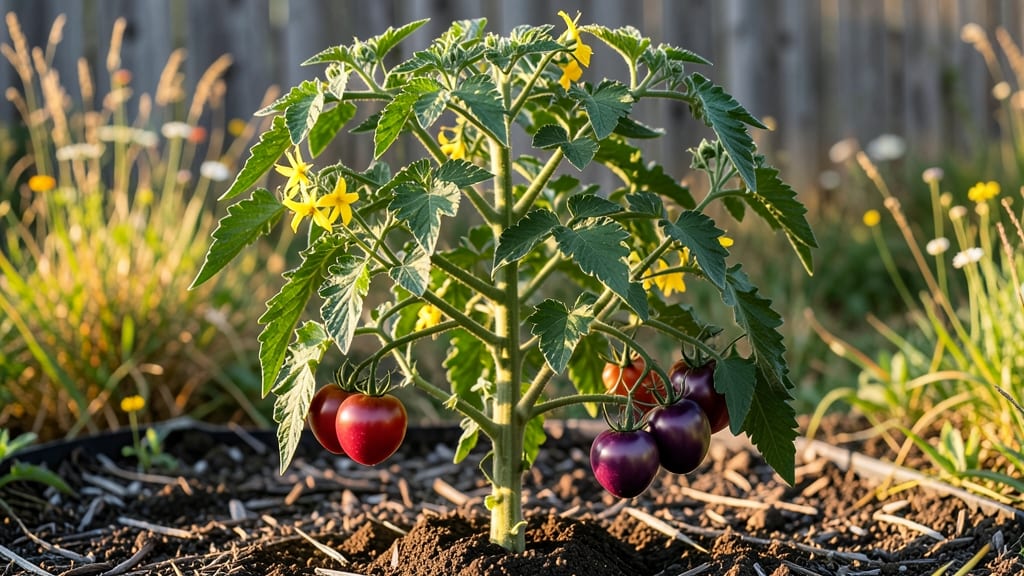
If you're wondering how tall Cherokee Purple tomatoes grow, the answer might surprise you—these 🍅 powerhouses can reach heights of 6 to 10 feet when left unchecked, making them a prime candidate for vertical gardening in zones like 6a.
But don’t let that intimidate you! With the right support—whether a sturdy trellis or a well-built cage—you can channel that growth into upward energy, saving space and keeping your garden tidy. The key is understanding how these indeterminate vines behave and when to intervene.
In this guide, I’ll break down everything you need to know about managing Cherokee Purple’s height, from spacing tips to pruning tricks that won’t sacrifice those prized purple fruits.
Whether you’re working with limited square footage or just love a neat garden layout, you’ll learn how to harness this variety’s potential without the chaos.
Ready to turn those sprawling vines into a vertical masterpiece? Let’s dive into the secrets of cultivating Cherokee Purple tomatoes—tall, productive, and picture-perfect—no matter your garden setup.

Cherokee Purple tomato height: vine growth patterns and space requirements
The Cherokee Purple tomato is a heirloom favorite known for its rich, smoky flavor and striking deep-purple hue—but its indeterminate growth habit means it won’t stop climbing unless you guide it.
Unlike determinate varieties that bush out and stop at 3-4 feet, Cherokee Purple vines can reach 6 to 10 feet tall (or even taller in ideal conditions), making them perfect for vertical gardening or sprawling trellises.
If you’re planning your garden layout, remember: these vines need space to stretch or support to contain them. Without intervention, they’ll sprawl across your garden bed like a wild vine, competing with nearby plants for sunlight and nutrients.
But with the right pruning and training, you can keep them manageable while maximizing your harvest of those juicy, meaty tomatoes.
Here’s the key detail: Cherokee Purple’s mature height depends on three factors—growing conditions, pruning habits, and regional climate.
In warm, sunny climates like USDA Zones 8-10, vines can easily hit 8-10 feet, while cooler zones (like Zone 6) may see 4-6 feet due to slower growth.
Even within the same zone, a vine trained on a 10-foot trellis will behave differently than one left to sprawl in a 5-foot cage.
🌱 Did You Know? Cherokee Purple’s height isn’t just about space—it’s also tied to fruit production. Taller vines often produce more tomatoes over a longer season, but they require consistent care to avoid disease and breakage from heavy fruit loads.
| Factor | Impact on Height | Actionable Tip |
|---|---|---|
| Growing Method | Trellis: 6-10 ft | Cage: 4-6 ft | No support: 3-5 ft | Use a 6-8 ft trellis for vertical growth or a 5 ft cage for bushier control. |
| Pruning Frequency | Light pruning: 8-10 ft | Heavy pruning: 4-6 ft | Pinch suckers weekly to limit height or let them grow for maximum yield. |
| Climate Zone | Zone 6: 4-6 ft | Zone 8-10: 8-10 ft | In cooler zones, extend the season with row covers to boost vine growth. |
| Sunlight Exposure | Full sun (6-8 hrs): 6-10 ft | Partial shade: 3-5 ft | Ensure 6+ hours of direct sun daily to avoid stunted growth. |
| Soil Fertility | Rich soil: 8-10 ft | Poor soil: 3-5 ft | Amend soil with compost and balanced fertilizer (10-10-10) for optimal growth. |
If you’re new to growing Cherokee Purple tomatoes, start by estimating your vine’s potential height based on your local climate.
For example, in Southern California (Zone 10), I’ve seen vines climb 12 feet on a sturdy trellis, while in Upstate New York (Zone 5), they rarely exceed 5 feet without extra care.
Always plant near a support structure—even if you plan to prune heavily—to avoid damaging the plant later.
Another pro tip: Monitor vine growth in early summer. If your Cherokee Purple starts outpacing your trellis, it’s time to prune aggressively or add a taller support.
The goal is to balance height control with fruit production—too much pruning can reduce yield, while too little leads to overcrowded, disease-prone vines.
For container gardening, Cherokee Purple can still thrive—but expect shorter vines (3-5 feet) due to limited root space. Use a large pot (15+ gallons) and a compact trellis to support the plant. In containers, watering consistency becomes even more critical, as roots dry out faster.
Finally, don’t forget that Cherokee Purple’s height isn’t just about aesthetics—it’s about harvest efficiency. Taller vines produce more tomatoes over a longer season, but they also require more maintenance.
If you’re short on time, a 5-foot cage might be your best bet, while serious gardeners will love the challenge (and reward) of a 10-foot trellis.
Ready to grow? Start by choosing your support system—whether it’s a trellis,
Cherokee Purple tomato height: vine growth patterns and space requirements
The Cherokee Purple tomato is an indeterminate variety, meaning it grows continuously throughout the season. Unlike determinate tomatoes, these vines don’t stop at a set height—they keep climbing until frost.
On average, you can expect 6 to 10 feet of vertical growth, though some vines reach 12 feet with ideal conditions. This makes them perfect for vertical gardening but requires planning for space and support.
Your Cherokee Purple’s mature height depends on three key factors: pruning habits, growing conditions, and regional climate. In cooler climates (USDA Zones 4-6), vines may max out at 6-8 feet due to shorter growing seasons.
Meanwhile, in hot, sunny climates (Zones 7-10), expect 8-12 feet if left unpruned. Even a 5-foot vine can produce 20+ pounds of fruit, so height isn’t always the best indicator of yield!
| Growth Factor | Typical Height Range | Space Needs |
|---|---|---|
| Unpruned Vine | 8–12 feet | 10+ ft ceiling height |
| Lightly Pruned | 6–8 feet | 6–8 ft trellis |
| Heavily Pruned | 4–6 feet | 4–5 ft cage |
| Container-Grown | 3–5 feet | 5-gallon pot + stake |
To estimate your Cherokee Purple’s height, start by checking your last frost date. In short-season gardens (60–70 days), vines rarely exceed 6 feet without pruning. For longer seasons (80+ days), expect 8–12 feet if you skip pruning entirely.
I’ve seen vines in Florida’s Zone 9 hit 15 feet by late summer—though they often need additional support like tomato towers or overhead trellises.
Pruning plays a huge role in controlling height. If you pinch suckers (side shoots) regularly, you’ll limit vertical growth by 30–50%. For example, a 10-foot vine pruned weekly might stay at 5–6 feet while still producing 15–20 pounds of tomatoes.
The trade-off? Fewer but larger fruit since energy focuses on fewer clusters. If you prefer bushier growth, minimal pruning keeps vines taller but wider, ideal for ground covers or large containers.
Don’t overlook soil fertility—rich, nitrogen-heavy soil fuels rapid vine growth, while balanced NPK (10-10-10) promotes fruit production over height. I’ve noticed that over-fertilizing with nitrogen can send vines skyrocketing to 12+ feet while reducing fruit set.
To balance growth, side-dress with compost every 4–6 weeks and avoid high-nitrogen feeds after flowering begins. A 5-foot vine with proper nutrients will yield just as much as an unchecked 10-footer!
For small spaces, consider container growing. A 5-gallon pot limits roots, keeping vines under 3–5 feet—perfect for balconies or patios. Use a sturdy stake or cage and prune aggressively to encourage bushier growth.
Even in pots, Cherokee Purples thrive if you water deeply twice daily in summer and rotate the pot weekly for even sunlight exposure. My container-grown Cherokee Purple hit 4.5 feet last year and produced 12 pounds of tomatoes—proof that height isn’t everything!