
How To
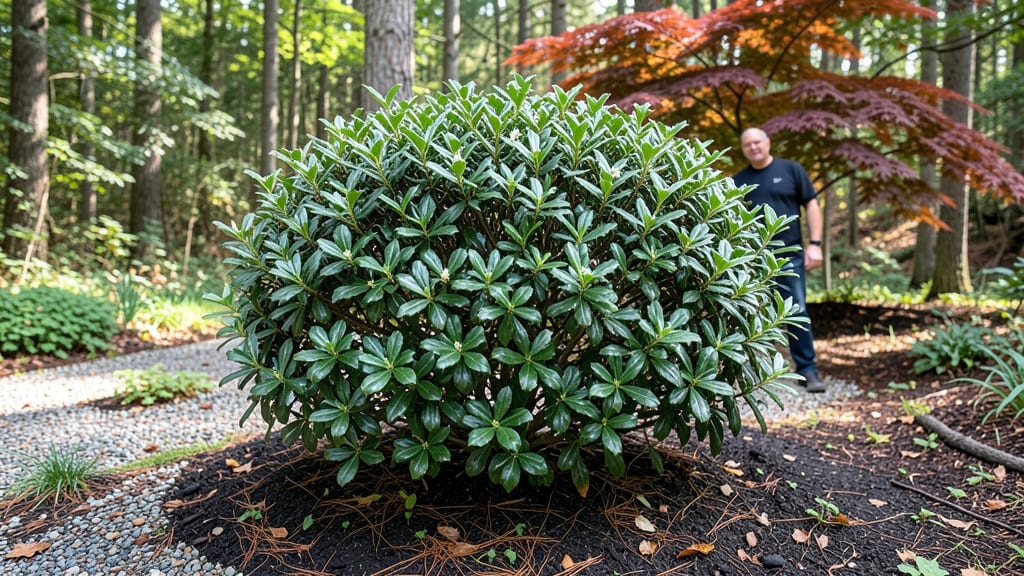
If you're wondering how tall does Japanese holly grow, the answer might surprise you—this versatile evergreen can range from a modest 2 feet to a towering 15 feet, depending on the cultivar and care you provide.
Whether you're envisioning a cozy hedge or a striking privacy screen, understanding these growth patterns is key to planning your landscape. 🌿
The secret to controlling your Japanese holly's height lies in choosing the right variety for your space. Some dwarf cultivars stay compact, perfect for small gardens, while others grow tall enough to rival a basketball hoop.
I'll break down the most popular types and how to keep them at your desired size.
Pruning plays a major role in shaping your plant's growth. With the right techniques, you can encourage bushier growth or maintain a tidy, manicured look. Even the tallest varieties can be managed with consistent care, ensuring they fit seamlessly into your outdoor design.
Ready to transform your yard? Let's dive into the specifics of Japanese holly growth so you can pick the perfect cultivar and care routine for your space. You'll learn how to nurture it from a small sapling to a stunning, mature shrub that adds year-round interest to your landscape.

Japanese holly height by cultivar: compact vs. towering varieties
Japanese holly (Ilex crenata) is one of the most versatile evergreens for landscapes, but its height can swing dramatically depending on the specific cultivar.
Some stay as short as 2 feet, perfect for container gardens, while others reach 15 feet, ideal for privacy screens. The key to choosing the right variety lies in understanding how each cultivar grows—whether it’s naturally compact or prone to towering growth.
For small spaces, dwarf varieties like 'Green Lustre' or 'Soft Touch' are game-changers. These stay under 3 feet tall and wide, making them perfect for borders or foundation plantings.
On the other hand, taller cultivars like 'Sky Pencil' or 'Helleri' can stretch up to 12-15 feet, offering dramatic vertical interest for backyard focal points.
Here’s how to match your space and style with the perfect Japanese holly cultivar. The table below breaks down the most popular varieties, their mature heights, and their best uses in your landscape.
If you’re working with a tight urban garden, prioritize dwarf cultivars like 'Green Lustre' or 'Soft Touch'. These thrive in containers or as low hedges, adding texture without overwhelming your space.
For rural or suburban yards, taller varieties like 'Sky Pencil' or 'Helleri' create stunning vertical lines or privacy barriers.
One of my favorite mid-sized options is 'Convexa', which hits 4-6 feet and boasts striking blue-green foliage. It’s perfect for mixed borders or as a low hedge that still makes an impact.
Meanwhile, 'St. George' is a standout for wildlife gardens thanks to its red berries and disease resistance.
When selecting a cultivar, also consider your climate zone. Most Japanese holly varieties thrive in USDA Zones 5-8, but some, like 'Green Lustre', are more adaptable to cooler climates. If you’re in a warmer zone, taller varieties may grow even bigger with proper care.
Pro tip: Always check the nursery tag for mature height estimates, as some cultivars can vary slightly based on growing conditions. For example, 'Sky Pencil' might stay shorter in partial shade compared to full sun.
Finally, don’t overlook lesser-known cultivars like 'Microphylla' or 'Old Gold'. These offer unique heights and foliage colors—'Old Gold' even turns a stunning golden hue in winter—making them great for seasonal interest.
Now that you’ve got the lowdown on height ranges and ideal uses, the next step is understanding how to control growth once your holly is planted. Stay tuned for tips on pruning, soil conditions, and light exposure to keep your Japanese holly at your desired height! 🌿
Factors that influence Japanese holly growth height (and how to control it)
Japanese holly’s height potential isn’t set in stone—it’s shaped by your care choices and growing conditions. Understanding these key factors lets you steer your plant toward compact elegance or towering privacy. Let’s break down what controls growth and how to manage it.
The cultivar you choose is your first lever. Some varieties like 'Green Lustre' max out at 3–5 feet, while others like 'Sky Pencil' can reach 15–20 feet. Even within the same species, genetics dictate whether your holly will sprawl or stay tidy.
🌱Pruning techniques are your next tool. Regular trimming in late winter encourages bushier growth and keeps height in check. For taller varieties, prune selectively to maintain shape, while dwarf cultivars benefit from light shaping to prevent legginess.
🔍 Key Factors Affecting Height
Sunlight plays a surprising role in height control. While Japanese holly thrives in partial shade, too much direct sun can spur rapid vertical growth. If your holly starts stretching toward the sky, consider filtering sunlight with a sheer curtain or nearby trees.
💧 Soil conditions also impact growth. Well-draining, acidic soil (pH 5.0–6.5) promotes healthy root development, which supports controlled growth. Amend heavy clay with compost or peat moss to prevent root stress that can lead to stunted or erratic growth patterns.
For large landscapes, let your holly grow naturally—space 10–15 feet apart for privacy screens. In small gardens, opt for dwarf cultivars and prune aggressively to maintain a 2–4 foot height.
With the right approach, you can tailor your Japanese holly’s height to fit any space—whether it’s a container on a patio or a towering hedge.