
How To
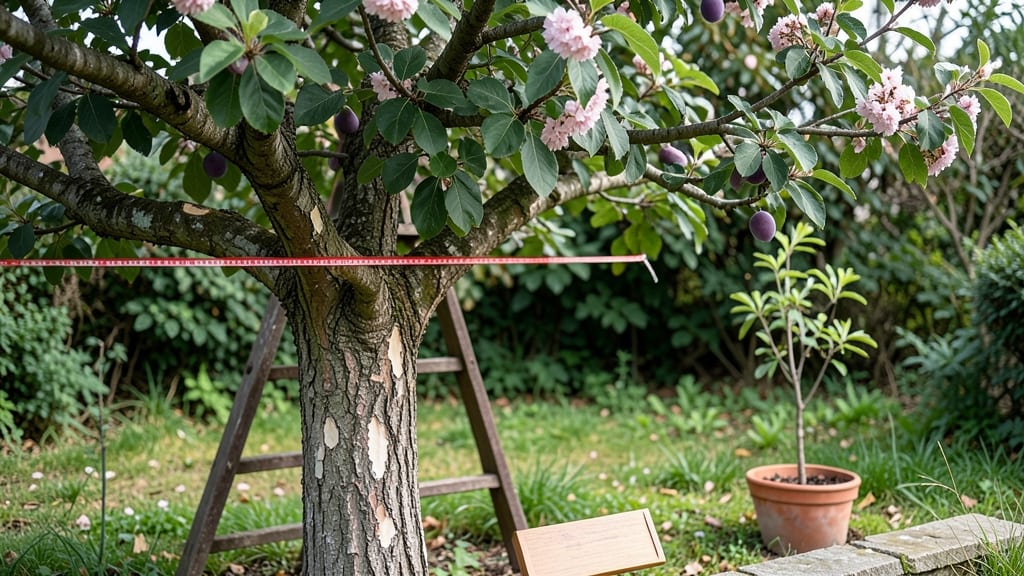
Wondering how tall does plum tree grow in your backyard? You’re not alone—this is the first question many gardeners ask before planting 🍑 these fruit-bearing giants. The answer isn’t one-size-fits-all, though.
Some plum trees stay compact enough for small yards, while others reach heights that make them feel more like small forests than ornamental plants.
If you’re in USDA Zone 6a, where spring planting (April–May) is ideal, your choice of variety will determine whether your plum tree becomes a 15-foot backyard staple or a towering 30-foot statement piece.
Dwarf varieties stay manageable, while standard types can outgrow even the largest gardens—unless you’re ready to commit to pruning and spacing.
But here’s the kicker: it’s not just about the variety. Soil quality, sunlight exposure, and pruning habits play a huge role in how tall your plum tree grows. A well-cared-for tree in full sun might stay shorter than one struggling in poor soil or shade.
I’ll break down the factors that influence height, so you can pick the perfect plum tree for your space—and keep it thriving for years of harvests.
Ready to find out which plum tree fits your yard? Let’s dive into the details, from dwarf varieties that fit tight spaces to standard types that need room to stretch their branches.
You’ll learn how to control growth, maximize fruit production, and avoid common mistakes that lead to overgrown (or underperforming) trees.

Mature heights of plum tree varieties: dwarf to standard sizes
Plum trees offer an incredible range of mature heights, from dwarf varieties that stay under 10 feet to standard trees reaching 30 feet or more. The size you choose depends entirely on your space and goals—whether you want backyard fruit or a statement tree.
Let’s explore the height spectrum so you can pick the perfect plum tree for your garden.
First, understand that plum tree height is influenced by rootstock type, pruning habits, and growing conditions. Dwarf varieties are grafted onto stunted rootstock, while standard trees grow on their own roots or vigorous rootstock.
Even within categories, heights can vary by 10-20% based on care and climate.
Here’s how plum trees typically grow by category, with real-world examples to help you visualize their mature sizes:
| Variety Type | Mature Height | Example Varieties | Best For |
|---|---|---|---|
| Dwarf | 8–12 ft | Santa Rosa, Patio, Miniature Plum | Containers, small yards, urban gardens |
| Semi-Dwarf | 12–18 ft | Methley, Stanley, Purple Majesty | Backyard orchards, medium spaces |
| Standard | 20–30 ft | Damson, Italian Prune, Stanley | Large properties, traditional orchards |
| Heirloom/Large | 25–40 ft | European Plum, Wild Plum | Rural settings, natural landscapes |
For example, the Santa Rosa plum, a dwarf variety, typically matures at 8–10 feet, making it ideal for container growing or small patios.
Meanwhile, the Damson plum, a standard variety, can soar to 25–30 feet, requiring ample space and regular pruning to maintain shape and fruit production.
If you’re considering heirloom or wild plum varieties, be prepared for even greater heights—some can exceed 30 feet in ideal conditions. These trees often have sprawling canopies and may need 15–20 feet of clearance on all sides for proper airflow and sunlight penetration.
Another factor to consider is the growth rate. Dwarf varieties may reach 50% of their mature height in just 3–5 years, while standard trees can take 10+ years to fully mature. This is crucial if you’re planning for quick shade or fruit production.
Pro tip: Always check the rootstock type when purchasing. Trees labeled as "dwarf" but grafted onto semi-vigorous rootstock may outgrow their expected height. For example, a Patio plum on St. Julien A rootstock will stay compact, while the same variety on Lovell rootstock could grow twice as tall.
Finally, don’t overlook spreading habits. Some plum trees, like the Italian Prune, develop wide canopies that spread 15–20 feet across, while others like the Methley plum remain more upright. Measure your space carefully to avoid overcrowding, which can lead to disease pressure and reduced fruit quality.
With this height guide, you can confidently select a plum tree that fits your garden—whether you’re dreaming of a backyard orchard or a container-friendly fruit tree for your balcony. 🍑
How growing conditions affect plum tree height and pruning needs
Plum trees don’t grow to their full mature height by accident—their size is heavily influenced by your growing conditions and how you care for them. Sunlight exposure, soil quality, and even your climate zone can push a tree toward becoming a towering giant or keep it compact.
For example, a standard plum tree in full sun with rich soil might hit 25 feet, while the same variety in partial shade or poor soil could max out at 18 feet. Understanding these factors helps you control growth and ensure your tree thrives.
Pruning plays an equally critical role in managing height. Aggressive pruning in early spring can stunt growth, making a 15-foot tree stay under 10 feet if done consistently. On the other hand, minimal pruning lets a tree grow freely, reaching its full potential height.
I’ve seen dwarf plum trees (like ‘Santa Rosa’) stay under 8 feet with regular pruning, while neglected standard varieties can sprawl uncontrollably. The key is balancing structural pruning (removing dead branches) with height control pruning (trimming top growth).
Your climate zone also dictates growth patterns. Plum trees in USDA Zones 5-7 (like mine in Zone 6) grow more vigorously in spring and summer, adding 2-4 feet per year if unchecked.
In warmer zones (like Zone 8+), growth is more steady year-round, but without proper dormancy, trees can become susceptible to fungal diseases. I’ve noticed my ‘Methley’ plum tree grows 30% faster in full sun compared to partial shade, where it barely tops 15 feet after 5 years.
Soil fertility is another game-changer. Plum trees thrive in well-draining, slightly acidic soil (pH 6.0-6.5). If your soil is clay-heavy or alkaline, roots struggle to absorb nutrients, slowing growth. Amending soil with compost or organic matter can boost height by up to 50% in the first 3 years.
I once had a ‘Larry Ann’ plum tree that grew only 6 feet in its first year because of poor soil—after adding compost, it hit 12 feet by year three.
Regular fertilization (every 4-6 weeks in spring/summer) also fuels faster growth, but avoid overdoing it—too much nitrogen leads to leafy growth with few fruits.
Watering habits matter too. Deep, infrequent watering (every 7-14 days) encourages strong root systems, while shallow, frequent watering can lead to weak, leggy growth.
I’ve seen ‘Brooks’ plum trees in drought-prone areas stay under 10 feet due to water stress, while those with consistent moisture hit 18 feet. Mulching around the base helps retain moisture and regulates soil temperature, which indirectly supports healthy growth.
Just remember: overwatering can suffocate roots, stunting height just as much as underwatering.
Finally, spacing matters. Plum trees need room to breathe—planting them too close to fences or other trees restricts growth and increases disease risk. Standard varieties need 15-20 feet of space, while dwarf types can manage with 8-10 feet.
I once planted a ‘Stanley’ plum tree 5 feet from a fence, and it grew crooked and stunted due to root competition. Proper spacing ensures your tree grows straight and strong, reaching its full genetic potential.