
How To
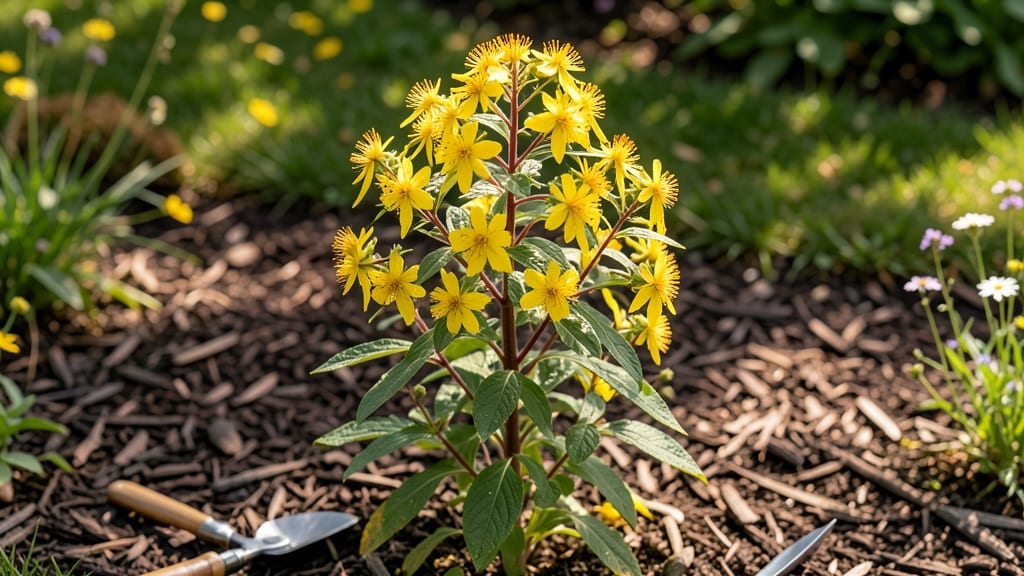
If you’ve ever wondered how tall does St John's wort grow in your garden, the answer might surprise you—this cheerful 🌼 can shoot up to 5-6 feet if left to its own devices.
But here’s the good news: with a few simple pruning tricks, you can easily keep it under 3 feet, making it perfect for borders, containers, or even medicinal harvests.
St John’s wort is a hardy perennial that thrives in USDA Zone 6a and beyond, but its height depends on growing conditions. In ideal spring planting (April-May), it starts modestly at 1-2 feet but can double in size by summer if not managed.
The key to controlling its growth lies in understanding its natural habits and when to intervene.
Whether you’re growing it for its vibrant flowers or medicinal properties, knowing how to prune at the right time is the game-changer. I’ll walk you through proven techniques to keep your St John’s wort lush but compact, so you can enjoy its benefits without the wild overgrowth.
Let’s get started!
From deadheading spent blooms to strategic summer trims, these methods will help you maintain that perfect 2-3 foot height while encouraging bushier, healthier growth. Ready to take control of your garden’s 🌼 giant?

Natural height range of St. John’s wort: what to expect without pruning
St. John’s wort (Hypericum perforatum) is a fast-growing perennial that thrives in sunny gardens, but its height can vary dramatically depending on growing conditions. In the wild, it often reaches 5 to 6 feet tall, forming dense thickets that can outcompete nearby plants.
However, in cultivated gardens with regular care, it typically stays between 3 to 4 feet when unpruned.
During its first year, you’ll see modest growth of 1 to 2 feet, as the plant establishes its root system.
By year two, it gains momentum, shooting up to 2 to 3 feet, and by year three, it reaches its mature height of 3 to 5 feet if left unchecked.
The key factor here is sunlight—full sun exposure accelerates vertical growth, while partial shade can keep it slightly shorter.
Climate also plays a role: in warmer regions like USDA Zones 6-9, St. John’s wort grows taller and bushier due to longer growing seasons. In cooler climates, growth may slow, resulting in a more compact 2 to 3 feet stature.
Even in ideal conditions, its growth habit is upright and bushy, making it perfect for borders or wildflower gardens—but only if you’re prepared for its rapid expansion.
| Growth Stage | Height Range | Key Characteristics |
|---|---|---|
| Year 1 | 1–2 ft | Root establishment, minimal flowering |
| Year 2 | 2–3 ft | Increased bushiness, early blooms |
| Year 3+ (Mature) | 3–5 ft | Full flowering, dense thickets |
| Wild Growth (Uncontrolled) | 5–6 ft | Aggressive spread, invasive potential |
🌿 Note: Pruning in early spring can reset growth to 2–3 ft by summer.
Flowering time also influences height. St. John’s wort typically blooms from July to September, and the more it flowers, the taller it grows. Each bright yellow bloom signals new vertical growth, so deadheading spent flowers can help control its height.
Without intervention, the plant will focus energy on producing more flowers and taller stems, leading to that 5-foot wild giant you want to avoid.
Soil quality matters too. Well-draining, slightly acidic soil (pH 6.0–7.0) encourages robust growth, while poor or compacted soil can stunt it to 2 to 3 feet. Amending your soil with compost before planting gives you a head start on managing its height naturally.
If your garden has heavy clay, consider planting in raised beds to improve drainage and limit excessive growth.
One common misconception is that St. John’s wort grows uniformly. In reality, its height can vary by up to 2 feet depending on whether it’s growing in a container, border, or wild setting.
Containers naturally restrict root spread, keeping plants 1 to 2 feet shorter than their ground-grown counterparts. This makes containers a great option if you’re aiming for a compact, manageable plant.
If you’re growing St. John’s wort for medicinal purposes, timing is everything. The best time to harvest is when the plant is 2 to 3 feet tall, just as it begins full flowering.
At this stage, the hypericin content—the compound responsible for its antidepressant properties—is at its peak. Letting it grow taller than 3 feet may reduce potency, as the plant diverts energy to seed production rather than medicinal compounds.
For gardeners in urban or small-space settings, understanding this plant’s growth habit is crucial. Without pruning, St. John’s wort can quickly overwhelm nearby plants, spreading via underground runners.
In these cases, regular pruning and container gardening are your best tools to keep it under control while still enjoying its vibrant flowers and medicinal benefits.
Finally, remember that St. John’s wort is a perennial, meaning it will return year after year with the same growth patterns unless you intervene. If you’re not ready to commit to pruning, consider planting it in a dedicated corner of your garden where its height won’t be an issue.
With the right approach, you can enjoy its beauty without the chaos.
Natural height range of St. John’s wort: what to expect without pruning
St. John’s wort (Hypericum perforatum) thrives as a perennial herb with a natural height range of 3 to 6 feet when grown in ideal conditions.
In the wild, it often reaches its maximum height of 5–6 feet, while cultivated varieties typically stay between 3 and 5 feet. The plant’s upright, bushy growth habit and woody stems contribute to its towering presence, especially in full sun and well-draining soil.
During its first year, St. John’s wort grows slowly, reaching only 1 to 2 feet in height. By year two, it gains momentum, shooting up to 2 to 3 feet, and by year three, it can easily surpass 4 feet if unchecked.
The flowering stage, which occurs in mid to late summer, often coincides with the plant’s most rapid vertical growth, pushing it toward its peak height of 5–6 feet.
| Growth Stage | Height Range | Seasonal Notes |
|---|---|---|
| Year 1 | 1–2 ft | Slow growth; focuses on root establishment. |
| Year 2 | 2–3 ft | Rapid vertical growth; begins flowering. |
| Year 3+ | 3–6 ft | Mature height; aggressive spread if unmanaged. |
Your climate and location play a significant role in determining how tall St. John’s wort will grow. In warmer, southern regions (USDA Zones 7–10), the plant often reaches its maximum height due to longer growing seasons.
Conversely, in cooler northern climates (USDA Zones 3–6), growth may be slower, with mature plants typically staying between 3 and 4 feet. Soil quality also impacts height—poor, nutrient-deficient soil can stunt growth, while rich, well-draining soil encourages taller, more robust plants.
If you’re growing St. John’s wort for medicinal purposes, timing is key. The best time to harvest is when the plant is 2 to 3 feet tall and the flowers are fully open, typically in July to September.
At this stage, the plant’s active compounds are at their peak, making it ideal for tea, tinctures, or dried extracts. Waiting until the plant reaches 5–6 feet may reduce potency and complicate harvesting due to its height.
Without regular pruning or containment, St. John’s wort can become invasive, spreading aggressively via underground rhizomes. In wild settings, it often forms dense thickets that can outcompete native plants.
To prevent this, prune back stems by 1/3 in early spring and deadhead spent flowers throughout the growing season. This not only controls height but also encourages bushier growth and prolongs flowering.
For gardeners with limited space, consider container growing. St. John’s wort can be successfully grown in large pots (12+ inches deep) where its roots are naturally restricted. In containers, it typically stays between 2 and 3 feet, making it perfect for balconies, patios, or small gardens.
Just ensure the pot has drainage holes to prevent root rot, a common issue with this drought-tolerant but moisture-sensitive plant.