
Plants
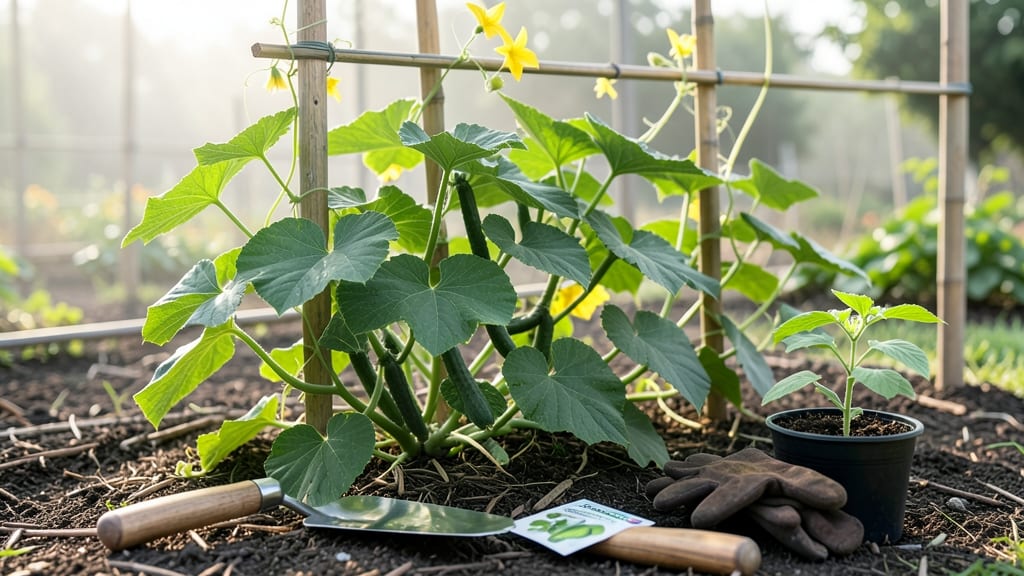
Timing your cucumber planting in New Hampshire isn't just about the calendar—it's about beating frost while catching that sweet 160-day window between last and first frost. Plant too early, and a late spring chill will zap your 🥒 seedlings before they even sprout.
Too late, and you'll miss the summer heat needed for those crisp, vine-ripping harvests.
With USDA zones 5b-6b and New Hampshire's famously unpredictable weather, knowing when to plant cucumbers means checking soil temps (aim for 60°F+) and watching for those last-frost dates that shift yearly.
Mid-May to early June is your golden window—but don't just guess. The difference between a bountiful harvest and a sad, stunted plant often comes down to those 10-14 days of perfect timing.
I've learned the hard way that black plastic mulch can shave weeks off soil warming time, and choosing heat-tolerant varieties like 'Straight Eight' gives you that extra buffer when NH's summer feels more like a rollercoaster than a steady climb.
Let me break down exactly how to nail your planting schedule, from frost dates to soil prep, so you're harvesting cucumbers from July through September instead of crossing your fingers for a miracle.
Whether you're a first-time gardener or a seasoned NH grower, these tips will help you avoid the most common mistakes—like planting too soon and watching your cucumbers wilt, or waiting too late and ending up with bitter fruit.
Ready to turn your garden into a 🥒 powerhouse? Let's get those seeds in the ground at the perfect moment.
New Hampshire’s frost-free timeline for planting cucumbers: exact dates by region
New Hampshire’s USDA zones 5b-6b create microclimates where last frost dates can vary by 2-3 weeks across regions. Coastal areas like Portsmouth typically see frost-free conditions by May 10th, while inland spots like White Mountains may wait until May 25th.
Understanding these differences ensures your cucumber seeds or seedlings get planted at the perfect moment.
For direct sowing (planting seeds directly in the ground), aim for when soil temperatures hit 60°F+—usually mid-May to early June. If you’re transplanting seedlings, wait until nighttime temperatures stay above 50°F, which often aligns with late May for most of the state.
Check the NH Agricultural Experiment Station’s frost data for your specific town.
Here’s how New Hampshire’s regions break down for optimal cucumber planting, including heat-unit calculations to ensure strong germination:
| Region | Avg. Last Frost | Ideal Planting Window | Soil Temp. Threshold | Heat Units Needed |
|---|---|---|---|---|
| Coastal (Portsmouth, Dover) | May 10 | May 15–25 | 60°F+ | 1,200–1,500 |
| Lakes Region (Laconia, Meredith) | May 15 | May 20–June 1 | 60°F+ | 1,300–1,600 |
| White Mountains (North Conway, Jackson) | May 25 | June 1–10 | 60°F+ | 1,400–1,700 |
| Seacoast (Rye, Hampton) | May 5 | May 10–20 | 60°F+ | 1,100–1,400 |
Heat units = Degree days calculated from 50°F baseline. Use a soil thermometer to confirm readiness.
If you’re starting cucumbers indoors for an earlier jumpstart, begin seeds 4-6 weeks before your region’s last frost date. For example, Coastal NH gardeners can start indoors by April 1st, while White Mountains growers should wait until April 15th.
Use grow lights to provide 12-14 hours of light daily until transplanting.
For container gardening in NH, choose bush varieties like ‘Bush Champion’ or ‘Spacemaster’ to save space. These compact plants thrive in 5-gallon containers and can be moved to sunniest spots as needed. Just ensure pots have drainage holes and use lightweight potting mix to prevent root stress.
Pro tip: Use black plastic mulch to warm soil faster and extend your planting window by 1-2 weeks. This trick is especially helpful in Zone 5b areas where cold snaps linger. Lay the mulch 1 week before planting to maximize soil temperature gains.
Remember, cucumbers love heat—they’ll bolt (flower prematurely) if stressed by cold. Monitor your plants closely after transplanting, and be ready to protect them with row covers if unexpected frost threatens in late May or early June.
🌱
How to extend your cucumber growing season in New Hampshire’s unpredictable climate
New Hampshire’s short growing season and unpredictable frost dates can make cucumber gardening a challenge. But with the right strategies, you can extend your harvest window by weeks—even months. The key is protecting your plants from late spring frosts and early fall chills while maximizing warmth for faster growth.
One of my favorite tricks is using row covers or floating row tunnels to create a microclimate. These lightweight fabrics trap heat and shield young plants from unexpected cold snaps.
I’ve seen cucumbers thrive under row covers planted as early as mid-April in the Lakes Region, where soil warms faster near water bodies. Just remove the cover once plants are established and temperatures stay above 50°F at night.
🌱 5 Proven Ways to Extend Your Cucumber Season in NH
- 1. Start with heat-tolerant varieties: Choose ‘Straight Eight’ or ‘Marketmore 76’—both handle NH’s short, hot summers better than delicate heirlooms.
- 2. Use black plastic mulch: Warms soil 5-10°F faster than bare earth, letting you plant 2-3 weeks earlier.
- 3. Succession plant every 2 weeks: Stagger 3-4 plantings from late May to early July for a continuous harvest.
- 4. Try cold frames or hoop houses: Extends season 4-6 weeks into fall by trapping solar heat.
- 5. Harvest aggressively: Pick cucumbers every 2-3 days to prevent bitterness and encourage new fruit.
For late-season harvests, I swear by cold frames or low tunnels. These simple structures can add 30-45 days to your growing season by trapping heat during the day and insulating at night.
In my Zone 5b garden, cucumbers planted in early July under a cold frame still produced marketable fruit until mid-October. Just be sure to vent the structure on warm days to prevent overheating.
Another game-changer is succession planting. Instead of betting everything on one planting, I space out 3-4 batches every 2 weeks from late May through July. This ensures a steady supply of fresh cucumbers while accounting for NH’s variable weather patterns.
For example, if your first planting gets nipped by a late May frost, your second batch (planted June 1) will still have time to thrive.
Don’t overlook the power of soil preparation. Amending your beds with compost and aged manure ensures your cucumbers have the nutrients they need to grow quickly and vigorously.
I also recommend raising beds in sunnier spots—even a 2-foot elevation can make a difference in soil warmth and drainage. This is especially helpful in cooler microclimates like the White Mountains, where frost can linger longer.
Finally, keep an eye on the weather forecast and be ready to act. If a cold front is predicted, rush to harvest or protect your plants with row covers or blankets.
With these strategies, you can turn NH’s challenging climate into an advantage—producing cucumbers from late June to October instead of just a few weeks in summer.
🌱