
Plants
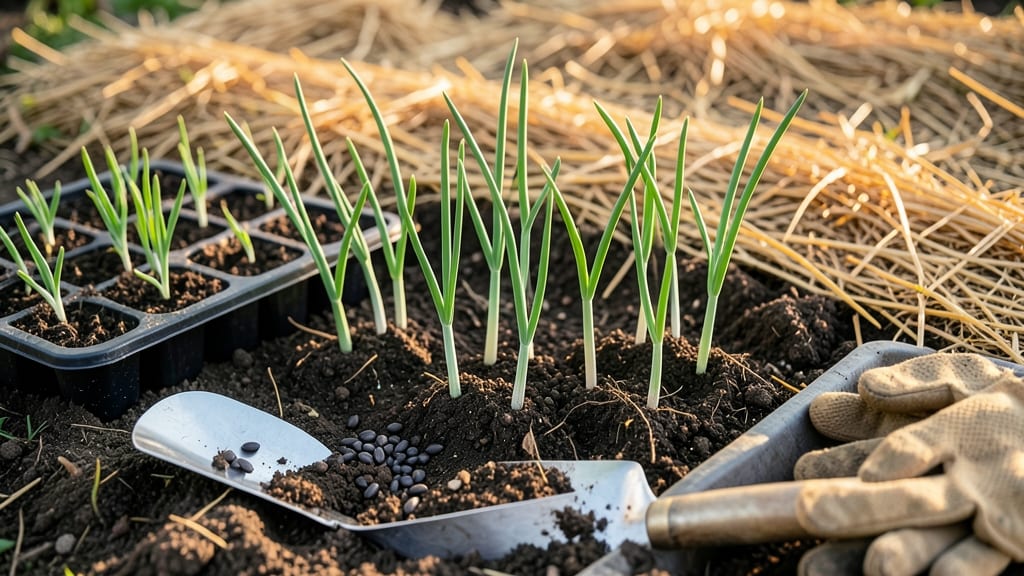
Timing your onion seed planting in fall could mean the difference between a bumper crop and a wasted season. If you plant too early, your 🧅 might bolt before winter; too late, and frost will stall growth entirely.
The sweet spot? 6-8 weeks before your first frost—a window that varies wildly depending on where you live.
For most gardeners in USDA Zone 6a (like me!), that means late September or early October—but your exact date depends on local frost patterns and microclimates.
I’ll break down how to calculate your perfect window, whether you’re in chilly New England or milder Southern states, so you can set those seeds with confidence.
Here’s the kicker: fall-planted onions need the right conditions to overwinter successfully. We’re talking soil prep, variety selection, and even mulching strategies to protect tender roots. Skip these steps, and you might end up with stunted bulbs—or worse, nothing at all.
By the end of this guide, you’ll know exactly when to plant, how deep to sow, and what to watch for as winter rolls in. Let’s get those onions growing strong for a late spring harvest that’ll make your kitchen the envy of the neighborhood.
Optimal fall planting timeline for onion seeds by US hardiness Zones
Timing your onion seeds correctly in fall determines whether you’ll harvest plump, flavorful bulbs or miss the window entirely. The golden rule: plant 6-8 weeks before your first frost date. This gives seedlings enough time to establish roots before winter dormancy.
But since frost dates vary wildly across the U.S., let’s break it down by USDA hardiness zones to pinpoint your exact window.
For example, gardeners in Zone 3 (northern climates) should aim for early September, while those in Zone 10 (southern deserts) can plant as late as December. The key is avoiding both overly early planting (which leads to weak, leggy seedlings) and delayed planting (which risks frost damage before roots form).
Microclimates complicate things further. A sheltered garden bed might stay frost-free a week longer than your official zone suggests. Always check your local frost calendar and adjust by 1-2 weeks if your area tends toward early or late frosts.
Here’s a zone-by-zone breakdown to simplify your planning:
Southern gardeners in Zones 8-10 often overlook fall planting because winters are mild. But planting in November or December still works—just choose short-day onion varieties like ‘Texas Early White’ or ‘Yellow Granex’. These bulbs mature faster in cooler temps, giving you an early harvest.
In contrast, northern gardeners (Zones 3-5) must act fast. If your first frost hits by October 15, plant by September 1 at the latest. Use black plastic mulch to extend the season by warming the soil.
Pro tip: If you’re unsure about your exact frost date, check the National Weather Service or local cooperative extension service. Their data is far more precise than generic zone averages.
Once you’ve nailed the timing, focus on soil prep. Onions thrive in loose, well-draining soil with a pH of 6.0-7.0. Work in compost or aged manure 2-3 weeks before planting to give roots a nutrient boost.
With the right timing and soil prep, your fall-planted onions will overwinter beautifully and reward you with larger, sweeter bulbs next summer.
Optimal fall planting timeline for onion seeds by US hardiness Zones
Timing your onion seeds for fall planting depends entirely on your USDA hardiness zone. The golden rule? Plant 6-8 weeks before your first frost date—this gives seedlings time to establish roots before winter dormancy.
In Zone 3-5, aim for mid-September to early October, while Zones 6-8 can wait until late September to November. Southern gardeners in Zones 9-10 have flexibility until December, but avoid planting too late—onions need 40°F soil temps to germinate.
Microclimates complicate things. A sheltered south-facing bed might stay frost-free longer than your official zone suggests. Test your soil temperature with a soil thermometer—if it’s below 40°F (4°C), germination will stall.
For northern climates, prioritize short-day onion varieties like ‘Candy’ or ‘Sweet Sandwich’; they thrive with less daylight in winter. In warmer zones, long-day varieties like ‘Yellowstone’ may still perform well if planted early enough to mature before summer heat.
| Zone | Ideal Planting Window | Soil Temp Requirement | Variety Recommendation |
|---|---|---|---|
| 3-5 | Mid-Sept to Early Oct | 40-50°F (4-10°C) | Short-day: 'Candy', 'Red Baron' |
| 6-8 | Late Sept to Nov | 40-55°F (4-13°C) | Intermediate: 'Sweet Spanish', 'Texas Early White' |
| 9-10 | Oct to Dec | 45-60°F (7-15°C) | Long-day: 'Yellowstone', 'Texas Early White' |
Adjust for late frosts by using row covers or planting in containers near your home for extra warmth. In Zone 4-6, a straw mulch layer (3-4 inches) insulates roots during temperature swings.
Southern gardeners should avoid planting after November 1st—onions planted too late may bolt (send up flower stalks) instead of bulbing. Always check your local frost date via the USDA Plant Hardiness Zone Map or a weather station app for precision.
Pro tip: Direct-sow seeds in fall rather than starting indoors. Onion seedlings hate transplanting and often struggle to recover. Space seeds ½ inch apart in rows 12 inches apart for easy thinning later.
If your soil is clay-heavy, mix in compost or sand to improve drainage—onions rot in soggy soil. A light mulch of straw after planting retains moisture while protecting young sprouts from winter heaving.
Fall-planted onions need consistent moisture but no standing water. Water deeply once a week unless rain falls, then taper to bi-weekly in winter. In Zone 7+, expect bolting in spring if days lengthen too quickly—choose bolting-resistant varieties like ‘Texas Early White’ for reliability.
Harvest next late spring to early summer when tops yellow and flop over, but before they dry out completely.
Remember: Soil temperature trumps calendar dates. If your ground stays warm late into fall, delay planting until temps drop. Conversely, if frost arrives early, plant as soon as soil is workable.
The key is giving seedlings enough time to root deeply before winter—aim for 3-4 inches of root growth before the ground freezes. With the right timing, your fall-planted onions will reward you with sweeter, larger bulbs than spring plantings.