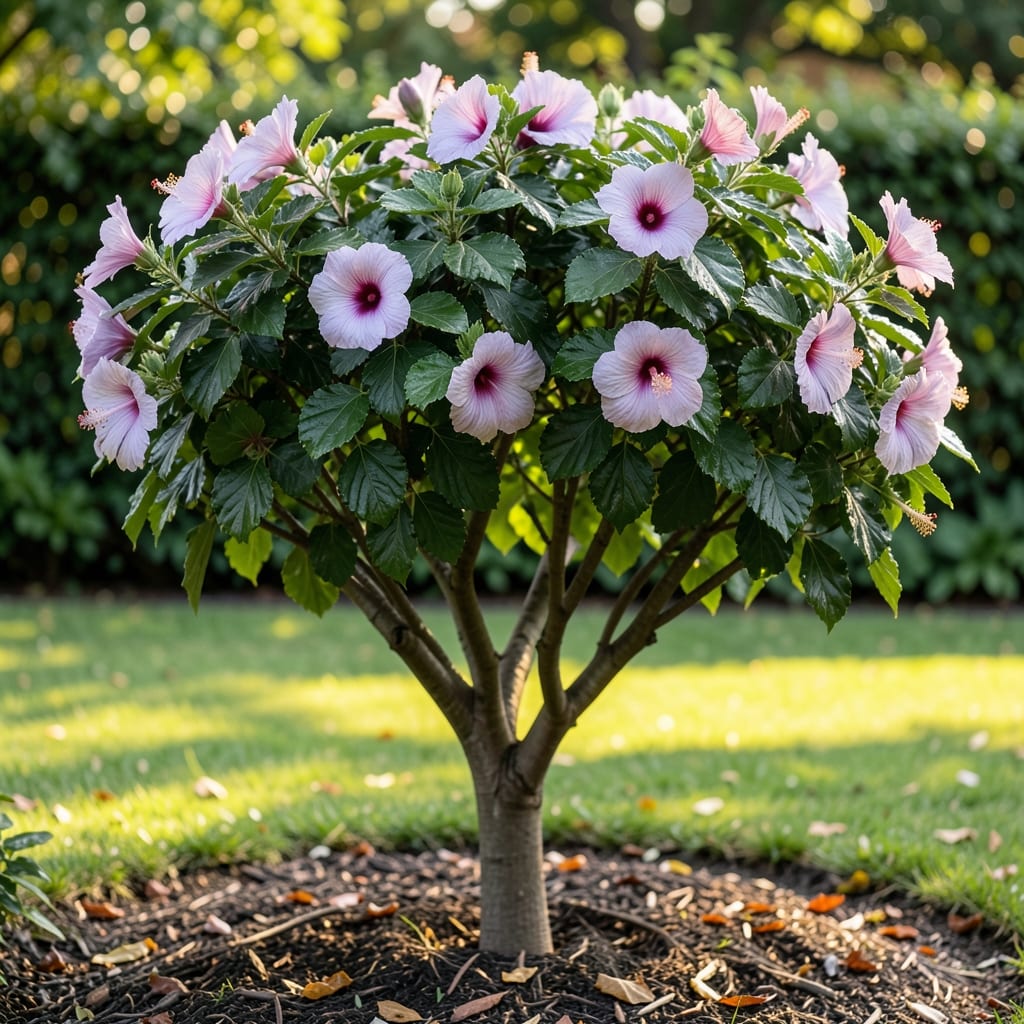
Wondering how tall can a hibiscus tree grow before it starts crowding your backyard or becoming a small jungle? The answer might surprise you—these stunning 🌺 plants can stretch from compact shrubs to towering giants, depending on the variety and care you give them.
If you're dreaming of a hibiscus tree that adds tropical flair without dominating your space, you're in the right place. Some varieties stay neatly under 6 feet, while others can reach 20 feet or more with the right conditions. The key lies in choosing the right type and learning a few simple pruning tricks to control its growth.
Whether you're working with a small balcony garden or a sprawling backyard, I'll show you how to pick the perfect hibiscus for your space. You'll discover which varieties thrive in tight spots and which ones need room to spread their wings—literally. Let's dive into the world of hibiscus heights and find the perfect fit for your garden.
From dwarf varieties that fit snugly in containers to hardy giants that make a bold statement, there's a hibiscus tree size for every gardener. You'll also learn how to keep even the fastest-growing types in check with easy pruning techniques. Ready to transform your outdoor space with these vibrant beauties?
Hibiscus Tree Height Range
6 ftto20 ft
0 ft3 ft6 ft9 ft12 ft
🌱Tall Tree
Hibiscus tree height by variety: from dwarf to giant species
If you're wondering how tall can a hibiscus tree grow, the answer depends entirely on the variety you choose. Some hibiscus trees stay compact enough for small gardens, while others can reach towering heights of 20 feet or more. The key is understanding the differences between tropical hibiscus (like Hibiscus rosa-sinensis) and hardy hibiscus (like Hibiscus syriacus). Let’s break down the height ranges so you can pick the perfect fit for your space.
Tropical hibiscus trees, such as the common hibiscus (Hibiscus rosa-sinensis), are the showstoppers of the hibiscus family. Left unpruned, they can grow 10 to 20 feet tall, with some varieties even reaching 25 feet in ideal conditions. These trees thrive in warm climates and are prized for their vibrant, long-lasting blooms. However, their rapid growth means they’ll quickly outgrow small yards or containers unless you’re proactive with pruning.
Hardy hibiscus, on the other hand, are cold-hardy and often smaller. The rose-of-Sharon (Hibiscus syriacus) is a popular choice for temperate climates, typically maturing between 6 to 12 feet tall. This variety is more manageable for home gardens and offers season-long blooms in shades of pink, purple, and white. Unlike tropical hibiscus, hardy varieties can handle USDA zones 5-9, making them versatile for a wider range of gardeners.
Dwarf hibiscus varieties are rare, but some shrub-like hibiscus, like the dwarf hibiscus (Hibiscus moscheutos), stay between 3 to 6 feet tall. These are perfect for container gardening or small spaces where you want the drama of hibiscus blooms without the height. Just be sure to check the specific variety’s growth habits, as even "dwarf" labels can vary.
Now, let’s dive into the specifics with a summary-table comparing the most popular hibiscus varieties and their mature heights:
Variety
Type
Mature Height
Growth Rate
Best For
Common Hibiscus (Hibiscus rosa-sinensis)
Tropical
10–20 ft
Fast
Large gardens, containers (with pruning)
Rose-of-Sharon (Hibiscus syriacus)
Hardy
6–12 ft
Moderate
Small to medium gardens, urban landscapes
Dwarf Hibiscus (Hibiscus moscheutos)
Shrub
3–6 ft
Slow to moderate
Containers, small spaces, borders
Hibiscus ‘Luna Red’
Tropical
8–12 ft
Moderate
Medium gardens, patio plantings
Hibiscus ‘Blue Ch
How to control hibiscus tree height: pruning, training & space-saving techniques
If your hibiscus tree is reaching for the sky faster than you’d like, don’t panic—you’re not stuck with a towering giant! With the right pruning techniques and training methods, you can shape your hibiscus into a compact shrub or even a small tree that fits your space perfectly. The key is understanding when, how, and why to prune, along with creative solutions for small gardens or containers.
First, timing is everything. The best time to prune hibiscus trees is late winter or early spring, just before new growth begins. This encourages fresh, vigorous shoots while avoiding the risk of frost damage. Avoid heavy pruning in fall, as it can stimulate tender new growth that won’t survive winter. For tropical hibiscus varieties, you can prune lightly year-round, but always avoid cutting into old wood, as it won’t regrow.
Now, let’s talk tools. Use clean, sharp pruners or loppers for larger branches to make precise cuts without tearing the bark. Always cut just above a leaf node or bud, angled slightly away from the bud to encourage water runoff. Never leave stubs—this invites disease and weakens the plant. For a more polished look, you can also use a hand saw for thicker branches, but always disinfect it with rubbing alcohol between cuts to prevent spreading pathogens.
Method
When to Use
Goal
Light Pruning
Early spring or after blooming
Remove dead/diseased branches, shape plant
Hard Pruning
Late winter (dormant season)
Reduce height by 1/3, encourage bushier growth
Topping
Early spring (for aggressive varieties)
Cut back to 12-18 inches to control height
Espalier Training
Year-round (best in spring)
Train branches flat against a wall or trellis
For small gardens or containers, consider espalier training—a technique where you guide the hibiscus’s branches to grow flat against a wall, fence, or trellis. This not only saves space but also creates a stunning vertical display. Start by selecting 3-4 main branches and tying them to a support with soft plant ties or flexible wire. As the branches grow, gently bend and secure them into your desired pattern, such as a fan or candelabra shape. This method works beautifully for Hibiscus rosa-sinensis and other tropical varieties.
If you’re growing hibiscus in a container, choose a pot that’s at least 18 inches deep to accommodate roots, and prune regularly to prevent the plant from outgrowing its space. Container-grown hibiscus can be kept smaller with monthly pruning to remove leggy growth and encourage a fuller shape. Just
Finally, don’t forget that fertilizer choices can influence growth habits. A balanced, low-nitrogen fertilizer (like 10-10-10) promotes blooms over leafy growth, while a higher-nitrogen fertilizer (like 20-10-10) encourages rapid foliage growth. If your hibiscus is growing too fast, switch to a bloom-boosting fertilizer in early spring to redirect energy toward flowers instead of height. Pair this with consistent watering—deep soaks once a week during dry spells—to keep the plant healthy without encouraging excessive growth spurts.