
Flowers
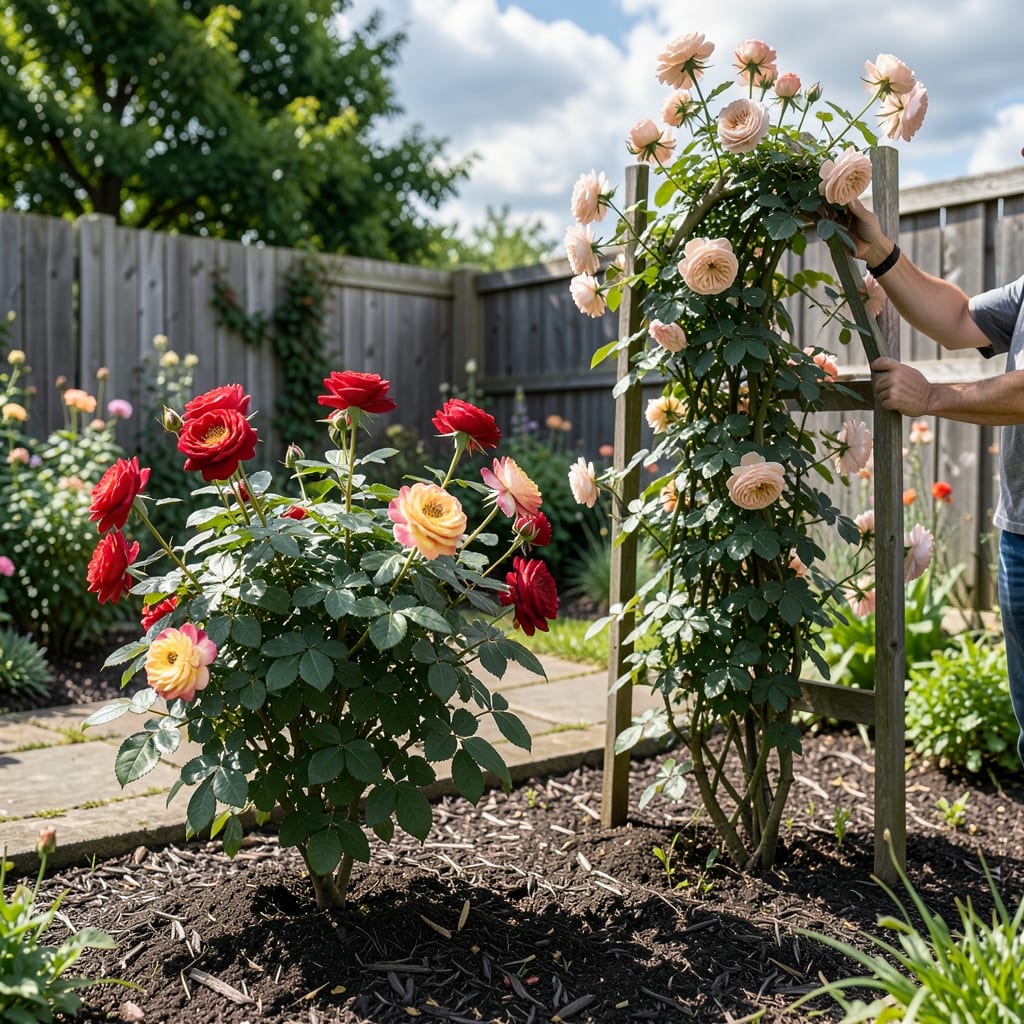
Ever wondered how tall a rose can grow in your garden? Staring at your 🌹 rose bushes and wondering if they’ll soon climb your trellis like a jungle vine or stay as compact as a dinner plate? The answer depends entirely on the variety you’ve planted—and knowing these differences is the key to designing a garden that’s both stunning and manageable.
Some roses barely reach your waist, while others can stretch taller than a basketball hoop. Shrub roses typically stay between 3 and 5 feet, making them perfect for borders, but climbers can soar to 10 feet or more, turning fences into living walls of color. The secret lies in understanding each type’s growth potential and how your climate and care habits play a role.
If you’ve ever struggled with overgrown roses taking over your yard or wondered why your prized climber isn’t reaching its full height, you’re not alone. I’ll break down the exact height ranges for popular varieties and share pruning secrets to control growth—whether you want a neat hedge or a sky-high floral display.
Let’s dive into how to choose the perfect rose for your space and keep it thriving at the right height, no guesswork required.


Rose varieties and their maximum heights: a complete guide
When planning your garden, knowing how tall a rose can grow helps you choose varieties that fit your space perfectly. Roses aren’t one-size-fits-all—some stay small enough for window boxes, while others need room to climb like a jungle gym. The key is matching the variety to your garden’s layout and your maintenance style.
I’ve grown everything from miniature roses that fit in my palm to climbing varieties that reach my second-story balcony. The difference in height isn’t just about aesthetics—it affects pruning, spacing, and even how you support your roses. Let’s break down the major categories so you can pick the perfect fit for your garden.
🌹 Visual Height Guide: Below is a quick reference for mature heights, spacing needs, and ideal uses for each rose type. This will help you visualize how they’ll look in your space before you plant.
| Variety | Mature Height | Spacing Needs | Ideal Use |
|---|---|---|---|
| Miniature Roses | 1–3 ft | 6–12 inches apart | Containers, window boxes, fairy gardens |
| Semi-Dwarf Roses | 3–5 ft | 2–3 ft apart | Borders, hedges, small shrubs |
| Hybrid Tea Roses | 3–6 ft | 2–4 ft apart | Cut flowers, garden focal points |
| Shrub Roses | 4–8 ft | 3–5 ft apart | Mass plantings, privacy screens |
| Climbing Roses | 8–20+ ft | 4–6 ft from support | Arbors, trellises, fences |
| Groundcover Roses | 1–2 ft | 12–18 inches apart | Slopes, erosion control, walkway edges |
If you’re wondering how tall a rose can grow in your specific climate, remember that these are mature heights under ideal conditions. For example, my climbing rose ‘New Dawn’ hit 12 feet in Zone 7, but in cooler climates, it might max out at 8–10 feet. Always check the USDA hardiness zone for your variety to avoid disappointment.
For compact gardens, I recommend miniature roses or groundcover types like ‘Dr. Huey’ or ‘Flower Carpet.’ These stay low but pack a punch with continuous blooms. Meanwhile, if you want drama, climbing roses like ‘Blaze’ or ‘Zephirine Drouhin’ can transform a plain fence into a living tapestry of color.
Pro tip: Always check the canes’ thickness when buying climbing roses. Thicker canes (1/2 inch or more) mean stronger growth and better support for heavier blooms. I’ve seen ‘Rambling Rector’ canes reach 25 feet with proper training—though most gardeners keep them at 10–12 feet for easier maintenance.
Next, we’ll cover how to control rose height through pruning, so you can shape your roses to fit your vision—whether that’s a neat hedge or a sky-high floral masterpiece. 🌿
5 Factors that influence how tall your roses will grow
If you’ve ever planted a rose expecting it to stay at a certain height—only for it to either sprawl wildly or stay stubbornly short—you’re not alone. The height of your roses depends on more than just the variety you choose. Five key factors can push your roses to reach their full potential or hold them back, sometimes dramatically. Understanding these will help you create the perfect conditions for your roses to grow exactly as you envision.
First, sunlight exposure plays a massive role. Roses thrive with 6+ hours of direct sun daily, but too little sunlight can stunt their growth. In shady spots, even vigorous climbers might max out at half their expected height. I’ve seen climbing roses that should reach 12 feet barely hit 6 feet when planted under trees. Conversely, full sun can make a shrub rose grow 2 feet taller than expected in just one season.
Full sun (6+ hours) = optimal growth. Partial shade = stunted growth.
Next, soil quality and drainage can make or break your roses’ height. Compacted or waterlogged soil restricts root growth, which directly limits how tall your roses can climb or sprawl. I always test my soil’s drainage before planting—if water pools after 6 hours, I’ll amend it with compost or sand. Well-draining, nutrient-rich soil can help a standard rose reach its full 6-10 foot height, while poor soil might keep it at 3 feet.
Well-draining soil = taller growth. Poor drainage = stunted roots.
Your watering habits also affect height. Overwatering can lead to weak stems and leggy growth, while underwatering stresses the plant and slows vertical expansion. I water my roses deeply in the morning, giving them 1-2 gallons per plant every 3-5 days. During heatwaves, I increase frequency to keep stems strong. A climbing rose that’s properly hydrated will grow faster and taller than one struggling for moisture.
Deep, consistent watering = strong stems. Over/underwatering = weak growth.
Don’t overlook fertilization, either. Roses need balanced nutrients to fuel their growth, especially nitrogen for foliage and phosphorus for blooms. I use a 10-10-10 fertilizer every 4-6 weeks during the growing season. Under-fertilized roses may stay short and sparse, while over-fertilized ones can grow too fast with weak stems. The key is consistency—never skip feeding during peak bloom months if you want those climbing roses to reach their ceiling.
Lastly, climate and pruning shape your roses’ height. Cold climates can slow growth, while warm regions speed it up. Pruning also plays a role: aggressive pruning keeps shrubs compact, while minimal pruning lets climbers stretch. I always prune in late winter to encourage vertical growth when I want taller roses. If you’ve ever wondered why your rose isn’t growing as tall as expected, check these five factors first—they’re the real secret to controlling your roses’ height.