
Trees
Rubber tree height limits: indoor growth potential explained
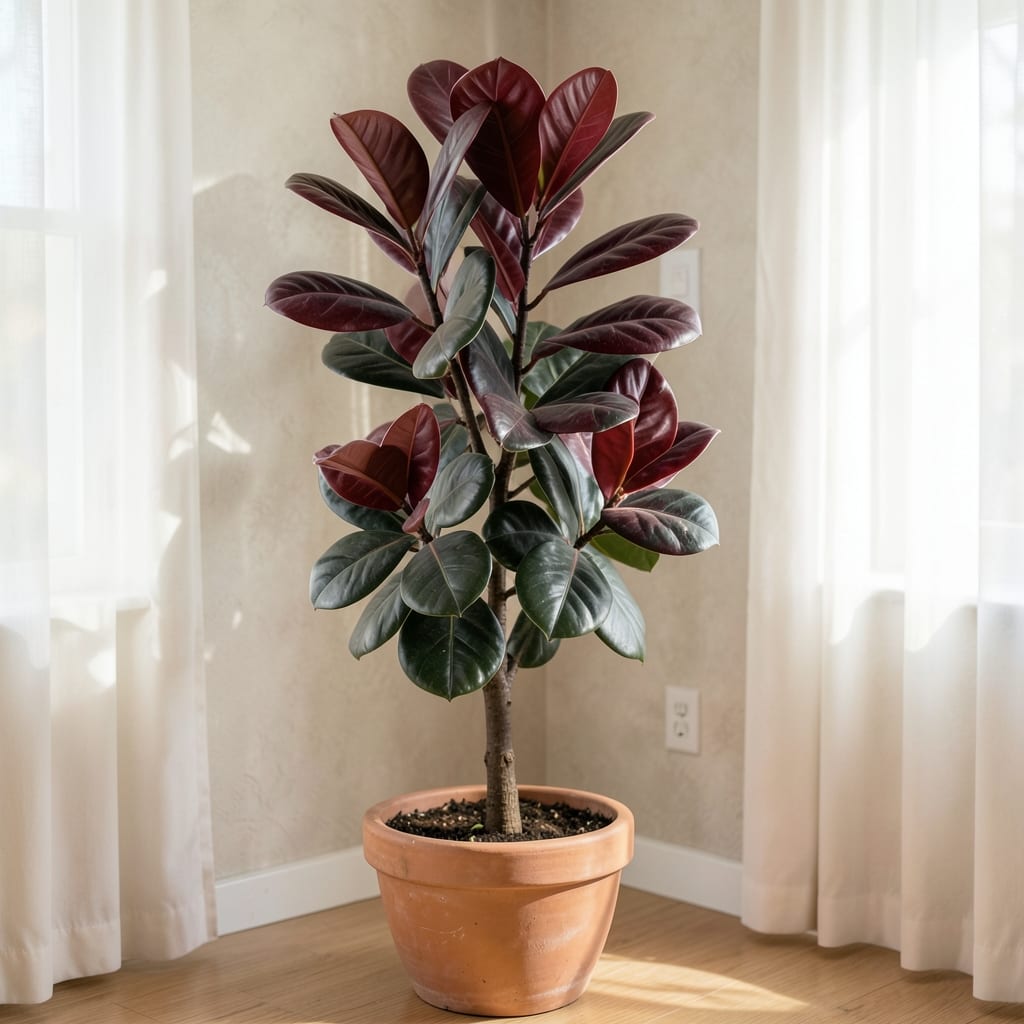
Your rubber tree (Ficus elastica) can become a stunning indoor centerpiece, but its height depends entirely on your care routine. Without intervention, these trees typically grow 5 to 15 feet tall indoors, though some varieties like the 'Black Prince' stay more compact. The key to controlling its size lies in understanding how light, pruning, and pot size interact to shape its growth trajectory.
If you're working with limited ceiling space, don't worry—regular pruning can keep your rubber tree between 3 and 6 feet tall. Even in ideal conditions, most indoor rubber trees grow 1 to 2 feet per year, giving you plenty of time to adjust their height before they become unwieldy. The secret? Pruning in early spring when new growth begins, combined with proper light exposure.
Here’s what influences your rubber tree’s indoor height the most:
| Factor | Impact on Height | How to Control It |
|---|---|---|
| Light Exposure | More light = faster growth (up to 2 ft/year) | Place near bright indirect light; avoid direct sun |
| Pot Size | Root-bound trees grow taller but weaker | Repot every 2-3 years; choose a pot 1-2 inches wider |
| Pruning Frequency | Prune 2-3 times/year = compact shape | Trim 1/3 of new growth in spring/summer |
| Fertilizer Use | Over-fertilizing = rapid but leggy growth | Use balanced 10-10-10 every 6-8 weeks in spring/summer |
| Variety | Dwarf varieties stay 3-6 ft tall; standard types reach 10-15 ft | Choose 'Robusta' or 'Tineke' for smaller sizes |
Let’s talk about light exposure, the most critical factor for controlling your rubber tree’s height. These trees thrive in bright, indirect light, which encourages balanced growth. If you place yours near a south-facing window, expect faster height increases—but also watch for leaf scorch. For slower, more manageable growth, position it 3-5 feet from a north-facing window.
Another game-changer is pot size. Rubber trees in too-small pots grow taller but weaker as they stretch toward light. If you notice roots circling the pot’s bottom, it’s time to repot into a container 1-2 inches wider. Pro tip: Use a pot with drainage holes to prevent root rot, which can stunt growth entirely.
When it comes to pruning, timing is everything. Always prune in early spring or late summer to encourage bushier growth. Use clean, sharp pruners to make cuts just above a leaf node. For a fuller look, trim back 1/3 of the new growth each time. Remember, the more you prune, the more your rubber tree will focus on width over height.
If you’re aiming for a miniature rubber tree, consider these pro tips: Pinch back the tips of new growth when they’re 4-6 inches long to encourage branching. This method works especially well for 'Tineke' varieties, which naturally stay smaller. With consistent care, you can keep even standard varieties under 6 feet tall for years.
One common mistake I see is over-fertilizing, which leads to rapid but weak growth. Stick to a balanced fertilizer (10-10-10) applied every 6-8 weeks during the growing season (spring and summer). In fall and winter, let your rubber tree rest—no fertilizer needed—to prevent nutrient buildup in the soil.
For visual learners, here’s a quick height comparison: A 3-year-old indoor rubber tree typically reaches 5-8 feet tall, while a 5-year-old unpruned specimen can soar to 10-12 feet. If your ceiling is 8 feet tall, plan to prune regularly to avoid hitting the ceiling fan! 🌿
Outdoor rubber tree growth: how tall can it really get?
When your rubber tree (Ficus elastica) escapes indoors and thrives outdoors, its growth habits transform dramatically. In ideal conditions—like USDA Zones 10–12—these trees can reach 30 to 100 feet tall, rivaling small oak trees. Their rapid growth rate of 2 to 3 feet per year makes them a stunning focal point for tropical gardens.
Outdoor rubber trees also develop thicker trunks and broader canopies, thanks to abundant sunlight and space. Unlike their indoor counterparts, they rarely need pruning to control height, though you can shape them for aesthetic or functional reasons. The key to unlocking their full potential lies in well-draining soil and consistent moisture.
🌿
In cooler climates, like Zone 9, outdoor rubber trees top out at 15 to 25 feet, making them more manageable for suburban yards. They’ll still grow faster than their indoor cousins but may develop thicker foliage to adapt to sunnier conditions. If you’re in Zones 8 or below, treat it as a container plant or bring it indoors during winter.
One surprising fact: Outdoor rubber trees produce small white flowers and fig-like fruits, though they’re not edible. These features are rare in indoor varieties, adding another layer of interest to your garden. Just be prepared for the messy sap—it stains easily and can irritate skin if handled carelessly.
For gardeners in temperate climates, consider planting your rubber tree near a south-facing wall to extend its growing season. A mulch layer around the base will also protect roots from temperature swings, ensuring steady growth year-round.
🌳