
Size
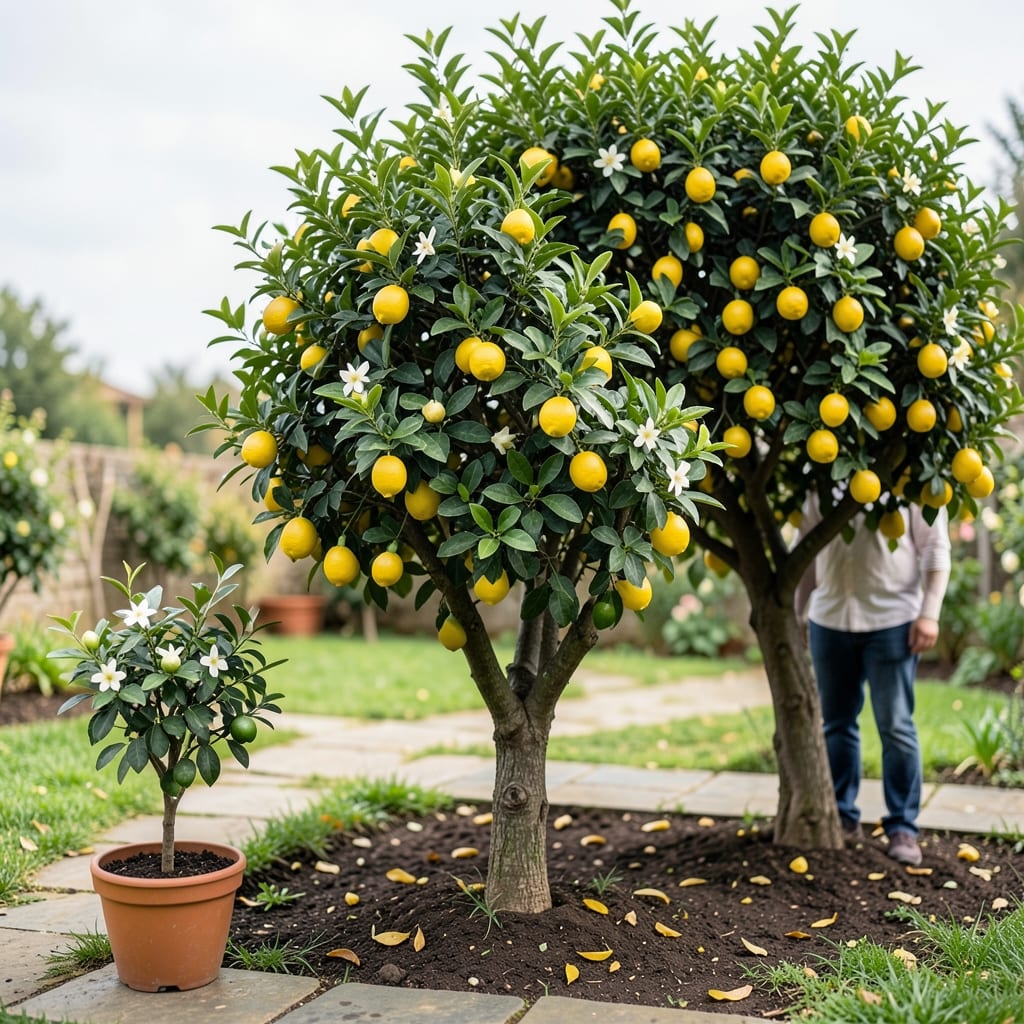
If you’ve ever dreamed of plucking fresh lemons from your own backyard 🍋, you might be wondering: how tall can lemon trees grow before they outgrow your space? The answer depends entirely on the variety you choose—some stay compact enough for containers, while others stretch toward the sky like a citrus skyscraper.
Standard lemon trees can reach 15 to 20 feet tall, making them a statement piece in larger gardens, but dwarf varieties like the Meyer lemon top out at just 6 to 10 feet. That means whether you’re working with a balcony or a backyard, there’s a perfect size for your needs—and pruning can help keep even the tallest trees in check.
Climate, soil, and sunlight all play a role in how big your lemon tree becomes, but the variety you pick is the real game-changer. Let’s break down the differences between dwarf, semi-dwarf, and standard lemon trees, plus the best ways to manage their height so you can enjoy fresh lemons without sacrificing space.
Ready to find the perfect fit for your garden? I’ll walk you through the top varieties, their growth habits, and the simple pruning techniques that keep them at your ideal height—so you can start harvesting sooner than you think.

Lemon tree height by variety: dwarf to giant growth potential
Choosing the right lemon tree variety is the first step to controlling its height. Some varieties stay compact enough for containers, while others grow into towering backyard giants. The Meyer lemon, a popular dwarf variety, typically reaches 6 to 10 feet tall, making it perfect for patios or balconies. In contrast, the Eureka lemon, a standard variety, can grow up to 20 to 30 feet tall, requiring ample space and regular pruning to manage.
Your climate also plays a role in how tall your lemon tree grows. In warmer regions like USDA Zones 9-11, lemon trees grow faster and reach their mature height sooner. In cooler zones like Zone 6, growth slows, and trees may stay smaller unless given extra care, like winter protection. For example, a Lisbon lemon tree can reach 15 to 20 feet in ideal conditions but may only grow 10 to 12 feet in cooler climates.
If you’re short on space, dwarf varieties like the Improved Meyer lemon or Ponderosa lemon (which has larger fruit but similar height) are excellent choices. These stay between 6 and 10 feet tall and thrive in containers. Semi-dwarf varieties, such as the Villafranca lemon, grow 10 to 15 feet tall and are great for medium-sized yards.
For a visual comparison of how these varieties stack up, here’s a quick reference table to help you decide which lemon tree fits your space and goals:
| Variety | Mature Height | Best For | Notes |
|---|---|---|---|
| Meyer Lemon | 6–10 ft | Containers, patios | Sweet fruit, cold-hardy |
| Improved Meyer | 6–10 ft | Balconies, small yards | Disease-resistant |
| Ponderosa Lemon | 8–12 ft | Large containers, gardens | Massive fruit, slower growth |
| Villafranca Lemon | 10–15 ft | Medium yards, espalier | Thick-skinned fruit |
| Eureka Lemon | 20–30 ft | Large backyards, orchards | Classic lemon flavor |
| Lisbon Lemon | 15–20 ft | Sunny yards, commercial use | Cold-sensitive |
If you’re growing lemon trees in containers, dwarf or semi-dwarf varieties are your best bet. Even these can grow slightly taller in-ground, so always account for extra height if planting directly in soil. For example, a Meyer lemon in a 15-gallon pot might only reach 5 to 7 feet, but the same tree in the ground could hit 8 to 10 feet.
Sunlight is another critical factor in height. Lemon trees need at least 6 hours of direct sun daily to grow to their full potential. In shadier spots, growth slows, and trees may stay shorter but produce fewer lemons. If you’re in a cooler climate like Zone 6, consider using a greenhouse or grow lights to supplement sunlight and encourage healthy growth.
For those in warmer climates, like Zones 9-11, lemon trees grow faster and can reach their mature height in 3 to 5 years. In cooler zones, it may take 5 to 7 years or longer. Patience is key—especially if you’re growing from seed, as grafted trees (like those sold at nurseries) mature faster and produce fruit sooner.
One variety that often surprises gardeners is the Variegated Lemon, which grows 10 to 15 feet tall but has striking white and green foliage. While it’s stunning, it’s less cold-hardy than Meyer lemons, so it’s best suited for Zones 9-11. If you love unique foliage but need cold tolerance, consider the Improved Meyer instead.
Finally, remember that even standard varieties can be kept smaller with proper pruning and training. Techniques like espalier
Outdoor space requirements: can you grow a lemon tree in a small yard?
Even the most compact lemon tree needs room to thrive, and your outdoor space plays a huge role in how tall it grows. A standard lemon tree can spread 10 to 15 feet wide alongside its height, while dwarf varieties still need at least 5 feet of clearance in all directions. If your yard is tight, don’t despair—many varieties adapt beautifully to smaller spaces with the right care.
For example, the Improved Meyer lemon fits perfectly in a 10x10-foot area, making it ideal for suburban backyards or large patios. Meanwhile, the Villafranca lemon, a standard variety, requires a 20x20-foot space to avoid overcrowding. Always measure your space before planting to ensure your tree has room to grow without competing with other plants or structures.
🌱 Pro Tip: If space is limited, opt for container growing. Dwarf varieties like the 'Four Seasons' lemon thrive in 15-gallon pots and can be moved indoors during winter to protect them from frost.
| Variety | Mature Height | Space Needs | Best For |
|---|---|---|---|
| Improved Meyer | 6-10 ft | 10x10 ft | Containers, small yards |
| 'Four Seasons' | 8-12 ft | 12x12 ft | Urban gardens, patios |
| Eureka | 15-20 ft | 20x20 ft | Large backyards, orchards |
| Villafranca | 18-25 ft | 25x25 ft | Rural properties, full sun |
| Ponderosa | 20-30 ft | 30x30 ft | Large estates, tropical climates |
Sunlight is just as critical as space when it comes to controlling height. Lemon trees need 6+ hours of direct sunlight daily, but too much harsh afternoon sun can stress the tree and encourage rapid, unchecked growth. If your yard has partial shade, choose a dwarf variety or plant near a south-facing wall to maximize sunlight exposure without overheating the roots.
💡 Light Hack: Use a reflective surface like a white fence or wall to bounce sunlight onto your tree, especially in shadier areas. This trick can help your lemon tree grow stronger and more compact, even in less-than-ideal conditions.
Finally, remember that pruning in late winter can drastically reduce height over time. By removing 1/3 of the new growth each year, you can keep even a standard lemon tree at a manageable height—perfect for smaller spaces. With the right variety and a little planning, you can enjoy fresh lemons without sacrificing your garden’s layout.