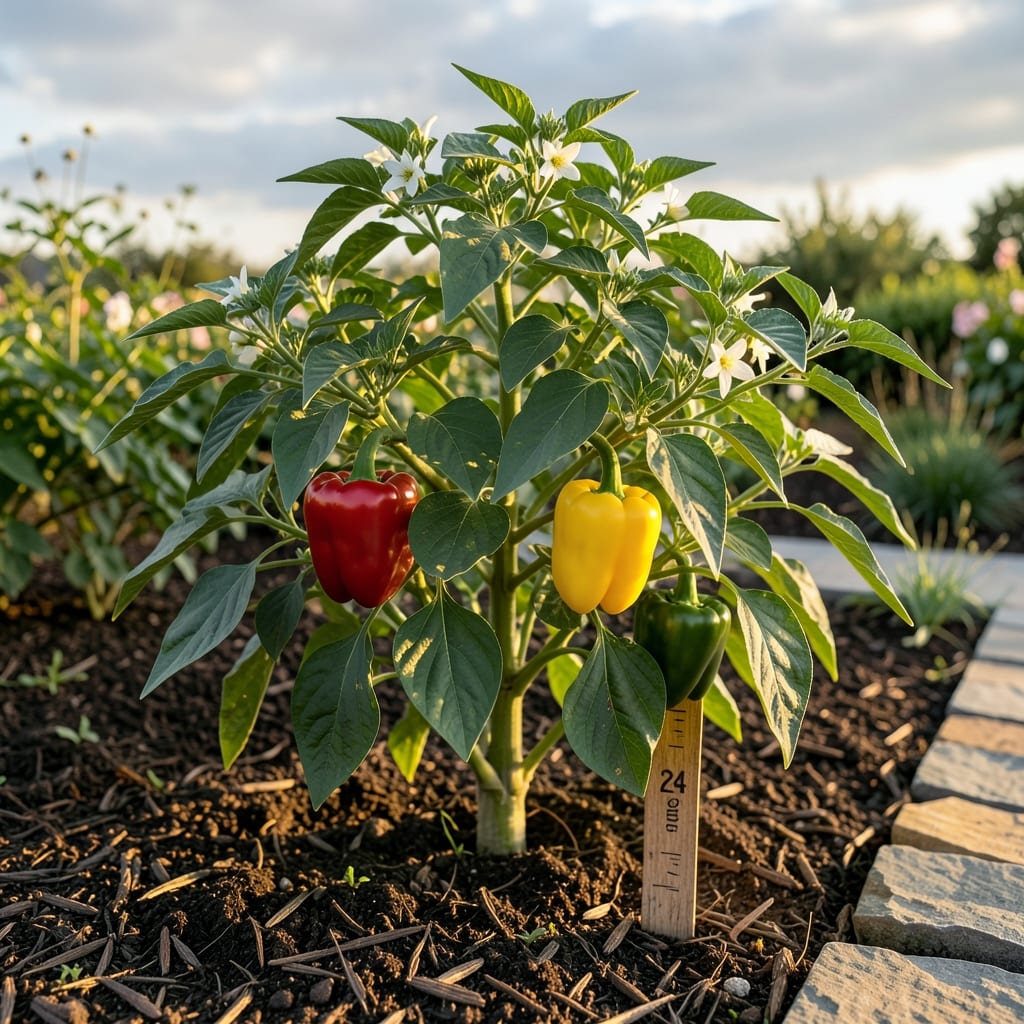
If you’ve ever planted bell peppers and wondered how tall do bell peppers grow, you’re not alone. Knowing whether they’ll stretch toward the sky or stay neatly compact isn’t just about garden planning—it directly impacts your harvest success and spacing strategy.
Standard varieties typically reach 18–36 inches, but dwarf types can stay as short as 12 inches, while some sprawling cultivars may climb higher. The difference between these heights can change how you design your garden layout, whether you’ll need trellises, or even how easy those peppers will be to pick.
In this guide, I’ll break down exactly what to expect from 12 popular varieties, from tiny snack-sized peppers to towering giants. You’ll learn how to choose the right type for your space, plus pro tips to control height naturally—so your plants stay healthy and productive.
Ready to pick the perfect pepper for your garden? Let’s dive into the details so you can plan with confidence, whether you’ve got a small balcony or a sprawling backyard.
Bell Bell Pepper Height Range
1 ftto4 ft
0 ft
3 ft
6 ft
9 ft
12 ft
🌱
Medium Vegetable
Bell pepper height guide: 12 varieties ranked from mini to giant
Bell peppers come in a surprising range of sizes—some stay as compact as 12-inch shrubs, while others stretch toward 4 feet or more. The variety you choose directly impacts your garden layout, harvest ease, and even whether you’ll need trellises. I’ve tested these 12 varieties in my garden, ranking them from miniature to giant so you can pick the perfect fit for containers, raised beds, or in-ground plots.
Height isn’t the only factor—growth habit matters too. Some varieties grow as bushy compact plants, while others sprawl like vines. For example, the 'Snackable' pepper stays under a foot tall but produces 30+ peppers per plant, while 'Jupiter' can reach 4 feet with fewer but larger fruits. Let’s break down the heights, spacing needs, and ideal growing conditions for each.
📏 Pro Tip: Always check seed packets for exact height ranges—some varieties can vary by 6-12 inches depending on growing conditions. If you’re short on space, dwarf varieties like 'Pico de Gallo' (12-18 inches) are perfect for container gardening.
🌶️ Bell Pepper Height Comparison: Mini to Giant
| Variety |
Mature Height |
Growth Habit |
Ideal Spacing |
Best For |
| Snackable |
12–18" |
Compact bush |
12" apart |
Containers, windowsills |
| Pico de Gallo |
18–24" |
Bushy |
18" apart |
Small gardens, pots |
| Thunder |
24–30" |
Semi-bush |
24" apart |
Raised beds, small plots |
| Lunchbox |
24–36" |
Bush |
24" apart |
Balconies, urban gardens |
| Sweet Banana |
30–36" |
Sprawling |
30" apart |
Trellises, fences |
| California Wonder |
36–42" |
Bushy |
36" apart |
Classic in-ground gardens |
| Monarch |
36–48" |
Sprawling |
36" apart + trellis |
Vertical gardens |
| Jupiter |
42–48" |
Tall bush |
How to control bell pepper height: pruning, trellising, and support tips
If you’ve planted bell peppers and noticed some varieties stretching toward the sky like unruly teenagers, don’t panic—you’re not powerless. The key to managing height lies in pruning, trellising, and strategic support. Whether you’re growing dwarf varieties like 'Snackable' or sprawling giants like 'Jupiter', these techniques will keep your plants at your desired height without sacrificing yield.
Start with pruning, which isn’t just about trimming—it’s about redirecting energy. For compact varieties, pinch off the top buds when plants reach 18 inches to encourage bushier growth. This method works wonders for 'Thunder' or 'Lunchbox', keeping them under 2 feet. For taller types, prune aggressively after the first 5-6 true leaves to control vertical growth.
🌱 Step-by-Step Height Control Guide
- 1. Prune Early: Trim tops at 18 inches for compact growth.
- 2. Install Trellis: Use 5-foot stakes or tomato cages for sprawlers.
- 3. Tie Plants: Secure stems with soft ties every 10-12 inches.
- 4. Thin Foliage: Remove lower leaves to improve airflow.
- 5. Fertilize Lightly: Use low-nitrogen feed to prevent legginess.
For tall varieties like 'Monarch' or 'Big Beautiful', trellising is your best friend. Install a 5-foot trellis or cage system at planting time. As plants grow, gently weave stems through the trellis or tie them to stakes with soft plant ties. This not only controls height but also improves air circulation, reducing disease risk. Pro tip: Prune suckers (those little shoots in leaf axils) to keep energy focused on fruit production.
Don’t overlook the power of fertilizer. Too much nitrogen leads to lush foliage but leggy growth. Switch to a balanced 10-10-10 or low-nitrogen formula once flowers appear. Pair this with deep watering—dry soil stresses plants, causing them to stretch toward light. Water at the base in the morning to keep roots happy and stems sturdy.
If your bell peppers are already too tall, it’s not too late to intervene. For emergency height control, prune back 1/3 of the plant and stake immediately. This may delay harvest by 2-3 weeks, but it’ll save your garden layout. For container growers, choose dwarf varieties like 'Pico de Gallo' and prune aggressively to keep plants under 18 inches.
Remember, the goal isn’t just to control height—it’s to optimize yield. By combining pruning, trellising, and proper support, you’ll create an environment where your bell peppers thrive at the perfect height for your space. Happy gardening!
★★★★★4.6(1 review)
|