
Trees
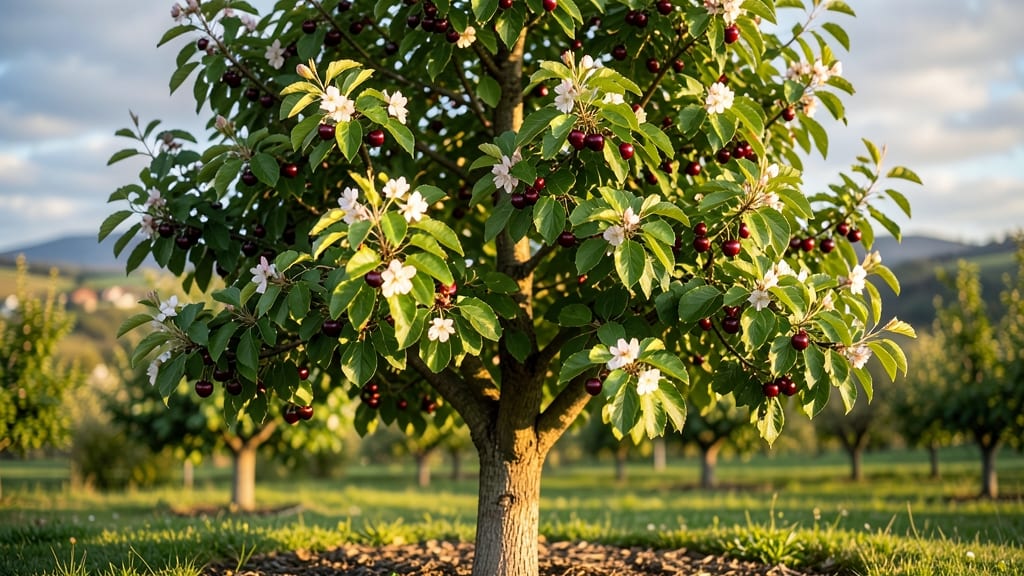
Cherry tree height guide: dwarf vs semi-dwarf vs standard varieties
If you've ever wondered, "how tall do cherry fruit trees grow?" the answer depends entirely on the variety you choose. Standard cherry trees can soar to 20-40 feet tall, towering over most backyards like a skyscraper in a dollhouse.
But don't let that intimidate you—dwarf and semi-dwarf varieties offer the same delicious fruit in a fraction of the space. For perspective, a 20-foot tree is roughly the height of a two-story house, while a 10-foot dwarf fits neatly under a basketball hoop.
The key to selecting the right cherry tree lies in understanding these three growth categories: dwarf, semi-dwarf, and standard. Each has distinct height ranges, growth rates, and space requirements that will impact everything from planting location to long-term maintenance.
For example, a standard Bing cherry tree might reach 25 feet in 10 years, while a dwarf Stella cherry will max out around 8 feet—both producing sweet, juicy fruit but on vastly different scales.
Your choice isn't just about height—it's about rootstock type. Dwarf trees are grafted onto dwarfing rootstock like Gisela 5 or Gisela 6, which naturally restrict growth.
Semi-dwarf trees use intermediate rootstock like Lovell or Colt, while standard trees grow on their own roots or Mahaleb rootstock, reaching their full towering potential. This distinction explains why a 12-foot semi-dwarf might produce 30% more fruit per square foot than a standard tree of the same age.
| Variety | Type | Mature Height | Spacing Needs | Growth Rate | Best For | |||||||||||||||||||||||||||||
|---|---|---|---|---|---|---|---|---|---|---|---|---|---|---|---|---|---|---|---|---|---|---|---|---|---|---|---|---|---|---|---|---|---|---|
| Stella | Dwarf | 8-10 ft | 8-10 ft apart | Moderate | Containers, small yards | |||||||||||||||||||||||||||||
| Compact Stella | Dwarf | 6-8 ft | 6-8 ft apart | Slow | Patio gardens, urban spaces | |||||||||||||||||||||||||||||
| Montmorency | Semi-Dwarf | 12-15 ft | 12-15 ft apart | Fast | Medium yards, orchards | |||||||||||||||||||||||||||||
| Bing | Standard | 20-25 ft | 20-25 ft apart | Very Fast | Large properties, rural areas | |||||||||||||||||||||||||||||
| Rainier | Standard | 25-30 ft | 25-30 ft apart | Fast | Orchards, commercial farms | |||||||||||||||||||||||||||||
| Black Tartarian | Semi-Dwarf | 15-18 ft | 15-18 ft apart | Moderate | Backyard orchards | |||||||||||||||||||||||||||||
| Lapins | Dwarf | 8-10 ft | 8-10 ft apart | Slow | Containers, small spaces | |||||||||||||||||||||||||||||
| Sweetheart | Dwarf | 6-8 ft | 6-8 ft apart | Moderate | Patios, balconies | |||||||||||||||||||||||||||||
| Stella Compact | Dwarf | 5-6 ft | 5-6 ft apart |
Best compact cherry trees under 10 feet for small gardensIf your backyard is small but you crave fresh cherries, don't let limited space stop you! Many compact cherry varieties stay under 10 feet tall while still producing abundant fruit. These space-saving options are perfect for containers, urban gardens, or tight corners. I’ve grown several myself, and the Stella and Compact Stella varieties are my top picks for their reliability and manageable size. For tart cherries, the Montmorency dwarf variety reaches just 8-10 feet, making it ideal for small orchards or even large pots. Even standard varieties can be pruned to stay within these limits, but choosing a naturally compact type saves time and effort. Below are my favorite cherry tree varieties under 10 feet, along with their care needs and fruit production tips.
When selecting a compact cherry tree, prioritize self-pollinating varieties like Stella or Lapins to simplify growing. These trees thrive in full sun (6+ hours daily) and well-draining soil. For container growing, choose a 5-gallon pot minimum and use a balanced fertilizer like 10-10-10 every 6 weeks during spring and summer. My Compact Stella tree in a large pot produced 20 pounds of cherries last season—proof that small spaces can yield big harvests! To maximize fruit production in limited space, prune annually in late winter to remove dead or crossing branches. Thin out excess fruit in early summer to improve size and quality. I also recommend mulching around the base to retain moisture and suppress weeds, which is especially helpful for potted trees. With the right care, even a 6-foot-tall cherry tree can feed your family for years. For urban gardeners, consider training your compact cherry tree against a south-facing fence or trellis. This not only saves space but also makes harvesting easier. Just ensure the support structure is sturdy—cherry branches can get heavy when laden with fruit! With these varieties, you’ll enjoy homegrown cherries without the space constraints of standard trees. 🍒 |