
How To
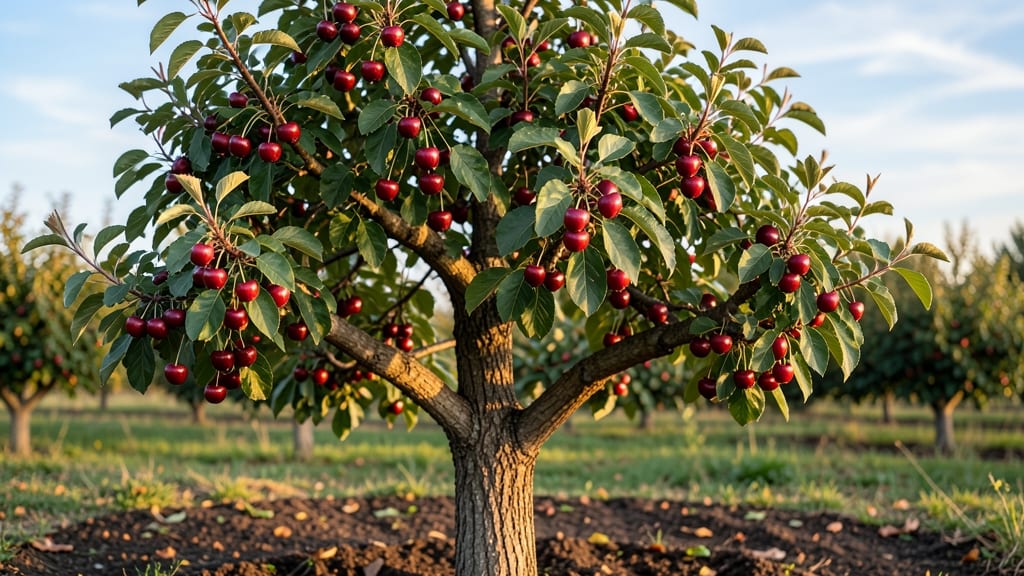
Wondering how tall does a Bing cherry tree grow before it starts shading your entire backyard? You’re not alone—many gardeners hesitate to plant one because of its impressive stature, but with the right approach, you can enjoy sweet 🍒 harvests without losing your outdoor space.
A standard Bing cherry tree typically reaches 15 to 25 feet at maturity, towering like a small oak. That’s enough to block sunlight for nearby plants and make ladder-based picking a necessity. But don’t let that scare you off—pruning and choosing the right variety can keep it manageable.
In just 3 years, you can shape this tree to stay within 10 to 15 feet, making it easier to maintain and harvest. Whether you opt for a dwarf variety (like ‘Stella’) or stick with standard pruning techniques, controlling its height is entirely within your reach.
Ready to grow your own Bing cherries without sacrificing your yard? Let’s break down how to keep this fruit-bearing giant in check while maximizing your harvest.

Natural height of Bing cherry trees: mature size and growth rate
A Bing cherry tree typically reaches a mature height of 15 to 25 feet, making it a tall, majestic addition to any landscape. In ideal conditions, these trees can grow even taller, but most home gardeners find them reaching the 18-to-20-foot range over time.
Understanding this height is crucial for planning your garden layout and ensuring your tree has enough space to thrive.
When planted, a Bing cherry tree starts small—usually 2 to 4 feet tall in its first year. By year two, it can shoot up to 6 to 10 feet, and by year three, it may already be 10 to 15 feet tall.
This rapid growth means your tree will quickly become a focal point in your yard, but with proper care, you can manage its height effectively.
The final height of a Bing cherry tree depends on several factors, including soil quality, climate conditions, and pruning practices. Trees grown in rich, well-draining soil with plenty of sunlight tend to grow taller and produce more fruit.
Meanwhile, cooler climates or nutrient-poor soil can slow growth, keeping the tree shorter.
If you're concerned about space, consider that Bing cherry trees have a spreading canopy of about 15 to 20 feet wide. This means you’ll need at least 20 feet of clearance in all directions to avoid overcrowding nearby plants or structures.
Proper spacing ensures good airflow, reducing the risk of disease and making fruit harvesting easier.
Now, let’s break down the key details in a quick-reference table to help you visualize the growth stages and space requirements.
| Stage | Height | Canopy Width | Spacing Needs |
|---|---|---|---|
| Year 1 | 2–4 ft | 3–5 ft | Minimal |
| Year 2 | 6–10 ft | 8–12 ft | 10 ft from structures |
| Year 3 | 10–15 ft | 12–15 ft | 15 ft from other trees |
| Mature (5+ years) | 15–25 ft | 15–20 ft | 20+ ft clearance |
For those with limited space, dwarf Bing cherry varieties are an excellent alternative. These trees can stay between 6 to 12 feet tall at maturity, making them perfect for smaller yards or even large containers.
While they produce fewer cherries, the trade-off in space and ease of maintenance is often worth it for urban gardeners.
Another factor influencing height is the rootstock used when planting. Standard Bing cherry trees are grafted onto vigorous rootstock, which encourages rapid growth. In contrast, semi-dwarf rootstock can reduce the tree’s height by 30 to 40%, while dwarf rootstock can cut it nearly in half.
Always check the rootstock details when purchasing your tree to align with your space constraints.
If you’re planting your Bing cherry tree in a windy or exposed area, growth may be stunted due to stress. To counteract this, provide windbreaks or choose a sheltered location.
Additionally, overwatering or poor drainage can lead to weaker growth, so ensure your soil is well-aerated and that your tree isn’t sitting in standing water.
Finally, remember that pruning plays a huge role in controlling height. Regular pruning not only shapes your tree but also encourages a stronger, bushier structure with more fruit-bearing branches.
In the next section, I’ll walk you through a 3-year pruning plan to keep your Bing cherry tree at your desired height while maximizing fruit production.
Natural height of Bing cherry trees: mature size and growth rate
A standard Bing cherry tree typically reaches a mature height of 15–25 feet, making it a towering presence in any backyard. In ideal conditions, these trees can grow even taller, but most gardeners find them reaching 18–22 feet with proper care.
Understanding this height is crucial for planning spacing and managing growth early on.
In their first year, a young Bing cherry tree grows slowly, reaching only 2–4 feet tall. By year two, you’ll see more rapid growth, with heights of 6–10 feet. By year three, the tree can surge to 10–15 feet, nearing its mature size by year five or six.
This steady growth means early planning is key to avoiding space issues later.
| Growth Stage | Height Range | Time to Reach |
|---|---|---|
| Year 1 | 2–4 feet | First growing season |
| Year 2 | 6–10 feet | Second growing season |
| Year 3 | 10–15 feet | Third growing season |
| Mature Height | 15–25 feet | 5–7 years |
Several factors influence how tall your Bing cherry tree grows. Climate plays a major role—warmer regions with long growing seasons often see faster growth. Soil quality also matters; rich, well-draining soil promotes healthier, taller trees. Additionally, watering consistency and fertilization can accelerate growth, though over-fertilizing may lead to weak branches.
If space is limited, consider planting your Bing cherry tree near a south-facing fence or wall, which can provide support and encourage upward growth. However, this also means regular pruning to maintain manageable height.
Without intervention, a standard Bing cherry tree can easily outgrow a typical suburban yard, making early pruning essential.
For gardeners with smaller spaces, dwarf varieties like ‘Stella’ Bing cherry offer a more compact solution, reaching only 6–10 feet at maturity. These varieties require less space but may produce fewer cherries. Always check the specific variety’s growth habits before planting to ensure it fits your landscape.
Proper spacing is critical when planting a Bing cherry tree. Aim for at least 15–20 feet of clearance between the tree and structures, neighboring trees, or property lines.
This ensures airflow, reduces disease risk, and allows for future growth without crowding. Always plant in a location where the tree can thrive for decades.