
How To
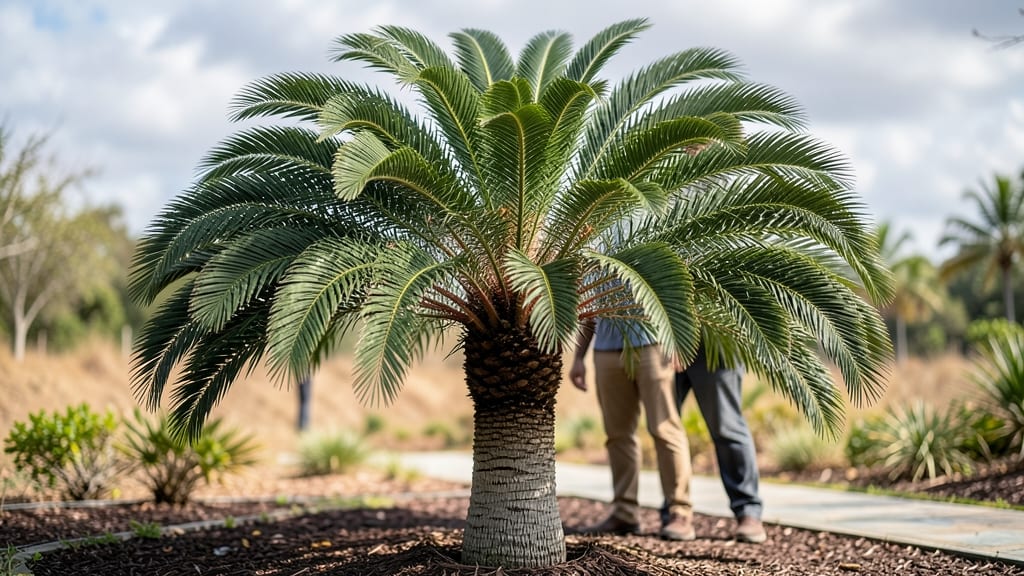
If you're dreaming of adding a FoxTail Palm 🌴 to your outdoor space, you might be wondering just how tall these tropical stunners can grow—and whether your yard can handle them.
The answer isn’t one-size-fits-all, because some varieties reach towering heights of 20 feet or more, while others stay more manageable for smaller gardens.
For home gardeners in USDA Zone 6a, understanding these height variations is the key to planning your landscape with confidence. Whether you're eyeing a dramatic focal point or a compact accent plant, knowing what to expect helps you choose the right spot and care routine.
Let’s break down the growth ranges so you can pick the perfect FoxTail Palm for your space.
The good news? These palms grow at a steady pace, making them easier to manage than you might think. In just 3 years, a young plant can climb to 6-8 feet, but their full height depends on sunlight, soil quality, and even your local climate.
With the right conditions, you can control their growth—or let them thrive naturally.
Ready to find out which varieties fit your yard best? I’ll walk you through the height differences, growth tips, and how to keep your FoxTail Palm looking its best—no matter how big (or small) you want it to be.

Foxtail palm height by variety: dwarf to giant species compared
Foxtail palms—like Wodyetia bifurcata—are stunning tropical plants, but their mature heights vary dramatically. Some stay compact enough for small yards, while others become towering landscape stars. Understanding these differences helps you choose the right variety for your space and sunlight conditions.
The most iconic foxtail palm, Wodyetia bifurcata, typically reaches 15-25 feet at maturity, making it a mid-sized palm. However, other species like Ptychosperma macarthurii (Australian native) can grow 20-30 feet tall, while dwarf varieties like Chamaedorea elegans (bamboo palm) max out around 6 feet.
Here’s how the most common foxtail palm varieties compare in height, growth habits, and ideal settings:
| Variety | Mature Height | Growth Rate | Best For |
|---|---|---|---|
| Wodyetia bifurcata | 15–25 ft | Slow to moderate | Large landscapes, tropical gardens |
| Ptychosperma macarthurii | 20–30+ ft | Moderate | Large properties, coastal areas |
| Chamaedorea elegans | 3–6 ft | Slow | Containers, indoor spaces, small yards |
| Rhapis excelsa | 6–12 ft | Moderate | Medium yards, urban gardens |
Note: Heights vary based on climate, soil, and care.
If you’re working with limited space, dwarf varieties like Chamaedorea elegans are perfect for containers or patios. For bold statements, Ptychosperma macarthurii or Wodyetia bifurcata will create dramatic focal points in large gardens or near swimming pools.
Pro tip: Always check your local USDA hardiness zone before planting. Foxtail palms thrive in zones 9-11, but some varieties can tolerate cooler climates with protection.
For container gardening, opt for slow-growing dwarf species—they’ll stay manageable even as they mature. Just ensure your pots are at least 18 inches deep to accommodate root growth.
🌱
Need help visualizing? Imagine a Wodyetia bifurcata at maturity—it’s roughly the height of a two-story building! In contrast, a Chamaedorea elegans stays about as tall as a standard door frame. Choose based on your space and aesthetic goals.
For tropical vibes without overwhelming your yard, consider Rhapis excelsa. It’s versatile enough for both ground planting and large containers, reaching 6-12 feet while maintaining a bushy, lush appearance.
🪴
How growth conditions affect foxtail palm height: sun, soil & climate factors
Your foxtail palm's mature height isn't set in stone—it's heavily influenced by its growing conditions. Sunlight exposure plays the biggest role, with full sun (6+ hours daily) accelerating growth toward the upper end of height ranges.
In partial shade, expect slower growth and potentially shorter stature, especially for varieties like Wodyetia bifurcata that thrive in bright conditions.
Soil quality also determines how tall your palm will grow. Well-draining, slightly acidic soil (pH 5.5-6.5) supports optimal nutrient uptake, allowing the palm to reach its genetic height potential.
Compacted or waterlogged soils stunt growth by limiting root development, while amended soil with compost can boost height by 20-30% in ideal conditions.
- Full sun = Faster growth (up to 30+ ft for large varieties)
- Partial shade = Slower growth (may stay under 15 ft)
- Well-draining soil = Reaches full height potential
- Poor drainage = Stunted growth (roots suffocate)
Climate zones further impact height development. In USDA Zones 9-11, where foxtail palms thrive naturally, they grow 15-25% taller than in cooler zones like Zone 8. The warmth and humidity of tropical climates accelerate growth rates, while cooler temperatures slow development.
Even in colder zones, container-grown palms can reach 80% of their potential height with proper winter care.
For compact growth, limit sunlight to 4-5 hours daily and use smaller containers (root-bound conditions naturally restrict height). To encourage taller growth, place your palm in the sunniest spot and fertilize with balanced 6-6-6 NPK every 6 weeks during growing season.
Remember: pruning fronds won't reduce height but improves airflow and overall health.
Regional variations matter too. In Florida or Hawaii, foxtail palms often exceed 25 feet due to ideal conditions, while in California's inland valleys, they may max out at 18-20 feet without supplemental watering.
Always check your local microclimate—urban areas with heat islands can push growth beyond typical ranges.
Pro tip: Monitor your palm's growth rate annually. If it's growing less than 12 inches per year, it's likely nutrient-deficient or light-starved. Adjust care immediately to reach its full height potential—because with the right conditions, even dwarf varieties can surprise you with their growth! 🌿