
How To
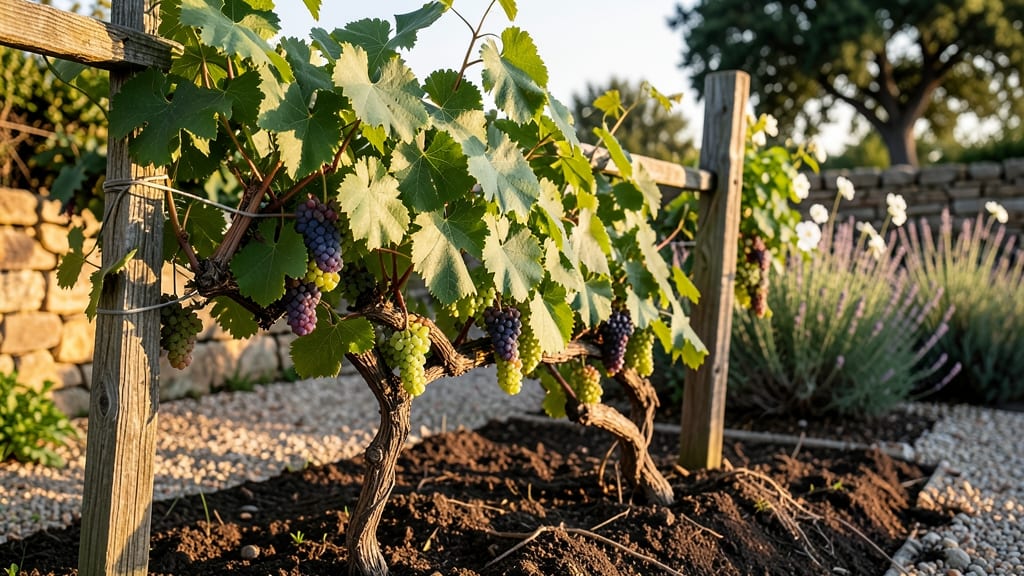
If you're planning a grapevine in your garden, one of the first questions you'll ask is "how tall do grapes grow"—because those 🍇 vines can stretch farther than you might expect!
While some compact varieties stay under 10 feet, others reach heights of 20 feet or more, especially when trained on trellises or arbors.
This dramatic difference isn’t just about space—it affects everything from pruning to harvest. Whether you're dreaming of a backyard vineyard or a small-space balcony setup, knowing your grapevine’s growth potential is the key to keeping it healthy and productive.
Let’s break down what to expect by variety and how to manage their height like a pro.
Some grapes, like the popular Thompson Seedless, grow aggressively and need strong support, while others, like Concord, stay slightly shorter but still require careful training. The right trellis or pruning technique can make all the difference in controlling their vertical reach.
Ready to turn your grape-growing plans into reality? I’ll walk you through the heights you can expect, the best varieties for your space, and simple tips to keep those vines in check—so you can enjoy a bountiful harvest without the tangled mess.

Grape vine height by variety: from compact bushes to towering trellises
Grapevines are legendary climbers, but their mature height depends entirely on the variety and your growing approach. Without proper support, vines can sprawl 20+ feet in a single season, while trained varieties stay compact.
Let’s break down the height ranges for popular grapes and how to plan your space accordingly.
Most commercial and backyard grapes fall into three growth categories: dwarf (8-12 ft), semi-dwarf (12-15 ft), and standard (15-20 ft). Dwarf varieties like Thompson Seedless are perfect for small gardens, while Concord or Pinot Noir can reach towering trellis heights if left unchecked.
Here’s how to visualize it: A mature standard vine (like Cabernet Sauvignon) can stretch taller than a two-story house’s roof (20+ ft), while a dwarf Muscadine stays under 10 ft. Your trellis or arbor must match the vine’s genetic potential—or risk tangled chaos.
🍇
| Variety | Mature Height | Spread | Ideal Trellis |
|---|---|---|---|
| Thompson Seedless (Dwarf) | 8–12 ft | 6–8 ft | 4–6 ft vertical trellis |
| Concord (Standard) | 15–20 ft | 10–12 ft | 12–15 ft Geneva double curtain |
| Pinot Noir (Semi-Dwarf) | 12–15 ft | 8–10 ft | 8–10 ft VSP trellis |
| Muscadine (Bush Type) | 6–10 ft | 5–7 ft | Arbor or low trellis |
| Cabernet Sauvignon (Standard) | 18–25 ft | 12–15 ft | 15–20 ft pergola or high trellis |
*Height varies with pruning, trellis support, and rootstock.
Notice how Muscadine grapes grow as compact bushes rather than vines, making them ideal for arbor-style training. Meanwhile, Cabernet Sauvignon demands serious vertical space—think pergolas or tall trellises to accommodate its 20+ ft potential.
If you’re short on space, opt for dwarfing rootstock, which can reduce height by 30–50%.
Rootstock choice is your secret weapon for controlling height. For example, grafting Thompson Seedless onto 1103 Paulsen rootstock (a dwarfing rootstock) keeps it under 10 ft, while the same variety on own roots can reach 15 ft.
Always check the rootstock recommendation for your chosen variety—it’s the difference between a manageable vine and a wild tangle.
For first-year growth, expect 5–10 ft of vertical gain, even in dwarf varieties. This is why trellis installation should happen at planting, not after the vine takes off.
A 5–6 ft trellis is ideal for most backyard setups, but if you’re growing standard varieties, plan for 10+ ft of clearance.
🌿
Pro tip: Vertical shoot positioning (VSP) trellises are the gold standard for controlled height and fruit quality. They force vines to grow upward in a single plane, making pruning and harvesting easier.
For small gardens, a 4–6 ft trellis with horizontal wires works well for dwarf varieties, while commercial setups often use 12–15 ft trellises for standard vines.
If you’re growing multiple varieties, space them 8–10 ft apart to prevent shading and disease spread. Overcrowding leads to stunted growth, poor fruit quality, and increased pest pressure. Think of your grapevine layout like a highway system—each vine needs its own lane to thrive.
How to control grape vine height: pruning, training & trellis systems
Controlling grape vine height isn't just about aesthetics—it directly impacts your harvest quality, yield consistency, and ease of maintenance. Without proper management, vines can grow uncontrollably tall (up to 20+ feet), creating tangled messes that make harvesting nearly impossible.
The key lies in three core techniques: pruning, training, and trellis systems, each tailored to your grape variety and space constraints.
For most backyard gardeners, the goal is to keep vines between 8-15 feet for manageable care. Dwarfing rootstock (like 1103 Paulsen or 101-14 Millardet) can reduce mature height by 30-50%, making them ideal for small spaces.
Even with dwarf varieties, though, you'll still need a sturdy support system—like a 5-6 foot trellis—to guide growth upward and prevent sprawling.
🌱 Pruning Methods Compared
| Method | Best For | Height Control | Yield Impact |
|---|---|---|---|
| Cane Pruning | Wine grapes (e.g., Cabernet, Merlot) | Moderate (4-8 ft) | High (more buds) |
| Spur Pruning | Table grapes (e.g., Thompson Seedless) | Low (6-10 ft) | Consistent |
| Renovating Canes | Old vines (5+ years) | Customizable | Variable |
✂️ Pro Tip: Always prune in dormant season (late winter) to minimize stress on the vine.
Your trellis choice plays a huge role in vine height. A vertical shoot positioning (VSP) trellis keeps vines tight and manageable, while Geneva double curtain (GDC) systems (common in commercial vineyards) can support 12-15 foot heights without sprawling.
For backyard setups, a 5-6 foot arbor works well for table grapes, while wine grapes may need 8-10 feet of vertical support to train canes properly.
Training young vines is where you set the foundation for height control. Start by tying vines to a central leader (like a bamboo stake or trellis wire) and removing lateral shoots that grow below 3-4 feet.
This encourages upward growth while preventing a bushy, unmanageable base. For first-year vines, aim to keep them under 5 feet—this reduces wind damage and makes winter pruning easier in later years.
One common mistake is over-pruning, which can lead to excessive height growth as the vine compensates by sending up long canes. The rule of thumb is to leave 12-24 buds per vine after pruning (more for wine grapes, fewer for table grapes).
Pair this with regular summer pruning—removing suckers and water sprouts throughout the season—to maintain your target height and improve air circulation.
For compact growth, consider espalier training on a flat trellis, which can keep vines as short as 6 feet while maximizing fruit production in tight spaces. Just be prepared to prune more frequently (every 4-6 weeks) to control lateral growth.
With the right balance of pruning, training, and trellis support, you can keep your grapevines at an ideal height for easy harvesting and healthy clusters—without sacrificing yield.