
Trees
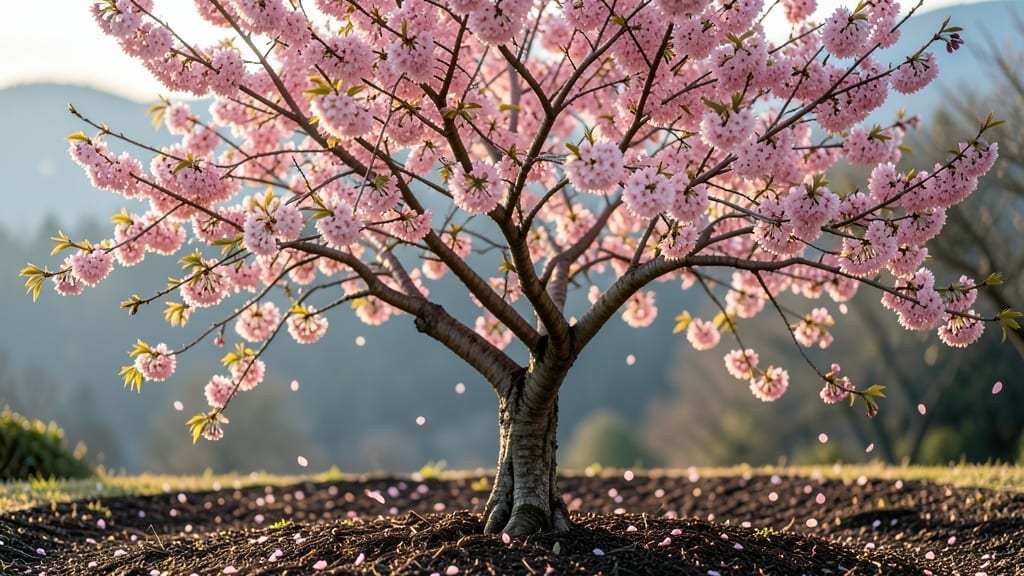
If you're dreaming of a backyard bursting with 🌸 Japanese cherry blossom trees, you're probably wondering how tall these stunning trees can grow—and whether your space can handle them.
The answer isn’t one-size-fits-all, because some varieties stretch toward the sky like skyscrapers, while others stay compact enough for even the coziest gardens.
The how tall do Japanese cherry blossom trees grow question depends entirely on the cultivar you choose. Popular types like the 'Kwanzan' can reach 25-30 feet at maturity, while others like 'Somei-Yoshino' typically max out around 20-25 feet.
But here’s the game-changer: with the right pruning techniques, you can shape these trees to fit your space—whether that means keeping them at a manageable height or encouraging a full, bushy canopy.
For gardeners with limited room, there are even smaller options that still deliver those breathtaking spring blooms. The key is understanding each variety’s growth habits and learning when and how to prune for both height control and vibrant flowers.
Let’s break down the heights by cultivar and share pruning secrets to keep your tree thriving—no matter how much space you have.
Whether you’re planning a dramatic focal point or a delicate accent plant, knowing these details will help you pick the perfect 🌸 Japanese cherry blossom tree for your landscape. Ready to transform your outdoor space into a pink-and-white paradise? Let’s dive in.

Japanese cherry blossom tree heights by popular cultivar (with growth charts)
Japanese cherry blossom trees (Prunus serrulata) are famous for their stunning spring blooms, but their mature heights can vary dramatically depending on the cultivar. While some varieties reach towering heights of 40 feet, others stay compact enough for small urban gardens.
Choosing the right variety ensures your tree fits your space while delivering that breathtaking floral display.
Most Japanese cherry blossoms grow between 20 to 40 feet at maturity, but their spread (width) is just as important as height. For example, the popular 'Somei-Yoshino' cultivar typically reaches 30 to 40 feet tall but spreads 25 to 35 feet wide.
This wide canopy means you’ll need ample yard space to accommodate both height and spread.
Here’s where things get exciting: some cultivars like 'Kiku-Shidare-Zakura' (weeping cherry) grow only 15 to 20 feet tall but create a stunning cascading effect. Others, like 'Shirotae' (white blossoms), stay under 25 feet tall, making them ideal for medium-sized gardens.
Always check the mature height and spread before planting to avoid overcrowding.
🌸
If you’re working with limited space, focus on cultivars like 'Kiku-Shidare-Zakura' or 'Shidare-Zakura', which stay under 18 feet tall. These varieties are perfect for urban gardens, patios, or even large containers.
Just remember: even compact varieties need room for their spread, so avoid planting them too close to structures or other plants.
For larger properties, 'Somei-Yoshino' or 'Hokusai' will create a dramatic focal point. These trees thrive when planted at least 30 feet away from buildings or other trees to allow for their
How pruning affects Japanese cherry blossom tree height and bloom quality
Pruning your Japanese cherry blossom tree isn’t just about controlling its height—it’s about preserving those stunning blooms while keeping the tree healthy. These trees naturally grow 20-40 feet tall, but improper pruning can stunt growth or even reduce flowering.
The key is timing and technique, as cherry blossoms form flower buds on one-year-old wood, meaning aggressive pruning can cut off next year’s blooms.
I’ve learned the hard way that pruning at the wrong time can turn your tree into a bare-branched shadow of its former self. For example, pruning in late summer or early fall removes next year’s flower buds entirely.
Instead, focus on dormant-season pruning (late winter or early spring) to shape the tree without sacrificing blooms. This is when the tree is still dormant but about to burst into growth.
Here’s a quick rule of thumb: Never remove more than 25% of the tree’s canopy in one year. Over-pruning stresses the tree and can lead to weak growth or even disease.
If you’re aiming for a smaller tree, opt for selective thinning instead of heavy topping. Thinning opens up the canopy, allowing sunlight to reach inner branches and encouraging better bloom distribution.
⚠️ Pruning Mistakes That Stunt Growth
- Pruning after blooming: Removes next year’s flower buds.
- Topping the tree: Creates ugly, weak growth and reduces blooms.
- Over-pruning young trees: Delays maturity and flowering.
- Using dull tools: Tears bark, inviting pests and disease.
Pro tip: Sanitize pruners with rubbing alcohol between cuts to prevent spreading disease.
If you’re dealing with an overgrown tree, start with structural pruning to remove dead, diseased, or crossing branches first. Then, focus on reducing height gradually by cutting back branches just above a bud or lateral branch.
Avoid cutting flush to the trunk, as this can create entry points for pests. For weeping varieties like 'Kiku Shidare Zakura', prune to maintain the graceful arch while keeping the center open for airflow.
For urban gardeners with limited space, regular pruning can keep a standard cherry blossom tree manageable. For instance, if you plant a 'Somei-Yoshino' (which typically reaches 30 feet), pruning back 1-2 feet annually can keep it within a 20-foot range over time.
Just remember: Patience is key. Cherry blossoms grow slowly, especially in their first few years, so don’t rush the process.
Finally, always prune on a dry, calm day to minimize stress on the tree. After pruning, apply a balanced fertilizer (like 10-10-10) to support new growth. And if you’re unsure, consult a local arborist—some varieties, like 'Kanzan', are more forgiving than others.
With the right approach, your cherry blossom will reward you with years of spectacular spring blooms while staying in check.