
Trees
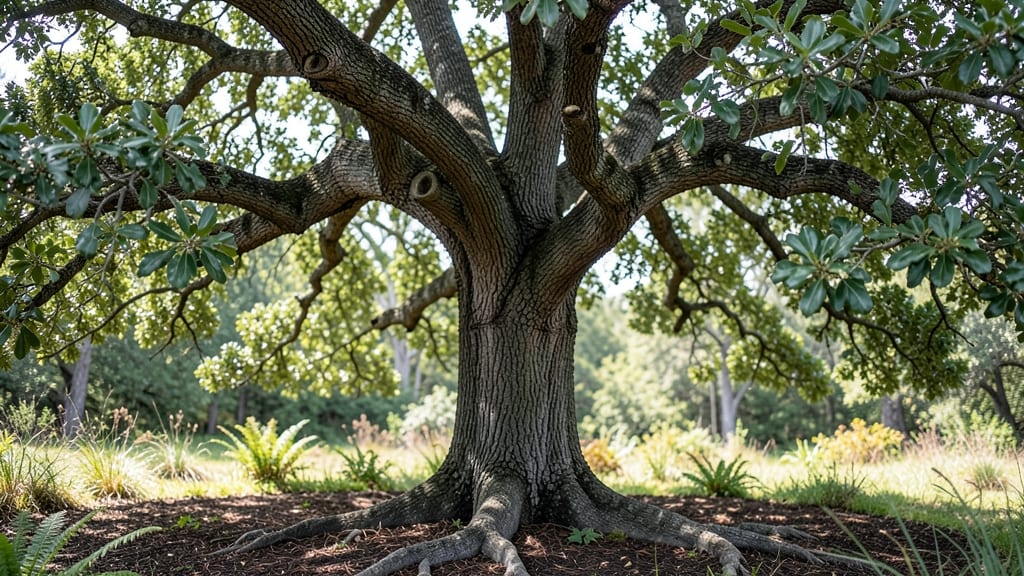
If you're planning to plant a Live Oak Tree 🌳, understanding how tall do live oak trees grow is the first step to creating a lasting landscape feature.
These majestic trees can reach heights between 60 and 80 feet in ideal conditions, making them a stunning but space-demanding addition to any property.
But here's the thing: their growth isn't just about height. The Live Oak's sprawling canopy—often wider than it is tall—means you'll need plenty of room for its roots to spread comfortably.
Whether you're in the humid Southeast or a slightly cooler USDA Zone 6a, knowing these growth patterns helps you avoid common mistakes that could stunt your tree's potential.
We'll break down exactly what influences a Live Oak's height—from soil quality to pruning habits—and how you can encourage healthy growth or manage it for urban spaces. Think of this as your guide to planting a tree that'll provide shade for generations, not just a few years.
Ready to get started? Let's explore how to give your Live Oak the best chance to thrive while keeping your landscape plans on track. The right preparation now means fewer headaches later when that 80-foot canopy starts casting its welcome shade.

Live Oak tree height by mature region: average ranges and growth variations
The Live Oak (Quercus virginiana) is one of the most iconic trees in the southeastern U.S., known for its towering height and sprawling canopy. On average, mature Live Oaks reach 60–80 feet tall, though their height can vary significantly depending on where you plant them.
In coastal areas with humid climates and sandy soil, these trees often grow taller—sometimes exceeding 80 feet—while inland specimens may stay closer to 50–60 feet due to drier conditions.
For gardeners planning a shade tree for a backyard, understanding these regional differences is critical. A Live Oak planted in Florida’s coastal regions might dwarf one grown in Texas Hill Country, where water scarcity naturally limits its growth.
Even within the same city, urban trees often grow shorter than their wild counterparts due to compacted soil and limited root space.
Here’s how Live Oak height compares across key U.S. regions, along with the factors that influence their growth:
| Region | Average Mature Height | Key Growth Factors | Canopy Spread |
|---|---|---|---|
| Southeastern Coast (FL, GA, SC) | 70–80 ft | Humid, sandy soil, high rainfall | 60–80 ft wide |
| Gulf Coast (LA, MS, AL) | 65–75 ft | Rich, moist soil, hurricane-prone | 50–70 ft wide |
| Inland South (TX, OK, AR) | 50–60 ft | Drier, clay-heavy soil, less humidity | 40–50 ft wide |
| Urban Landscapes (Any Region) | 40–50 ft | Compacted soil, root barriers, limited space | 30–40 ft wide |
When comparing Live Oaks to other oak species, they typically outgrow White Oaks (Quercus alba), which max out around 50–70 feet, and Red Oaks (Quercus rubra), which usually stay under 65 feet.
However, Southern Live Oaks (Quercus hemisphaerica) can rival them, reaching 70–90 feet in ideal conditions. For gardeners with limited space, consider dwarf varieties like ‘Nelson’ Oak, though true dwarf Live Oaks don’t exist—only slow-growing cultivars.
The spread of a Live Oak’s canopy is just as impressive as its height. Mature trees often have a spread of 60–80 feet, creating a massive umbrella of shade.
This wide canopy means you’ll need to plant your Live Oak at least 50 feet from structures to avoid root or branch damage. In urban settings, regular pruning is essential to manage both height and spread while maintaining safety.
Soil quality plays a huge role in height development. Live Oaks thrive in well-draining, slightly acidic soil (pH 5.0–6.0). Poor drainage or alkaline soil can stunt growth, while amended soil with compost or organic matter encourages taller, healthier trees.
If your soil is heavy clay, consider planting in a raised bed or mound to improve drainage and root health.
Climate also affects height. In coastal areas with high humidity, Live Oaks grow faster and taller due to abundant moisture. Inland or arid regions, however, may see slower growth unless you provide consistent irrigation during dry spells.
Even in optimal conditions, Live Oaks grow about 1–2 feet per year in their early years, with growth slowing as they mature.
For gardeners in USDA Zones 7–10, where Live Oaks thrive, the key to maximizing height is proper spacing and care. Plant saplings at least 30 feet apart to allow for future spread, and avoid planting near power lines or sidewalks.
With the right conditions, your Live Oak could easily become a century-old shade giant—a legacy for future generations.
🌳
Live Oak tree height by mature region: average ranges and growth variations
When planning to plant a Live Oak (Quercus virginiana), knowing its mature height is crucial—but the answer isn't one-size-fits-all. In the southeastern U.S., these trees often reach 60 to 80 feet, while inland or cooler climates may see slightly shorter specimens.
Coastal areas with high humidity and rich soil tend to produce the tallest specimens, sometimes exceeding 80 feet with proper care.
The Gulf Coast and Florida regions provide ideal conditions for maximum height, while inland areas of Texas or Louisiana might see trees in the 50 to 65-foot range due to slightly drier conditions.
Even within the same region, soil quality and sunlight exposure can shift a tree's potential height by 10 to 20 feet.
Here’s how Live Oaks compare to other oak species in height: Live Oak (60–80 ft) vs. Southern Live Oak (similar) vs. White Oak (50–75 ft).
The Live Oak’s sprawling canopy often makes it appear wider than tall, with branches spreading 50 to 75 feet across—so always account for that extra width in your planting plan.
| Region | Avg. Mature Height | Key Growth Factors |
|---|---|---|
| Southeastern Coast | 60–80 ft | High humidity, rich soil |
| Gulf Coast | 70–85 ft | Warm climate, frequent rainfall |
| Inland (Texas/Louisiana) | 50–65 ft | Drier soil, less humidity |
| Urban Areas | 40–60 ft | Competition for nutrients, pruning |
Urban environments often limit height due to root competition and pruning restrictions, but even in cities, a well-cared-for Live Oak can still reach 50 to 60 feet.
If you’re planting near power lines or sidewalks, expect more frequent pruning to keep the canopy manageable while still enjoying its shade.
For gardeners in USDA Zone 6a or cooler areas, growth may be slower, with mature heights clustering around 50 to 60 feet. In these cases, focus on soil preparation—amending with compost and ensuring well-draining soil—to encourage upward growth when conditions aren’t ideal.
One final tip: Live Oaks grow 2 to 4 feet per year when young, but this slows to 1 to 2 feet per year as they mature.
Patience is key—your tree won’t reach its full height for 30 to 50 years, but the wait is worth it for that iconic shade canopy.