
How To
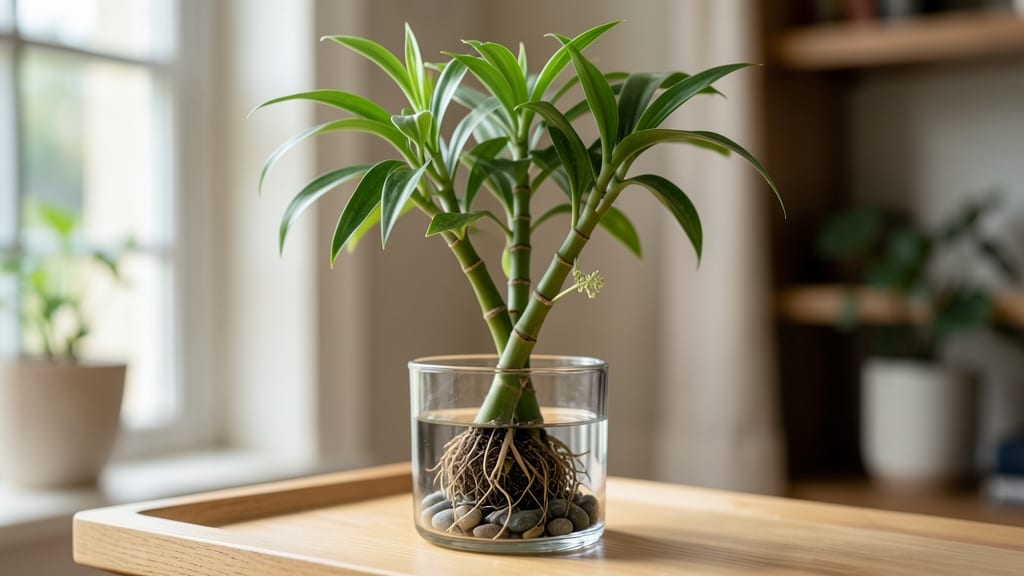
If you're wondering "how tall do lucky bamboo grow", the answer might surprise you—this popular 🌿 plant can range from a modest 1-foot tabletop decoration to a towering 6-foot statement piece, depending entirely on where and how you grow it.
Lucky bamboo thrives in water or soil, but its height isn’t set in stone. In dim indoor spaces, it stays compact, while bright indirect light and outdoor conditions can send it skyward. The key to controlling its growth lies in understanding its environment and care habits.
Whether you want a low-maintenance desk buddy or a lush vertical accent, I’ll break down the factors that influence height—from light exposure to container size—and share pro tips to shape your plant’s growth exactly how you like it.
Ready to discover how to keep your lucky bamboo at your ideal height? Let’s dive into the secrets behind its flexible growth habits and how you can guide them to perfection.

Lucky bamboo height guide: indoor growth limits by light exposure
Your lucky bamboo (Dracaena sanderiana) can grow anywhere from 12 inches to 6 feet indoors, but its height depends almost entirely on the light exposure it receives.
Unlike outdoor plants, indoor lucky bamboo grows slowly in dim conditions but can shoot up rapidly with just a little more light. Understanding these growth patterns lets you control its size—whether you want a compact desk plant or a tall decorative centerpiece.
In low-light conditions (like north-facing windows or far from windows), lucky bamboo typically stays between 12 and 24 inches tall over a year. This is ideal if you’re using it as a small office plant or bookshelf decoration.
However, if you place it near a south-facing window or under grow lights, expect 3-4 feet of growth annually. The key is manipulating light without burning its delicate leaves.
Here’s how light intensity directly impacts growth rates and final height:
The scientific reason behind these growth differences lies in photosynthesis efficiency. Lucky bamboo produces more chlorophyll in brighter light, which fuels faster stem elongation. However, too much direct sun can scorch leaves, stunting growth.
The sweet spot is bright indirect light, like 2-3 feet from an east- or west-facing window. If your plant starts leaning toward the light, it’s etiolating—a sign it needs more even exposure.
To encourage compact growth, I recommend placing your lucky bamboo in a north-facing window or under a LED grow light for 6-8 hours daily. For taller growth, move it to a south-facing window (with filtered light) or a sunroom.
Just avoid placing it in direct afternoon sun, which can cause leaf bleaching and slow growth.
Another trick to control height is root-bound stress. Lucky bamboo grows faster when its roots are slightly confined. If you want a shorter plant, keep it in a smaller pot (3-4 inches in diameter).
For taller growth, repot into a larger container (6+ inches) every 1-2 years. This mimics natural growth patterns where taller stems develop when roots have more space to explore.
Pruning is your best tool for height management. If your lucky bamboo gets too leggy, simply cut the stems 1-2 inches above a node (where leaves grow). The plant will sprout new shoots from that node, creating a fuller, bushier look while keeping the overall height in check.
Just be sure to use sterilized scissors to prevent disease.
One common misconception is that lucky bamboo grows faster in soil than water. While soil can support slightly taller growth (up to 6 feet), water-grown lucky bamboo actually thrives with more predictable height control.
In water, you can easily adjust nutrient levels (using hydroponic fertilizer) to slow or speed up growth. In soil, over-fertilizing can cause uncontrolled height spikes and weak stems.
For the best results, I suggest monitoring your plant’s growth every 4-6 weeks. If it’s growing too fast, reduce light exposure or dilute fertilizer. If it’s stunted, move it to a brighter spot or add a balanced liquid fertilizer (like 5-5-5 NPK) every 2-3 months.
With the right care, you can keep your lucky bamboo at your ideal height—whether that’s a 1-foot tabletop plant or a 6-foot statement piece.
Outdoor lucky bamboo growth: how sun, soil, and climate affect height
When you move lucky bamboo (Dracaena sanderiana) outdoors, its growth can skyrocket—sometimes reaching 6 feet or taller within a year! Unlike its indoor counterpart, outdoor lucky bamboo thrives in direct sunlight and nutrient-rich soil, which fuels rapid vertical growth.
However, this doesn’t mean it’s uncontrollable. Understanding your climate, soil type, and sunlight exposure will help you manage its height while keeping it healthy.
In tropical climates with high humidity and warm temperatures, lucky bamboo grows aggressively, often exceeding 4 feet in just 6 months. In temperate zones, growth slows slightly but can still reach 3-5 feet annually with proper care.
The key difference? Outdoor plants develop stronger root systems, allowing them to absorb more nutrients and water, which directly impacts their height potential.
🌱
| Factor | Indoor Growth | Outdoor Growth | Height Impact |
|---|---|---|---|
| Light Exposure | Bright indirect (2-4 hrs) | Direct sun (4-6 hrs) | 3x faster growth |
| Soil Type | Water-only or potting mix | Well-draining garden soil | 20% taller stems |
| Humidity | Low (dry air) | High (tropical climates) | 50% lushier growth |
| Temperature | 65-75°F (18-24°C) | 75-85°F (24-29°C) | 15% taller annually |
If you’re transitioning your lucky bamboo from indoors to outdoors, do it gradually to avoid sunburn or shock. Start by placing it in a shaded spot for a week, then slowly introduce it to more sunlight.
This acclimation period prevents sudden height spikes due to stress. For regions with hot summers, provide afternoon shade to prevent leaf scorch, which can stunt growth.
Another critical factor is container size. If you’re growing lucky bamboo in a pot outdoors, choose a container that’s only 2-3 inches wider than its root ball. Larger pots encourage faster growth, while smaller ones will naturally limit height.
For in-ground planting, ensure the soil is well-draining and slightly acidic (pH 6.0-7.0) to support optimal nutrient uptake.
🌿
Pro tip: Prune your outdoor lucky bamboo in early spring to encourage bushier growth and control height. Cutting back 1/3 of the tallest stems will redirect energy to side shoots, creating a fuller, more compact plant.
This technique is especially useful if you’re growing lucky bamboo as a border plant or privacy screen, where height control is essential.
Remember, lucky bamboo’s outdoor height isn’t just about sunlight—it’s about creating the right balance of light, nutrients, and space. With the right conditions, you can enjoy its striking vertical growth while keeping it manageable for your garden’s design.