
Trees
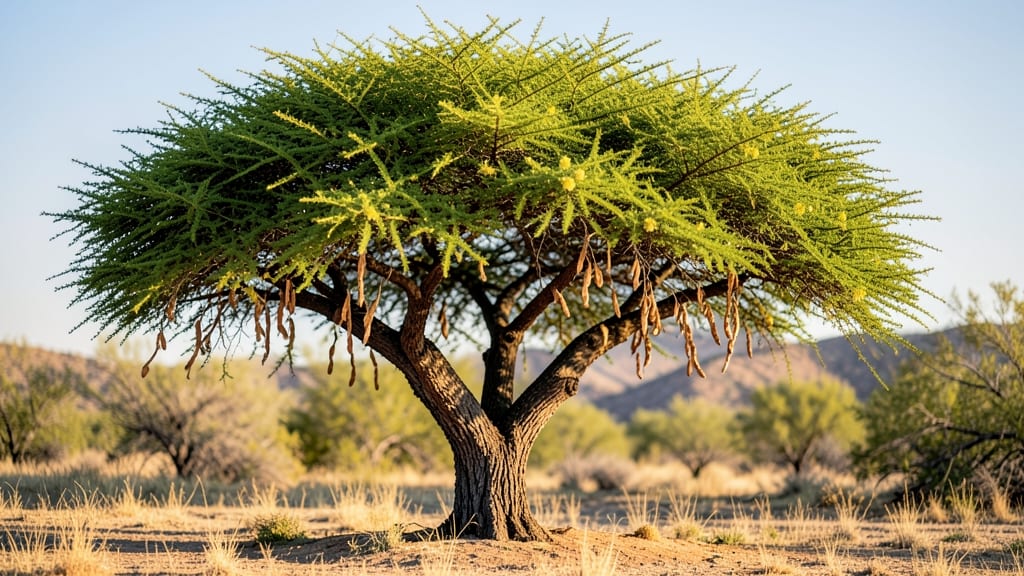
If you're wondering "how tall do mesquite trees grow", you're about to discover a tree that can stretch from a modest backyard shade provider to a towering neighborhood landmark—depending on the species and growing conditions.
The 🌳 Mesquite Tree, native to arid regions, is a hardy powerhouse that thrives in USDA Zones 6a-11b, making it a favorite for drought-resistant landscapes.
Most mesquite varieties, like the honey mesquite, can reach heights of 20–50 feet when mature, while others like velvet mesquite may stay slightly shorter.
What's fascinating is how quickly they grow—some species can add 3–5 feet per year under ideal conditions, turning a small sapling into a substantial tree in just a few seasons.
This rapid growth makes mesquite a game-changer for gardeners looking to establish shade or windbreaks fast. Whether you're planting in the desert or a semi-arid climate, understanding these growth patterns helps you plan for long-term landscaping success without overcrowding your space.
In the sections ahead, I'll break down the height variations by species, growth rates, and tips to manage their size—so you can enjoy their benefits without losing control of your yard. Let’s get started!

Mesquite tree height: species-specific growth limits and skyward potential
Mesquite trees are legendary for their towering presence in arid landscapes, but their mature height varies dramatically by species. Whether you're planning a desert oasis or a drought-resistant backyard, understanding these differences will help you choose the perfect variety for your space.
The most common types—honey mesquite, velvet mesquite, and screwbean mesquite—each have distinct growth patterns that can reach heights from modest to truly impressive.
For example, honey mesquite (Prosopis glandulosa) is the most widely planted variety in the U.S., often soaring to 20–50 feet at maturity. In ideal conditions, it can even exceed 60 feet, making it a true giant in the right environment.
Meanwhile, velvet mesquite (Prosopis velutina) typically grows slightly shorter, usually between 15–30 feet, but its dense canopy provides excellent shade for smaller spaces.
🌳
| Species | Mature Height | Growth Rate (First 5 Years) | Best For |
|---|---|---|---|
| Honey Mesquite | 20–50 ft (up to 60+ ft) | 3–6 ft/year | Large landscapes, shade trees |
| Velvet Mesquite | 15–30 ft | 2–4 ft/year | Smaller yards, urban planting |
| Screwbean Mesquite | 10–25 ft | 2–3 ft/year | Drought-prone areas, wildlife habitats |
Regional factors play a huge role in how tall your mesquite tree will grow. In USDA Zones 8–10, where these trees thrive naturally, they often reach their full height potential.
However, in cooler zones like Zone 6–7, growth may be slower, and mature heights could be 10–20% shorter due to seasonal stress. For instance, a honey mesquite in Arizona might hit 40–50 feet, while the same tree in Texas could max out at 30–40 feet.
Soil quality also influences height. Mesquite trees prefer well-draining, slightly alkaline soil (pH 7.0–8.5). In heavy clay or waterlogged conditions, their growth can stall, leading to a stunted, bushier appearance instead of a tall, elegant form.
If you're planting in urban areas with compacted soil, amending with sand and compost can encourage faster vertical growth.
Another key factor is water availability. While mesquite trees are drought-tolerant, they grow 20–30% faster with consistent moisture during their first 3–5 years. In arid climates, supplementing with deep watering every 2–4 weeks can help them reach their full height potential sooner.
However, once established, these trees require minimal watering—making them perfect for low-maintenance landscapes.
If you're planning to use mesquite for shade or wildlife habitats, aim for the honey mesquite variety. Its towering height and dense foliage create ideal conditions for birds and small mammals.
For smaller spaces or urban gardens, velvet mesquite is a better choice, offering manageable height without sacrificing drought resistance.
🌿
Before planting, always check local regulations, as some areas consider mesquite an invasive species due to its aggressive root system and seed dispersal. In Texas and Arizona, for example, certain varieties are restricted to prevent ecological disruption.
When in doubt, consult your local cooperative extension office for species-specific advice tailored to your region.
Understanding these growth patterns will help you select the perfect mesquite tree for your landscape while ensuring it thrives for decades to come. With the right variety and care, you could soon have a stately mesquite tree standing proudly in your backyard—providing shade, beauty, and a touch of desert charm.
Mesquite tree height: species-specific growth limits and skyward potential
Mesquite trees are nature’s skyscrapers of the desert, capable of reaching heights that will leave your landscape transformed. The honey mesquite (Prosopis glandulosa) often tops out at 20–50 feet, while velvet mesquite (Prosopis velutina) can stretch even taller, sometimes exceeding 60 feet in ideal conditions.
These aren’t just numbers—they’re the difference between a backyard shade provider and a neighborhood-defining centerpiece.
But here’s the twist: screwbean mesquite (Prosopis pubescens) tends to stay shorter, typically 15–30 feet, making it a better fit for smaller properties.
Regional climate plays a huge role—trees in USDA Zones 8–10 often grow taller due to year-round warmth, while those in Zone 7 or cooler may max out at 30–40 feet due to slower growth in winter.
| Species | Mature Height | Growth Rate (First 5 Years) | Ideal Climate |
|---|---|---|---|
| Honey Mesquite | 20–50 ft | 3–5 ft/year | Zones 8–11 |
| Velvet Mesquite | 30–60 ft | 4–6 ft/year | Zones 7–10 |
| Screwbean Mesquite | 15–30 ft | 2–4 ft/year | Zones 9–11 |
Soil quality also dictates height potential. Mesquite trees thrive in well-draining, sandy, or rocky soils—the kind found in deserts and Mediterranean climates. If your soil is heavy clay, expect slower growth and shorter stature unless you amend it with organic matter.
Meanwhile, trees planted in full sun (6+ hours daily) will outpace those in partial shade, sometimes by 20–30% in height.
For landscape planning, consider spacing: honey mesquite needs 30–40 feet of clearance from structures, while velvet mesquite’s sprawling branches may require 50+ feet to avoid power lines or roofs.
If you’re aiming for a shade canopy, plant 2–3 trees in a cluster to accelerate vertical growth and create a denser foliage cover faster.
One often-overlooked factor is water availability. While mesquite is drought-tolerant, deep, infrequent watering in the first 2–3 years can boost height by 10–15%.
After establishment, these trees rely almost entirely on rainfall, but a single deep soak per month in extreme drought can keep them growing toward their full potential.
If you’re planting near a fence or patio, opt for screwbean mesquite—its manageable height (15–30 ft) makes it ideal for smaller yards. For larger properties, honey mesquite offers the best balance of shade, wildlife benefits, and manageable pruning needs.
Just remember: once these trees hit 20 feet, they’re committed to their skyward journey—and pruning won’t stop their growth, just shape it.