
Plants
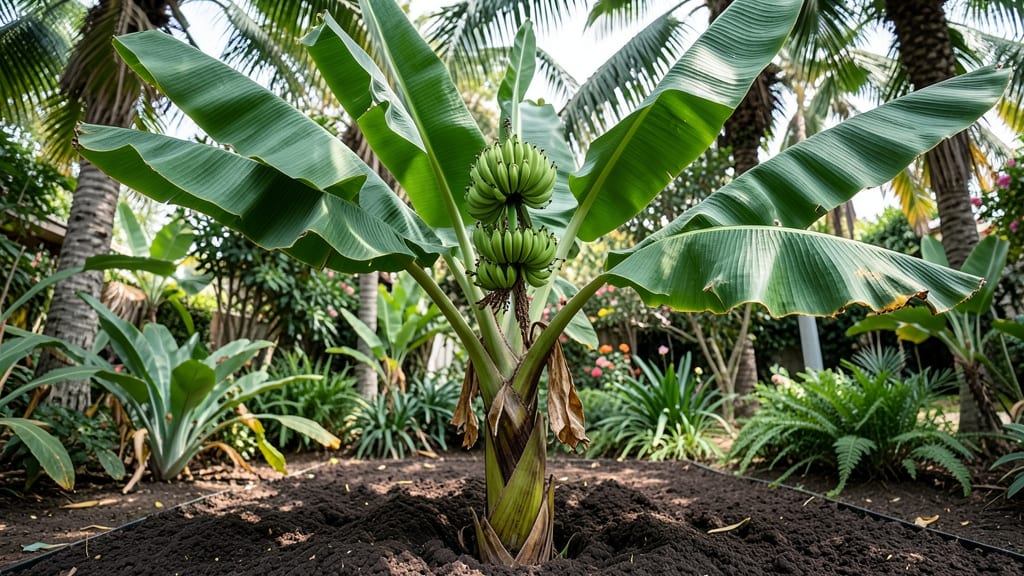
If you’ve ever planted a banana 🍌 and stared up at its towering pseudostem wondering, "How tall does a banana plant grow?"—the answer might shock you.
Some varieties stretch taller than a two-story house, while others stay manageable for small gardens, making the difference between a jungle statement and a backyard-friendly addition.
Most banana plants mature between 15 and 30 feet, but dwarf varieties like 'Lady Finger' top out at just 8–12 feet, perfect for containers or tight spaces. The key? Your choice of variety—and whether you’re in frost-free zones 10–12 or pushing the limits in cooler climates with protection.
Growth speed also plays a role: a banana plant can shoot up 3–5 feet per year, so that compact 'Dwarf Cavendish' you bought might surprise you by outgrowing its pot faster than expected.
Let’s break down exactly what to expect based on your space and climate—so you can plan (or prune!) before it’s too late.
Ready to turn your backyard into a mini tropical paradise—or at least avoid a banana plant that blocks your skylight? Here’s how height, care, and variety work together to shape your plant’s future.

Banana plant height by variety: from dwarf to towering giants
Banana plants (Musa spp.) are often misunderstood as trees, but they’re actually herbaceous plants with pseudo-stems made of tightly packed leaves. Their mature height varies dramatically—from dwarf varieties perfect for containers to giant jungle types that dwarf two-story homes.
The variety you choose determines whether your banana plant will reach for the sky or stay manageable in a patio pot.
Most gardeners assume all banana plants grow tall, but the truth is far more exciting. Dwarf Cavendish varieties, for example, top out at just 8–12 feet, while tropical giants like Red Dacca can soar to 25–30 feet.
Even in USDA Zones 9–11, height differences are staggering—some plants mature in 12 months, while others take 3+ years to reach full size.
Here’s the key distinction: herbaceous vs. true trees. Banana "trees" die after fruiting unless they’re rhizomatous varieties (like Musa acuminata), which regrow from underground stems.
This means your 10-foot dwarf might produce fruit in its first year, while a 20-foot giant could take years to flower—if it ever does in your climate.
| Variety | Mature Height | Growth Habit | Best For |
|---|---|---|---|
| Dwarf Cavendish | 8–12 ft | Compact, rhizomatous | Containers, small gardens |
| Lady Finger (Ice Cream Banana) | 12–18 ft | Semi-dwarf, non-rhizomatous | Tropical gardens, large pots |
| Red Dacca | 20–30 ft | Tall, non-rhizomatous | Large landscapes, tropical climates |
| Dwarf Blue Java | 6–10 ft | Dwarf, rhizomatous | Balconies, urban gardens |
| Gros Michel | 25–35 ft | Giant, non-rhizomatous | Commercial farms, warm climates |
🌱 Note: Heights assume ideal conditions (full sun, rich soil, frost-free zones).
If you’re growing bananas in Zones 9–11, your Dwarf Cavendish might produce fruit in its first year, while a Red Dacca could take 2–3 years to reach 20 feet.
The difference comes down to genetics and care: dwarf varieties thrive in 5-gallon pots, while giants need 10+ feet of space and year-round warmth.
For cooler climates (Zones 6–8), even dwarf varieties struggle unless grown in containers moved indoors during winter. A 10-foot plant in a pot can survive winters with mulch and frost cloth, but expect slower growth and smaller fruit.
The trade-off? You can grow bananas almost anywhere with the right variety and protection.
One common misconception is that all banana plants grow taller than they are wide. While this is true for giants, dwarf varieties spread 3–5 feet wide—making them ideal for patio borders or large containers.
Their broad leaves also provide shade, which is why gardeners in Zone 10 often plant them near poolside or deck areas.
Here’s a pro tip: Prune suckers (offshoots) to control height. If your Lady Finger starts to outgrow its space, remove 1–2 suckers at the base. This redirects energy to the main stem, keeping it under 15 feet instead of letting it bolt to 20 feet.
Just be warned—pruning too aggressively can delay fruiting by 6–12 months.
If you’re planning your garden layout, visualize heights relative to common objects. A 10-foot dwarf is about the height of a two-car garage door, while a 25-foot giant rivals a three-story building.
In a small urban yard, a Dwarf Blue Java (6–10 ft) will fit neatly under a 12
How fast do banana plants grow: timeline from seed to harvest
Banana plants are some of the fastest-growing tropical plants you can grow, but their speed depends heavily on the variety, climate, and care you provide. While dwarf varieties might reach harvestable size in as little as 9 months, standard types can take 12-18 months or longer.
The key is understanding their growth stages and how height progresses over time.
In their first 6 months, banana plants focus on building their pseudo-stem (the thick, leafy trunk) and root system. If grown from a rhizome (the underground stem), you might see 5-10 feet of growth by year one—though this is more common in warm climates like Zones 10-12.
Cooler zones (Zone 6-9) will see slower progress unless you use containers for mobility.
Here’s what to expect in terms of height milestones and growth phases, so you can plan your space and care accordingly:
Factors like sunlight, water, and fertilizer can accelerate or slow this timeline. For example, dwarf varieties like ‘Dwarf Cavendish’ may flower in 8-10 months with optimal care, while tropical giants like ‘Gros Michel’ can take 18+ months to mature fully.
Always monitor your plant’s leaf color and growth rate—yellowing leaves signal nutrient deficiencies or overwatering, which stall growth.
If you’re growing bananas in containers, expect slightly slower growth due to root restriction. However, dwarf varieties thrive in pots as small as 15-20 gallons, making them perfect for balconies or patios.
Just ensure your container has drainage holes and you’re using a high-potassium fertilizer to support fruiting.
🌿 Remember: Patience is key! Even the fastest-growing banana plants need time to establish before they reward you with edible fruit. With the right variety and care, you could be harvesting in under a year—or enjoying the journey of watching your jungle giant grow.