
How To
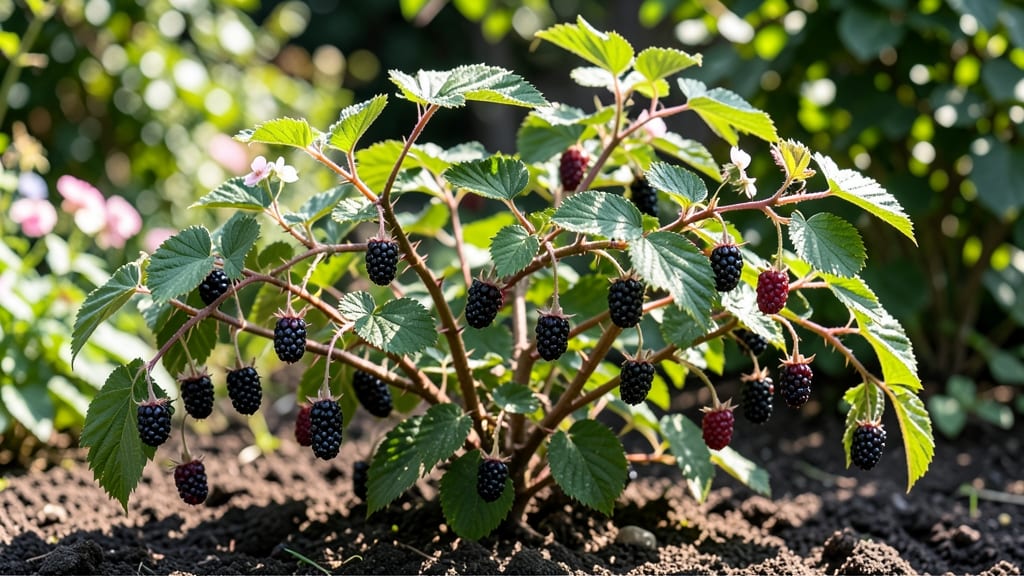
Wondering how tall does a blackberry bush grow before it takes over your garden? These plants can shoot up to 12 feet—taller than most backyard fences—if left unchecked, turning your neat garden into a thorny jungle faster than you can say "berry harvest."
But here's the good news: with the right approach, you can keep your 🫐 bushes at a manageable height without sacrificing those juicy summer treats. Whether you're dealing with thornless varieties or traditional types, understanding their growth habits is the key to pruning like a pro.
From erect varieties that grow straight up like a trellis dream to sprawling types that need support, each blackberry type has its own growth quirks. I'll show you how to manage their height naturally—no chemicals required—so you can enjoy bountiful harvests without the overgrowth headaches.
Ready to transform those wild canes into a well-behaved, fruit-producing powerhouse? Let's dive into the secrets of controlling blackberry bush height while keeping your garden looking (and tasting) amazing.

How tall blackberry bushes grow: species-specific height ranges and growth habits
Blackberry bushes are known for their rapid vertical growth, but their mature height depends heavily on the variety you choose. Most standard blackberry bushes reach 6 to 12 feet tall, while dwarf varieties stay compact at 3 to 5 feet.
Understanding these differences helps you plan your garden layout and support systems effectively.
For example, trailing blackberries like Cheyenne or Natchez sprawl aggressively, while erect varieties such as Arapaho grow upright with minimal sprawl. The root system also plays a role—blackberries spread via suckers, which can extend 10 to 15 feet from the parent plant if unchecked.
Here’s a quick comparison of how different blackberry types grow in height and spread:
| Variety Type | Mature Height | Spread Width | Growth Habit |
|---|---|---|---|
| Trailing (e.g., Natchez) | 6–12 ft | 10–15 ft | Sprawling, needs trellis |
| Erect (e.g., Arapaho) | 5–8 ft | 4–6 ft | Upright, minimal sprawl |
| Dwarf (e.g., Triple Crown) | 3–5 ft | 3–4 ft | Compact, ideal for containers |
| Primocane (e.g., Prime-Ark Freedom) | 5–7 ft | 6–8 ft | Fast-growing, fruiting canes |
🌱 Note: Heights vary by climate and pruning practices.
If you’re growing blackberries in USDA Zones 5–9, expect faster growth in warmer climates. For instance, in Zone 8, bushes may reach 10 feet in 2–3 years, while in Zone 5, growth slows to 6–8 feet over 4 years.
Always account for trellising needs—trailing varieties require sturdy supports to prevent damage.
Another key factor is the growth cycle. Blackberries produce floricane (second-year canes) that bear fruit and primocane (first-year canes) that may fruit in some varieties. Pruning at the right time—like removing old canes after harvest—keeps the bush from becoming overgrown while maximizing yield.
For container gardening, choose dwarf varieties like Triple Crown or Oregon Evergreen, which thrive in 5-gallon pots and stay under 5 feet tall. Even these compact types need annual pruning to control height and encourage bushier growth.
One common misconception is that taller blackberries always produce more fruit. In reality, overly tall bushes can struggle with light penetration and fruit quality. Aim for a 6–8 foot height with proper pruning to balance growth and harvest.
To manage height naturally, focus on seasonal pruning and trellis training. For example, erect varieties benefit from a single-wire trellis at 5 feet, while trailing types need a multi-tiered support system to guide their sprawling canes upward.
If you’re planning a blackberry hedge, space plants 3–4 feet apart and prune annually to maintain a 4–6 foot height. This creates a dense, productive barrier while keeping growth manageable.
Remember, the soil quality also impacts height. Amend your soil with compost and organic matter to encourage strong root development, which in turn supports healthier, more controlled growth.
How tall blackberry bushes grow: species-specific height ranges and growth habits
Blackberry bushes are known for their rapid growth and impressive height, but the exact size depends heavily on the variety you choose. Most standard blackberry bushes reach 6 to 12 feet tall at maturity, while thornless varieties often top out around 5 to 8 feet.
Understanding these differences helps you plan your garden layout and support structures effectively.
For example, erect varieties like Natchez or Chester grow in an upright form, making them ideal for small spaces or trellises. In contrast, trailing types such as Triple Crown or Apache sprawl along the ground unless properly guided with a trellis or fence.
This growth habit can dramatically affect how you manage your plants.
| Variety Type | Mature Height | Growth Habit | Trellis Needs |
|---|---|---|---|
| Erect (e.g., Natchez, Chester) | 5–8 ft | Upright | Low to moderate |
| Trailing (e.g., Triple Crown, Apache) | 6–12 ft | Sprawling | High (essential) |
| Semi-Erect (e.g., Ouachita, Black Satin) | 4–7 ft | Semi-upright | Moderate |
| Dwarf (e.g., Arapaho, Navajo) | 3–5 ft | Compact | Low (optional) |
Another critical factor is the root spread of blackberry bushes, which can extend 6 to 10 feet from the base. This means you’ll need ample space between plants—at least 4 to 6 feet apart—to prevent competition for nutrients and water.
If you’re growing in a small garden, consider dwarf varieties or container planting to save space.
Blackberries also exhibit biennial canes, where first-year canes (primocanes) grow vigorously and produce fruit the following year (floricanes). This two-year cycle affects how you manage height and pruning. For instance, primocane-bearing varieties like Prime-Ark Freedom produce fruit on new growth, allowing for a more controlled height if pruned correctly.
Regional climate also plays a role in height. In warmer zones (USDA 8-10), blackberries may grow taller and more aggressively due to extended growing seasons. Meanwhile, in cooler climates (USDA 5-7), growth might be slower, but proper winter protection can encourage stronger canes the following year.
To maximize fruit production while controlling height, pair your variety choice with the right support system. A sturdy trellis or fence not only manages height but also improves air circulation, reducing disease risk.
For trailing varieties, a kniffen wire trellis or T-post system works best, while erect types may only need light staking.
If you’re still unsure which variety fits your space, start with a thornless, semi-erect type like Ouachita. It balances manageable height (4–7 feet) with excellent fruit production and easier harvesting.
With the right variety and care, you’ll enjoy lush blackberry bushes that stay within your garden’s boundaries while delivering a bountiful harvest. 🫐