
How To
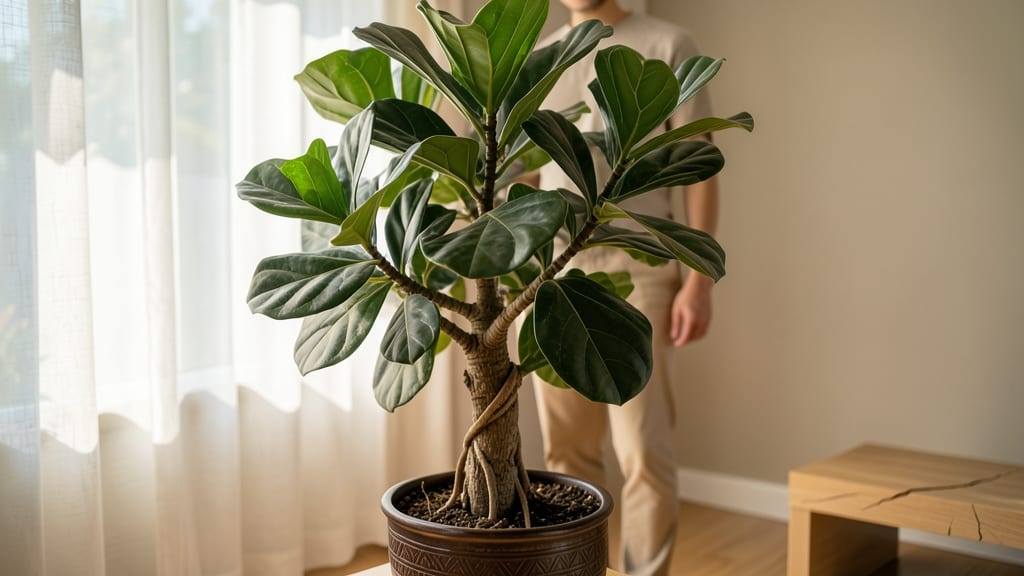
If you're wondering "how tall does a ficus tree grow", the answer might surprise you—especially when comparing your living room's weeping fig to a towering outdoor specimen!
These versatile 🌳 plants can range from a modest 3-foot indoor shrub to a 30-foot garden giant, depending on where you grow them.
Indoor ficus varieties like the rubber plant or fiddle-leaf often stay compact, making them perfect for apartments, while outdoor types can shoot up like a skyscraper if left unchecked. The key difference? Sunlight, space, and pruning habits—all of which I’ll break down so you can plan accordingly.
Whether you're dealing with a ficus benjamina in your home or a ficus elastica in your yard, understanding growth patterns helps you avoid overcrowded pots or unexpected garden takeovers. Let’s explore how to keep your ficus at the perfect height for your space.
From dwarf varieties that stay under 8 feet to standard types reaching 20+ feet, I’ll cover everything you need to know—plus expert tips to control growth naturally. Ready to master your ficus’s size?

Ficus tree height guide: indoor varieties and their mature sizes
If you're dreaming of a ficus tree for your home, knowing its mature height is crucial. Indoor ficus varieties can range from compact 3-foot plants to towering 10-foot giants, depending on the species.
The most popular indoor ficus types—like the Ficus elastica (rubber plant) and Ficus benjamina (weeping fig)—grow at different rates, so choosing the right one for your space is key.
For example, a Ficus lyrata (fiddle-leaf fig) typically reaches 10-12 feet indoors with proper care, while a Ficus microcarpa (Ginseng ficus) stays shorter at 6-8 feet.
The difference comes down to genetics, light exposure, and how aggressively you prune. Without pruning, these trees can easily outgrow even the tallest ceilings in most homes.
Here’s what you need to know about the height expectations for common indoor ficus varieties, including their growth rates and space requirements:
| Variety | Mature Height (Indoors) | Growth Rate (Per Year) | Space Needs |
|---|---|---|---|
| Ficus elastica (Rubber Plant) | 6-10 ft | 1-2 ft | Large pots, high ceilings |
| Ficus benjamina (Weeping Fig) | 10-12 ft | 1.5-2.5 ft | Ceiling clearance, wide base |
| Ficus lyrata (Fiddle-Leaf Fig) | 10-12 ft | 1-2 ft | Bright light, spacious room |
| Ficus microcarpa (Ginseng Ficus) | 6-8 ft | 0.5-1 ft | Medium pots, moderate space |
| Ficus pumila (Creeping Fig) | 3-5 ft (trailing) | 0.5-1 ft | Vertical surfaces, shelves |
The Ficus elastica and Ficus lyrata are the fastest growers among indoor ficus varieties, adding 1-2 feet per year if given ideal conditions. These trees thrive in bright, indirect light and need consistent moisture to reach their full height potential.
Without enough light, their growth slows dramatically, and they may never reach their mature size.
If you’re working with limited ceiling space, consider pruning regularly to control height. Even the tallest ficus varieties can be kept at 6-8 feet with strategic trimming.
For example, pinching back new growth in early spring encourages bushier, more compact growth. Just be prepared to sacrifice some height for a fuller appearance.
Another factor to consider is the pot size. Ficus trees grow faster in larger containers because they have more room for root expansion. However, if you want to stunt growth, keep them in smaller pots to limit their height.
Just ensure the pot has drainage holes to prevent root rot—a common issue with overwatered ficus trees.
For those with low ceilings, dwarf varieties like the Ficus microcarpa are excellent choices. These ficus types stay under 8 feet even without pruning, making them perfect for apartments or small homes.
Pair them with regular pruning to maintain their compact shape, and you’ll enjoy a manageable-sized tree without the risk of it outgrowing your space.
One common mistake is assuming all ficus trees grow at the same rate. In reality, Ficus benjamina and Ficus lyrata can grow 3 feet per year in optimal conditions, while slower-growing types like Ficus microcarpa may only add 6 inches annually.
Always check the specific growth rate of your ficus variety before bringing it home to avoid surprises.
Pro tip: If you’re unsure about your tree’s growth potential, ask the nursery for a growth chart or look up the variety online. Many ficus growers share photos of their mature trees, giving you a realistic idea of what to expect.
With the right variety and care, your ficus can become a stunning centerpiece without taking over your living room.
Ready to choose the perfect ficus for your space? Start by measuring your ceiling height and matching it with a variety that fits your needs.
And remember, even the tallest ficus can be managed with proper pruning—so don’t let height concerns stop you from adding one of these beautiful trees to your home! 🌿
Outdoor ficus trees: how fast they grow and when to prune for control
Outdoor ficus trees grow 3 to 5 times faster than their indoor counterparts, thanks to abundant sunlight, spacious root systems, and nutrient-rich soil.
In ideal conditions, a ficus elastica or ficus microcarpa can reach 20–30 feet in just 5–10 years, while tropical varieties like ficus benjamina may top 40 feet in warm climates. The key to managing this rapid growth lies in understanding your local climate and soil conditions.
In USDA Zones 9–11, where ficus trees thrive year-round, growth is nearly unchecked without intervention. Even in cooler zones (like Zone 8), these trees can still hit 15–20 feet if planted in protected microclimates.
The secret? Well-draining soil mixed with compost and consistent moisture—never soggy roots. Overwatering stunts growth, while drought stress triggers aggressive height spikes as the tree seeks sunlight.
🌳 Pro Tip: If you’re planting a ficus outdoors, choose a sunny but sheltered spot—direct afternoon sun can scorch leaves, slowing vertical growth. For faster, bushier growth, plant near a fence or wall to encourage lateral branching instead of a single trunk.
Failing to prune outdoor ficus trees can lead to unmanageable heights—some varieties grow 2–3 feet per year in perfect conditions. Without pruning, a ficus microcarpa (Ginseng Ficus) can become a 30-foot monster in a decade, while a ficus elastica may need annual trimming to stay under 15 feet.
🌿 Key Risk: Overgrown branches can block sunlight for other plants, attract pests, and even damage roofs or power lines. Always prune in late winter or early spring (just before new growth) to avoid stressing the tree.
Pruning outdoors is less precise than indoors—you’ll need sharp loppers or a pruning saw for thicker branches. Start by removing dead or crossing branches first, then trim back 1/3 of the new growth to encourage bushiness.
For fast-growing varieties, a light pruning every 6 months keeps them in check. Never cut more than 25% of the foliage at once, or you’ll shock the tree.
Seasonal pruning is critical for outdoor ficus. In spring, focus on shaping the tree; in summer, remove only water sprouts (shoots growing straight up). Fall pruning is a no-go—it stresses the tree before winter.
Instead, apply a balanced fertilizer in early spring to fuel controlled growth. Mulch around the base with wood chips to retain moisture and slow root expansion.
If your ficus is already too tall, don’t despair—crown reduction (trimming the top) can lower its height by 3–5 feet in one session. Just be prepared for a sparse look for a few months while it recovers.
For long-term control, consider dwarf varieties like ficus benjamina ‘Exotica’, which max out at 10–12 feet with proper care.
🪴 Final Tip: Monitor your ficus’s growth rate annually. If it’s shooting up more than 2 feet per year, it’s time to prune or relocate it to a smaller space.
With the right balance of sunlight, water, and pruning, you can keep your outdoor ficus at a manageable height while enjoying its lush foliage.