
How To
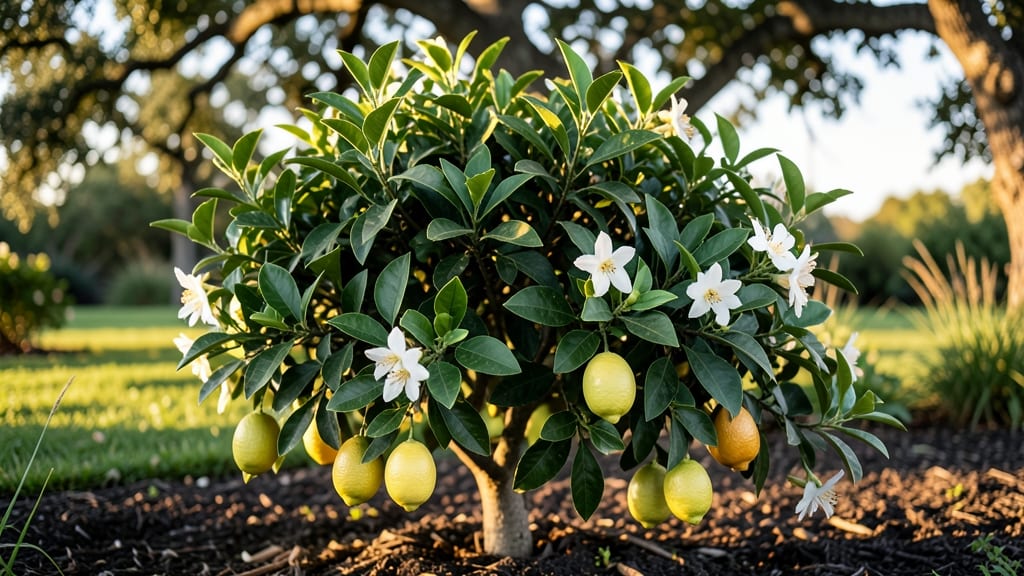
Meyer lemon tree height guide: average growth by environment
Your Meyer lemon tree can grow dramatically differently depending on whether it lives indoors, in a container outdoors, or planted directly in your yard. Without intervention, a mature tree can reach 15-20 feet in ideal conditions—but most home gardeners keep theirs much smaller.
The key lies in understanding how light exposure, pruning practices, and container size influence growth.
In indoor settings, Meyer lemon trees typically stay between 5-10 feet tall, making them perfect for kitchen windowsills or sunrooms. Outdoors in containers, they’ll grow to 8-12 feet if given enough space, while in-ground planting allows them to reach their full potential.
The difference comes down to root space and environmental factors.
🌱 Visual Comparison:
If you’re growing your Meyer lemon tree indoors, expect slower growth due to limited space and lower light intensity. These trees thrive near south-facing windows where they can soak up 6+ hours of direct sunlight daily.
Without enough light, they’ll stretch and become leggy, reaching heights of 10+ feet in search of sunlight—even if their growth rate slows.
For outdoor container growth, the size of your pot makes all the difference. A 15-gallon container can support a tree up to 8 feet tall, while larger pots (25+ gallons) may allow it to reach 12 feet.
Always use pots with drainage holes to prevent root rot, and upgrade pot size by 2-3 inches every 2-3 years as the tree matures.
In in-ground conditions, Meyer lemon trees grow fastest and tallest, often exceeding 15 feet in just 5-7 years. This makes them ideal for larger yards in USDA Zones 9-11, where they can enjoy year-round warmth. In colder zones, they’ll need winter protection or container growing to survive.
One surprising factor affecting height is pruning frequency. Regular pruning—especially in early spring—can keep trees 30-50% shorter than their natural height.
I’ve seen Meyer lemon trees in containers stay under 6 feet tall with consistent pruning, while neglected trees in the same pot can reach 10 feet in just 3 years.
Another critical factor is climate and temperature. In warmer climates (like Zone 10-11), trees grow faster and taller due to longer growing seasons.
In cooler zones (Zone 9), growth slows significantly, and trees may only reach 6-8 feet in containers unless given extra care like grow lights or greenhouse protection.
For gardeners in cold climates, dwarf varieties like the 'Improved Meyer' are a game-changer. These stay under 6 feet tall even with minimal pruning, making them perfect for patios or indoor growing.
Even standard varieties can be trained to stay small with the right techniques, which I’ll cover in the next section.
Remember, the height of your Meyer lemon tree isn’t set in stone—it’s a mix of genetics, care practices, and environmental conditions. With the right approach, you can grow a tree that fits your space perfectly, whether that’s a kitchen countertop or a backyard centerpiece.
How to control Meyer lemon tree height: pruning and training tips
Pruning your Meyer lemon tree isn’t just about keeping it manageable—it’s the key to shaping its growth and maximizing fruit production. With the right techniques, you can keep a standard variety under 10 feet or encourage a dwarf type to stay below 6 feet.
The secret lies in understanding when and how to trim, plus a few clever training tricks.
Start by pruning in late winter or early spring (February-March) to remove dead or crossing branches. This clears air flow and directs energy toward new growth. Avoid heavy pruning in summer or fall, as the tree needs its leaves to photosynthesize for energy storage over winter.
- Step 1: Remove dead/diseased branches with sterilized shears to prevent spread.
- Step 2: Trim 1/4-inch above outward-facing buds to encourage bushier growth.
- Step 3: Thin overcrowded branches to improve sunlight penetration.
- Step 4: Shorten water sprouts (fast-growing vertical shoots) to 6-8 inches.
- Step 5: Shape the tree by cutting back 1/3 of new growth in summer for compactness.
For indoor trees, use wire supports to train branches outward along a frame. This mimics natural growth patterns while keeping the tree’s center open for airflow. Rotate the pot every 2-3 weeks so all sides receive equal light, preventing lopsided growth.
Root restriction is another game-changer for dwarfing. If your tree outgrows its container, repot into a slightly larger pot (just 2-4 inches wider) every 2-3 years.
This slows root expansion, which in turn limits top growth. Pair this with regular pruning, and you’ll keep even standard varieties under 8 feet indoors.
Watch for new growth flushes after pruning—these are your cues to adjust your approach. If you see vigorous vertical shoots, prune them back immediately. For slow-growing trees, reduce pruning to avoid stress.
The goal is balance: enough trimming to shape the tree, but not so much that it struggles to recover.
With consistent care, your Meyer lemon tree will reward you with manageable height and abundant fruit, whether it’s a kitchen windowsill staple or a backyard centerpiece. The key is patience—healthy growth takes time, but the payoff is worth it.