
How To
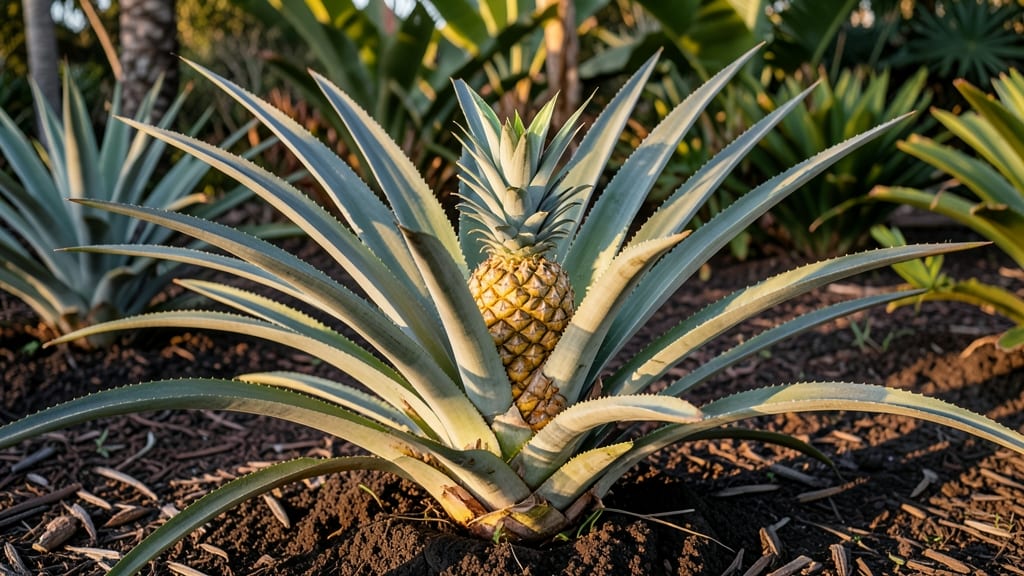
If you’ve ever wondered how tall does a pineapple tree grow, you’re not alone—many gardeners hesitate because these plants can surprise you with their size.
Unlike the small fruit we know, a mature 🍍 pineapple plant (Ananas comosus) typically reaches 3 to 5 feet in ideal tropical conditions, but outdoor varieties can stretch up to 6 feet or more when given space to thrive.
The key to managing height lies in understanding its growth habits. Pineapples aren’t true trees—they’re herbaceous perennials with long, sword-like leaves forming a rosette shape.
In containers, they stay compact (3 feet), while outdoor plants in zones 10-12 can grow taller with proper care, sometimes even reaching 15 feet in rare cases.
Climate, sunlight, and container size all play a role in determining how tall your pineapple will grow. Whether you’re growing one indoors or outdoors, knowing these factors helps you plan for space and support needs. Let’s break down what affects its height and how to keep it manageable.
From dwarf varieties to towering giants, pineapples offer flexibility for gardeners of all spaces. The right care can help you enjoy a tropical harvest without sacrificing your backyard—or balcony! Ready to learn how to control its growth? Let’s get started.

Pineapple tree height by variety: from dwarf to Giant sizes
First, let’s clear up a common misconception: pineapples aren’t technically trees! They’re herbaceous perennials with thick, rosette-shaped foliage that can resemble a tree’s silhouette. Their height depends entirely on the variety, with some reaching towering heights while others stay compact.
Most home gardeners grow standard varieties like Smooth Cayenne, which mature between 3 to 5 feet tall, making them ideal for backyard gardens.
For those with limited space, dwarf varieties (though rare in commercial markets) can stay as short as 2 to 3 feet. These are often hybrid selections bred for container growth or indoor cultivation.
Meanwhile, rare tropical strains—like those found in Hawaii’s volcanic soils—can stretch up to 6 to 15 feet when given ideal conditions, resembling a small palm tree in appearance.
Here’s how height breaks down by growth habit:
- Standard varieties (e.g., Queen, Singapore Red): 3–5 feet tall, with spiky, arching leaves and a sturdy central stem.
- Dwarf/hybrid types: 2–4 feet tall, perfect for patio pots or greenhouse growing.
- Giant strains: 6–15 feet tall, requiring sturdy support or wide planting beds to prevent toppling.
Even within the same variety, height can vary based on whether the plant is grown in-ground, in containers, or indoors.
For example, a Smooth Cayenne pineapple in a 5-gallon pot might max out at 4 feet, while the same plant in loose, nutrient-rich soil could reach 5+ feet.
The key difference lies in root space and nutrient availability—both of which influence how aggressively the plant sends up vertical growth.
The leaf structure also plays a role. Pineapple leaves are sword-like and serrated, with each leaf growing 2–3 feet long on its own. The central rosette (where leaves emerge) determines the plant’s width, while the stem elongation (if present) drives height.
Some varieties develop a woody stem as they age, adding to their tree-like appearance, while others remain ground-hugging with no true trunk.
🌱
If you’re choosing a variety for small spaces, opt for Queen or dwarf hybrids, which stay under 4 feet and thrive in 10–15 gallon containers.
For bold statements, Singapore Red or giant strains will dominate your garden—but be prepared for sturdy stakes or trellises to support their weight, especially in windy or rainy climates. Even standard varieties like Smooth Cayenne can become top-heavy when fruiting, so pruning lower leaves helps stabilize them.
One surprising fact: Pineapple height doesn’t always correlate with fruit size. Some compact varieties produce larger, sweeter pineapples than their taller counterparts. For example, a 3-foot-tall Queen pineapple might yield a 2-pound fruit, while a 5-foot-tall Smooth Cayenne could produce a 1-pound pineapple.
The trade-off? Smaller plants often fruit faster (as early as 18 months), while taller varieties may take 2–3 years to bear fruit.
🌿
To maximize your pineapple’s height potential—or keep it short—focus on soil fertility, sunlight exposure, and pruning. Over-fertilizing with high-nitrogen feeds encourages leafy growth (height), while balanced NPK (8-3-9) promotes fruit development.
If you’re growing in containers, root-bound plants will naturally stay shorter, but they may also produce smaller fruits. For the best of both worlds, repot every 2 years to give roots room to expand without sacrificing compactness.
Finally, remember that height isn’t the only factor when planning your pineapple garden. Consider leaf spread (which can reach 3–5 feet wide) and fruit weight (a mature pineapple can tip the scales at 3–5 pounds).
Even a 3-foot-tall plant will need ample space to avoid crowding nearby crops or pathways.
Pineapple tree height by variety: from dwarf to Giant sizes
First, let’s clear up a common misconception: pineapple plants (Ananas comosus) aren’t true trees—they’re herbaceous perennials with a rosette-shaped growth habit. However, their striking foliage and towering stature can make them look like trees, especially when mature.
Most varieties grow between 3 to 5 feet tall, but their height can vary dramatically depending on the cultivar, growing conditions, and care practices.
For example, the Queen variety—a popular choice for home gardeners—typically reaches 3 to 4 feet tall with a spread of 2 to 3 feet. This makes it ideal for small backyards or large containers.
On the other hand, commercial varieties like the Smooth Cayenne can grow 4 to 6 feet tall, with some rare strains even exceeding 15 feet in tropical climates with ideal conditions.
| Variety | Mature Height | Growth Habit | Best For |
|---|---|---|---|
| Queen | 3–4 ft | Compact rosette | Containers, small gardens |
| Smooth Cayenne | 4–6 ft | Tall, upright | Backyards, tropical climates |
| Red Spanish | 5–7 ft | Spreading rosette | Warm climates, large spaces |
| Giant King | Up to 15 ft | Massive, bushy | Tropical estates, greenhouses |
The root system of a pineapple plant also plays a role in its height. Unlike true trees, pineapples develop shallow, fibrous roots that spread outward rather than deep downward.
This makes them less stable in windy conditions, especially taller varieties. If you’re growing a 5-foot-plus plant, consider staking it to prevent toppling during storms or heavy rains.
Another factor influencing height is the growth rate. In their first year, pineapple plants focus on leaf production, reaching only 1 to 2 feet tall. By year two, they may produce offsets (pups) and start flowering, adding another 1 to 2 feet in height.
Full maturity—with fruit—typically occurs by year three, when the plant reaches its peak height of 3 to 5 feet in most home gardens.
If you’re growing pineapples in cooler climates (USDA Zones 9–11), expect slower growth and shorter mature heights due to reduced sunlight and temperature. In contrast, tropical climates (Zones 10–12) can produce taller, more vigorous plants with larger fruit.
For example, a Smooth Cayenne in Hawaii might reach 6 feet, while the same variety in Southern California could max out at 4 feet.
Understanding these height variations helps you plan your garden layout and choose the right variety for your space. Whether you opt for a compact Queen for your patio or a tall Smooth Cayenne for your backyard, knowing what to expect ensures your pineapple plant thrives without outgrowing its welcome.