
How To
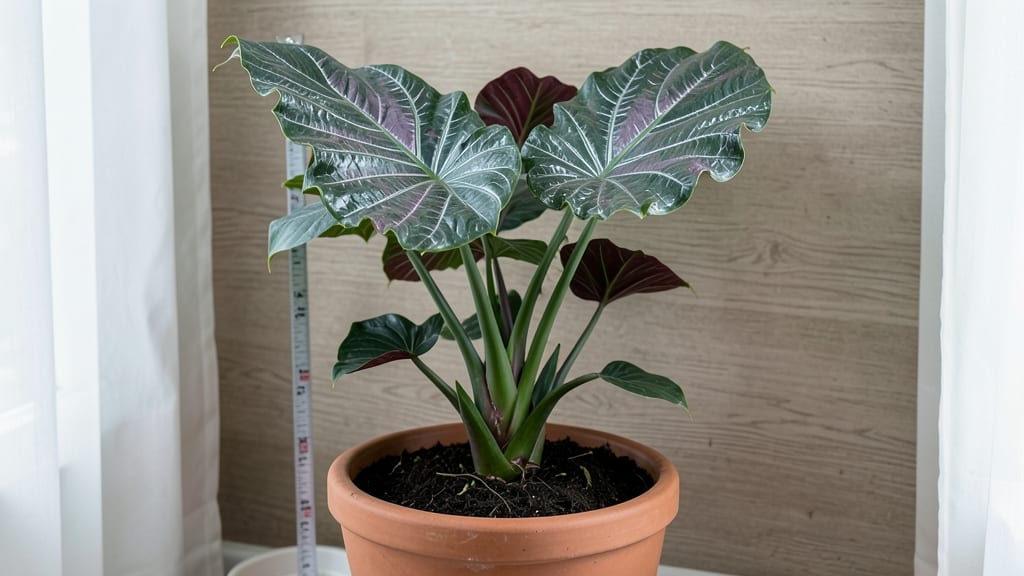
If you’ve ever wondered how tall does alocasia grow before committing to one of these stunning 🌿 plants, you’re not alone. Some varieties stretch toward the ceiling like tropical trees, while others stay compact enough for a sunny windowsill—it all depends on the type and care you provide.
Alocasia plants are famous for their dramatic foliage, but their growth habits can be just as impressive. Whether you’re dreaming of a floor-filling statement piece or a petite tabletop showstopper, understanding your plant’s potential height is key to creating the perfect growing conditions.
The right light, soil, and container can make all the difference in keeping your alocasia at its ideal size.
Let’s break down the height ranges for popular varieties—from the towering Alocasia zebrina to the more manageable Alocasia polly—so you can choose (or care for) the perfect plant for your space. You’ll also learn how to control growth, avoid common mistakes, and keep your alocasia thriving year-round.
Ready to discover which alocasia will fit your home—and how to nurture it to its full potential? Let’s dive in and explore the fascinating world of these arrowhead plants.

Alocasia height ranges by variety: from floor plants to tabletop jewels
Alocasias are stunning tropical plants with dramatic foliage, but their mature sizes vary dramatically depending on the variety. Some stay compact enough for tables, while others grow into towering floor plants. Knowing your alocasia’s height potential helps you choose the right spot and care routine.
Most alocasias reach their mature height within 2-4 years, with growth slowing significantly after year three. However, some varieties—like Alocasia sanderiana—can continue growing for decades, eventually reaching heights of 6 feet or more. Let’s break down the most popular varieties and their expected mature sizes.
Alocasia zebrina (also called "elephant ear" or "polly") is one of the most common varieties, typically growing 2-3 feet tall with a spread of 2-3 feet. It’s a great choice for tables or shelves, making it perfect for indoor gardeners with limited space.
| Variety | Mature Height | Growth Rate | Ideal Environment |
|---|---|---|---|
| Alocasia zebrina | 2-3 ft | Moderate | Indoor (bright indirect light) |
| Alocasia 'Dragon Scale' | 3-4 ft | Slow to moderate | Indoor/outdoor (humid climates) |
| Alocasia polly | 2-3 ft | Fast | Indoor (bright, filtered light) |
| Alocasia sanderiana | 4-6 ft | Slow | Outdoor (tropical climates) |
| Alocasia 'Black Stem' | 3-5 ft | Moderate | Indoor (high humidity) |
If you’re growing alocasias outdoors in USDA zones 9-11, varieties like Alocasia sanderiana and Alocasia macrorrhizos can thrive year-round, reaching their full height potential. In cooler climates, these plants are best kept indoors or as seasonal outdoor displays during summer.
For indoor growers, Alocasia zebrina and Alocasia polly are the easiest to manage due to their compact sizes. However, even these varieties can grow taller if given ideal conditions—like bright indirect light and high humidity. Without these, they may stretch unnaturally, leading to leggy growth.
Another factor influencing height is pot size. Alocasias are root-bound plants, meaning they grow taller when roots are restricted. Upgrading to a larger pot (1-2 sizes bigger) can encourage wider, bushier growth instead of upward stretching. Aim for a pot with drainage holes to prevent root rot.
Light is another critical factor. Alocasias need bright indirect light to maintain their compact shape. If placed in low light, they’ll stretch toward the nearest light source, becoming tall and weak. A north- or east-facing window is ideal for indoor plants, while outdoor varieties need partial shade.
Humidity also plays a role in growth. Alocasias thrive in environments with 60-80% humidity. In dry indoor air, they may grow slower or develop brown leaf tips. Use a humidifier, pebble tray, or group plants together to create a microclimate.
Finally, feeding your alocasia with a balanced fertilizer (10-10-10) every 4-6 weeks during spring and summer encourages healthy growth. Avoid over-fertilizing, which can lead to salt buildup in the soil and stunt growth.
Now that you know the height ranges, you can choose the perfect alocasia for your space—whether you want a tabletop statement piece or a dramatic floor plant to anchor your garden. 🌿
How to control alocasia growth height: pruning, light, and pot size tips
If your alocasia is shooting up faster than expected—or staying stubbornly small—you’re not alone. Controlling its height comes down to three key factors: pruning, light exposure, and pot size.
These adjustments can keep your plant at your desired height, whether you want a tabletop statement or a floor-filling giant. Let’s break down how to manage growth like a pro.
First, pruning is your best tool for height control. Unlike many plants, alocasia responds well to strategic trimming. Focus on removing the topmost leaves (the terminal bud) to halt upward growth. This encourages bushier, wider growth instead.
Just avoid cutting more than 1/3 of the plant at once—this can stress your alocasia. For Alocasia polly, which stays compact, a light trim every 6-8 months keeps it manageable.
Next, light exposure directly impacts growth rate. Alocasia craves bright, indirect light—think east-facing windows or dappled sunlight. Too little light? Your plant will stretch unnaturally tall (a condition called etiolation) as it reaches for light.
Too much direct sun? Leaves can scorch, slowing growth entirely. Place your plant 2-3 feet from a window and rotate it quarter-turns weekly for even growth.
⚠️ Warning: Over-Pruning Risks
Cutting too aggressively or too often can shock your alocasia, leading to yellow leaves or stunted growth. Never remove more than 20% of the foliage in a single session, and always use sterilized scissors to prevent disease. If your plant looks leggy but healthy, focus on light adjustments first.
Pot size plays a surprising role in height control. Root-bound alocasia grow faster because they’re stressed—this triggers a survival response to shoot upward quickly. For compact varieties like Alocasia zebrina, use a smaller pot (just 1-2 inches larger than the root ball) to slow growth.
Upgrade to a larger pot only when roots circle the drainage holes. Pro tip: Terracotta pots dry out faster, which can naturally limit rapid growth compared to plastic.
Seasonal care also matters. In spring and summer, when growth is most active, fertilize every 4-6 weeks with a balanced 10-10-10 formula to support healthy foliage. But in fall and winter, reduce feeding to once every 8-10 weeks—this mimics dormancy and prevents uncontrolled height spikes.
Pair this with cooler temperatures (60-75°F) to slow growth naturally.
Finally, if your alocasia is already too tall, don’t panic. You can propagate the top to create a new, smaller plant. Simply cut a healthy stem with at least 2-3 leaves, let it callous for 1-2 days, then place it in water or moist perlite.
Roots should appear in 2-4 weeks, giving you a fresh start with controlled growth. Just remember: patience is key—alocasia grow slowly but reward you with dramatic foliage when cared for correctly.
With these tips, you’ll master the art of height management, keeping your alocasia at the perfect size for your space—whether that’s a shelf gem or a room-dividing giant. 🌿