
How To
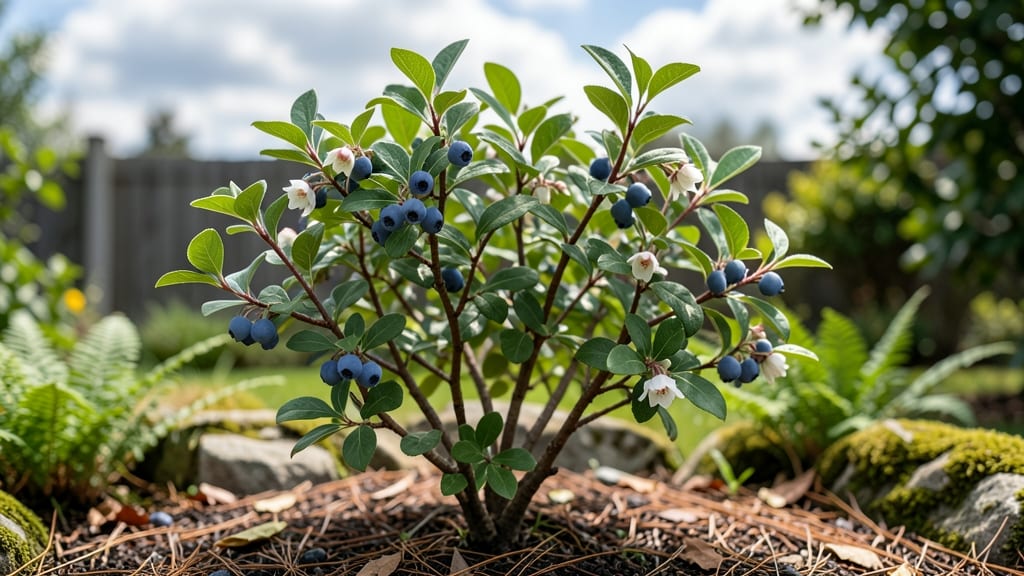
Wondering how tall does blueberry grow in your backyard? If you've ever stared at a blueberry bush and wondered whether it'll tower over your fence or stay neatly contained, you're not alone.
The answer isn't one-size-fits-all—because blueberry bushes come in three distinct height categories, each with its own space requirements and growing quirks.
From compact dwarf varieties that fit perfectly in pots to towering standard bushes reaching 12 feet, your choice affects everything from harvest ease to garden layout.
Whether you're working with a tiny balcony or a spacious yard, understanding these height differences is the key to selecting the right plant for your space—and your patience.
Let’s break down exactly what to expect from each type, how pruning shapes their growth, and why soil conditions can make a 6-foot bush act more like a 4-foot one.
You’ll also discover how height impacts sunlight needs and spacing, so you can set your blueberries up for success from day one.
Ready to turn your blueberry dreams into a reality? The right height choice could mean the difference between a bush that thrives and one that struggles—so let’s get started.

Blueberry bush height guide: dwarf vs standard varieties explained
If you're planning a blueberry patch but unsure about space, knowing blueberry bush heights is essential. Standard varieties can reach 6–12 feet tall, while dwarf types stay between 2–4 feet.
The right choice depends on your garden layout, sunlight access, and how much fruit you want to harvest each year.
For example, a standard blueberry bush like 'Duke' or 'Bluecrop' will tower over your fence line, needing 6+ feet of vertical space and 5–6 feet of width to thrive.
Meanwhile, a dwarf variety such as 'Top Hat' or 'Peach Sorbet' fits perfectly in containers or small garden beds, making them ideal for urban gardeners or balcony setups.
Here’s how blueberry bush heights break down by variety type, including growth rates and spacing needs for optimal fruiting:
| Variety Type | Mature Height | Width at Maturity | Growth Rate (Year 1-3) | Best For |
|---|---|---|---|---|
| Dwarf Varieties | 2–4 ft | 3–4 ft | 1–2 ft/year | Containers, small gardens, urban areas |
| Semi-Dwarf Varieties | 4–6 ft | 4–5 ft | 2–3 ft/year | Backyard gardens, mixed borders |
| Standard Varieties | 6–12 ft | 5–8 ft | 3–4 ft/year | Large gardens, orchards, rural properties |
Note: Heights can vary by soil quality, pruning habits, and climate conditions.
Your choice of blueberry bush height directly impacts how much sunlight and space your plants receive. For instance, standard varieties need full sun exposure (6+ hours/day) and 6+ feet of clearance above to avoid shading lower branches, which can reduce fruit production.
Dwarf varieties, on the other hand, thrive in partial shade (4–6 hours of sun) and can even grow well in 5-gallon containers if you use a high-quality, acidic potting mix. This makes them perfect for patios or rooftop gardens where space is limited.
One key factor affecting blueberry bush height is pruning. Regular pruning in late winter or early spring helps control growth, improves airflow, and encourages larger berries.
For example, if you prune a standard variety back by 30–50% each year, you can keep its height more manageable while boosting fruit yield.
Another critical consideration is soil conditions. Blueberries thrive in acidic soil (pH 4.5–5.5). Poor soil can stunt growth, leading to shorter bushes with fewer berries. Amending your soil with peat moss or sulfur ensures your plants reach their full potential height and productivity.
If you’re growing multiple blueberry bushes, spacing is crucial. Standard varieties need 8–10 feet apart to prevent competition for nutrients and sunlight, while dwarf varieties can be spaced 3–4 feet apart. Proper spacing also reduces the risk of fungal diseases, which thrive in crowded, humid conditions.
For container gardening, choose dwarf varieties like 'Sunshine Blue' or 'Pink Lemonade' (a newer variety with pink berries). These stay compact and produce fruit reliably, even in 15–20 gallon pots. Just
Finally, consider your climate zone. In colder regions (USDA Zones 3–5), blueberries may grow slower and stay shorter due to shorter growing seasons. In warmer zones (Zones 6–9), they can grow taller and faster, especially with consistent watering and protection from extreme heat.
🌱Blueberry bush height guide: dwarf vs standard varieties explained
Blueberry bushes come in three main height categories, each suited for different garden spaces and growing goals.
The dwarf varieties top out at 2–4 feet, making them perfect for containers or small yards, while semi-dwarf bushes reach 4–6 feet—ideal for borders or mixed shrub beds. Standard varieties can grow 6–12 feet tall, dominating larger landscapes like wild thickets but requiring more space for airflow and sunlight.
Your choice of height directly impacts fruit production, pruning needs, and even pollination success. Taller bushes tend to yield more berries but need sturdier supports, while compact varieties produce smaller harvests but with easier access.
For example, my Top Hat blueberry (a dwarf) fits neatly in a 5-gallon pot on my patio, while my Duke blueberry (standard) sprawls across a 6-foot-wide garden bed.
| Variety Type | Mature Height | Best For | Spacing Needs | Yield Potential |
|---|---|---|---|---|
| Dwarf (e.g., Top Hat, Sunshine Blue) | 2–4 ft | Containers, patios, small gardens | 3–4 ft apart | Moderate (1–2 lbs/plant) |
| Semi-Dwarf (e.g., Patriot, Bluecrop) | 4–6 ft | Borders, mixed shrub beds | 5–6 ft apart | High (2–4 lbs/plant) |
| Standard (e.g., Duke, Jersey) | 6–12 ft | Large gardens, hedgerows | 8–10 ft apart | Very High (4–6 lbs/plant) |
Height isn’t the only factor—growth rate varies too. Dwarf varieties mature in 2–3 years, while standard bushes take 4–5 years to reach full height. I planted my Duke blueberry in early spring, and by year 3, it shot up 5 feet with minimal pruning.
Patience pays off, especially if you’re waiting for that first heavy harvest!
Soil acidity and sunlight also tweak height. Blueberries thrive in acidic soil (pH 4.5–5.5) and full sun (6+ hours/day). Poor soil or shade can stunt growth, while rich, organic matter and morning sun fuel rapid vertical expansion.
My Patriot bushes in a raised bed with peat moss grew 1 foot taller in one season compared to those in regular garden soil.
Pruning plays a crucial role too. Over-pruning can reduce height but also limit fruit production, while selective pruning (removing dead wood and crossing branches) encourages bushier, healthier growth.
I prune my Top Hat lightly each spring to maintain its compact shape, while my Duke gets a more aggressive trim to control its wild sprawl.
For container gardening, stick to dwarf varieties in at least 5-gallon pots with drainage holes. Larger pots (10+ gallons) can accommodate semi-dwarf bushes, but standard varieties need in-ground planting to support their weight and root systems.
Always use a well-draining, acidic potting mix to prevent root rot and encourage upward growth.