
How To
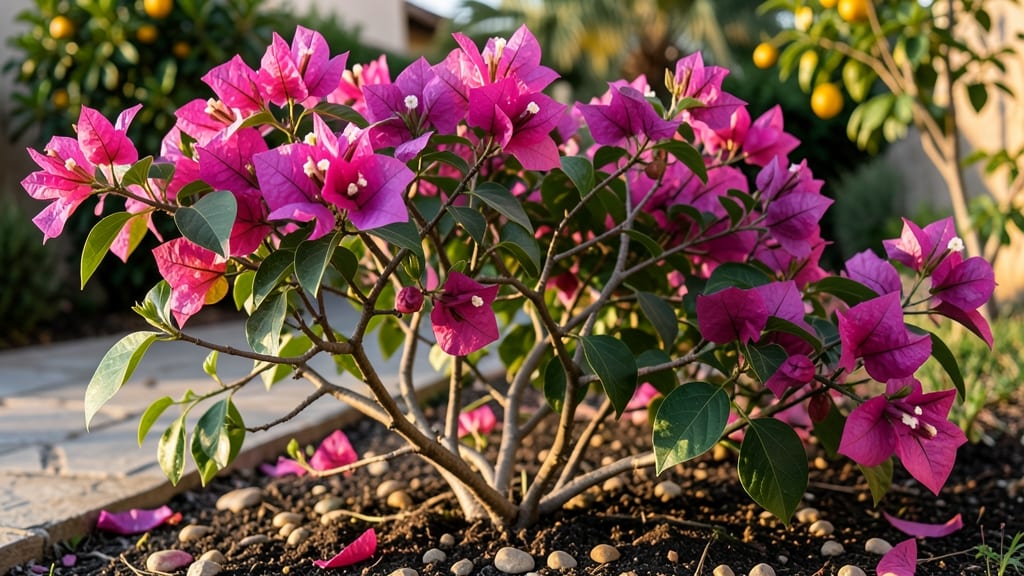
Wondering how tall does bougainvillea grow before it turns your garden into a jungle? This vibrant 🌺 beauty can surprise you—some varieties stretch up to 40 feet when left unchecked, while others stay neatly contained at just 3-5 feet with the right care.
The secret lies in understanding its growth habits. Bougainvillea thrives in warm climates (USDA zones 9a-11) and can be trained as a shrub, vine, or even a small tree, depending on how you prune and support it.
Whether you want it climbing a trellis or staying compact in a container, the key is knowing when and how to guide its growth.
Sunlight, pruning, and support structures play huge roles in controlling its height. With 6+ hours of full sun daily and strategic trimming, you can keep it at your ideal height—no matter if you prefer a bushy accent plant or a dramatic vertical display.
Let’s break down the best ways to manage its growth for a stunning, manageable garden feature.
Ready to transform your space with bougainvillea? I’ll show you how to pick the right variety, prune like a pro, and keep it blooming beautifully—without it overtaking your yard. Let’s get started!

Bougainvillea growth height by variety: compact shrubs vs. climbing giants
Bougainvillea’s height can vary dramatically depending on the variety and growing conditions. Some stay compact at just 3-5 feet, while others stretch to 40 feet or more when given proper support.
The key lies in understanding whether you’re growing a dwarf shrub, a standard bush, or a vigorous climber—each with distinct growth habits and care needs.
For example, the Bougainvillea 'Tropical Pink' typically maxes out around 8-12 feet as a bush, while B. glabra varieties can climb 20-40 feet when trained on trellises or fences.
Even within the same species, pruning practices and climate conditions play a huge role in determining how tall your bougainvillea will grow.
🌱
| Variety | Mature Height | Growth Habit | Best For |
|---|---|---|---|
| Dwarf Varieties (e.g., 'Mrs. Buttle') | 3–5 ft | Compact shrub | Containers, small gardens |
| Standard Shrubs (e.g., 'Spectabilis') | 8–12 ft | Bushy, upright | Hedges, privacy screens |
| Climbing Varieties (e.g., 'Glabra') | 20–40 ft | Vigorous vine | Trellises, fences, walls |
| Hybrid Varieties (e.g., 'San Diego Red') | 10–25 ft | Semi-dwarf climber | Balconies, large containers |
If you’re in a warmer climate (USDA Zones 9-11), bougainvillea can grow aggressively, especially with full sun exposure and well-draining soil. In cooler zones, growth slows, and plants may stay shorter unless you provide winter protection and prune strategically in early spring to encourage new shoots.
For container growing, even climbing varieties can be kept under 10 feet with regular pruning and root restriction. Just ensure your pot has drainage holes and you’re using a lightweight potting mix to prevent root-bound stress.
🌿
One common misconception is that bougainvillea will naturally grow into a tree-like structure. In reality, without pruning or support, it tends to become woody and leggy, with fewer blooms.
The bracts (colored leaves)—what most people mistake for flowers—thrive on new growth, so pruning at the right time (just after blooming) encourages more vibrant displays.
For example, if you’re aiming for a 6-foot tall bougainvillea bush, focus on pruning back one-third of the plant in late winter. This stimulates lateral branching and prevents the plant from becoming too tall and sparse.
In contrast, if you want a climbing specimen, prune lightly to encourage upward growth and tie new shoots to your chosen support structure.
🪴
Soil quality also impacts height. Bougainvillea hates waterlogged soil, which can stunt growth or even kill the plant. Amend heavy clay with sand or perlite to improve drainage, and consider adding compost to provide nutrients without excessive moisture.
In poor soil conditions, bougainvillea may grow slower and stay shorter, so investing in well-prepared soil pays off if you want that 30-foot trellis masterpiece.
Finally, remember that bougainvillea’s height isn’t just about genetics—it’s about your active role in shaping its growth.
With the right variety selection, pruning schedule, and support structure, you can grow bougainvillea at almost any height you desire—whether it’s a compact container plant or a dramatic climbing wall.
Bougainvillea growth height by variety: compact shrubs vs. climbing giants
Bougainvillea’s height varies dramatically between varieties, making it a versatile choice for gardens of all sizes. Dwarf varieties like 'Tropical Pink' stay between 3–5 feet, perfect for containers or small spaces.
Meanwhile, standard shrubs such as 'California Gold' can reach 8–12 feet with proper care, while vigorous climbers like 'San Diego Red' can soar to 30–40 feet when given support and ideal conditions.
The Bougainvillea spectabilis species, for example, often grows as a sprawling shrub, while B. glabra varieties tend to climb aggressively. Your local climate also plays a role—warmer zones (USDA 9a–11) encourage faster, taller growth compared to cooler regions where growth may be more restrained.
Here’s how bougainvillea’s height breaks down by type, including growth habits and ideal uses:
| Variety Type | Mature Height | Growth Habit | Best For |
|---|---|---|---|
| Dwarf | 3–5 ft | Compact shrub | Containers, small gardens, patios |
| Semi-Dwarf | 8–12 ft | Bushy shrub | Hedges, medium-sized yards |
| Standard | 15–40 ft | Climbing vine or sprawling shrub | Trellises, fences, large landscapes |
Sunlight is the #1 factor influencing bougainvillea’s height. Full sun (6+ hours daily) fuels rapid growth, while partial shade can stunt it.
For example, a 'Thunderbird' bougainvillea in full sun may hit 20 feet in 3 years, but the same plant in partial shade might max out at 10 feet. Well-draining soil also prevents root rot, which can weaken the plant and limit its growth potential.
If you’re growing bougainvillea in containers, expect slightly shorter heights due to root restriction. A 5-gallon pot might limit a standard variety to 6–8 feet, while a 15-gallon container could support 10–15 feet of growth.
Always use a fast-draining mix with perlite or cactus soil to prevent waterlogged roots.
For climbing varieties, height isn’t the only consideration—support structures are key. A sturdy trellis or fence can guide growth upward, while pruning techniques (like pinching back leggy stems) encourage bushier, more controlled growth.
Without support, even climbing types may sprawl into unruly mounds instead of reaching their full vertical potential.
Pro tip: Mulch around the base with gravel or bark to improve soil drainage and encourage deeper root growth, which stabilizes taller varieties. This simple step can make the difference between a top-heavy plant that flops and one that stands tall and proud.