
How To
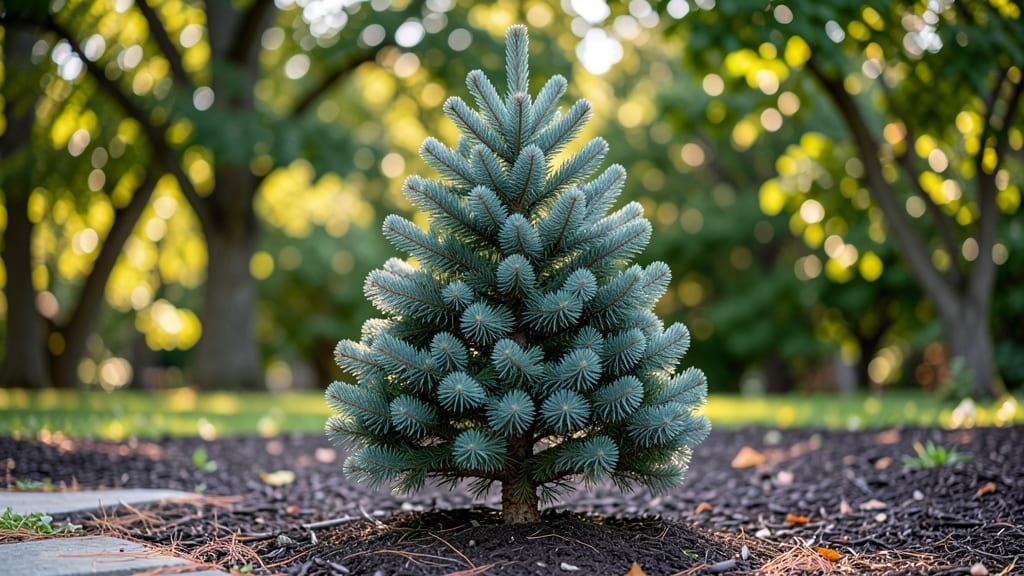
If you're wondering how tall does dwarf Alberta spruce grow, you're not alone—this tiny evergreen packs a big personality in surprisingly compact form.
The iconic 🌲 Picea glauca 'Conica' typically matures between 3-5 feet, making it perfect for small gardens, containers, or even as a striking focal point in your landscape design.
What makes this spruce so special is its slow-growing nature—most varieties add just 1-3 inches per year, so you won’t need to worry about it outgrowing its space anytime soon.
Whether you're planning a cozy corner or a container garden, understanding these growth patterns helps you choose the right cultivar for your vision.
From the classic 'Conica' that stays under 3 feet to slightly taller varieties like 'Little Gem' (reaching 4-6 feet), each type has its own charm.
We’ll break down the exact mature heights, spacing needs, and how to keep them thriving—so you can pick the perfect fit for your outdoor space.
Ready to transform your garden with this low-maintenance evergreen? Let’s dive into the details so you can confidently select the ideal dwarf Alberta spruce for your needs.

Mature height chart: dwarf Alberta spruce cultivars compared
The Dwarf Alberta Spruce (Picea glauca 'Conica') is a garden favorite, but its mature height varies dramatically between cultivars. While most stay under 5 feet, some like 'Glauca' can reach nearly 8 feet.
Understanding these differences helps you pick the perfect fit for your landscape—whether it's a tiny container garden or a sprawling yard.
Below, I’ve compared 8 popular cultivars based on their mature height, spread, and growth rates. I’ve also included visual references (like a basketball hoop or mailbox) to help you visualize their scale before planting.
For example, the iconic 'Conica' stays compact at just 2-3 feet, while 'Little Gem' grows taller at 4-6 feet.
🌲
| Cultivar Name | Mature Height (ft/in) | Mature Spread (ft/in) | Growth Rate (in/year) | Visual Size Reference | Best For |
|---|---|---|---|---|---|
| 'Conica' | 2-3 ft | 2-3 ft | 1-2 in | Mailbox height | Containers, bonsai, rock gardens |
| 'Globe' | 2-3 ft | 3-4 ft | 1-2 in | Small shrub height | Foundation planting, hedges |
| 'Little Gem' | 4-6 ft | 3-4 ft | 3-4 in | Basketball hoop base | Privacy screens, accent trees |
| 'Baby Blue' | 5-7 ft | 4-5 ft | 4-5 in | Lamp post height | Specimen plant, mixed borders |
| 'Glauca' | 6-8 ft | 4-5 ft | 5-6 in | Mailbox + 3 ft | Large landscapes, focal points |
| 'Pendula' | 3-5 ft | 4-6 ft (spreading) | 2-3 in | Weeping willow mini | Patio corners, cascading displays |
| 'Hot Spot' | 3-4
How to choose the right dwarf Alberta spruce for your spaceThe Dwarf Alberta Spruce isn’t just one plant—it’s a family of cultivars with wildly different mature sizes. Choosing the right one depends on your space, design goals, and long-term maintenance preferences. Here’s how to match your landscape needs with the perfect variety. For small spaces like balconies, patios, or tiny gardens, prioritize cultivars that stay under 3 feet tall. These compact varieties thrive in containers and won’t overwhelm your outdoor area. Think of them as living ornaments rather than trees. 🌲 Container Tips: Use well-draining soil with a mix of peat moss and perlite. Ensure the pot has drainage holes to prevent root rot, which can stunt growth and make your spruce stretch upward. If you’re designing a medium-sized bed or border, cultivars reaching 4–6 feet offer versatility. These varieties work well as focal points in flower beds or as accents alongside perennials. Space them 4–5 feet apart to allow airflow and prevent overcrowding. 🌿 Spacing Matters: Overcrowding forces spruces to compete for nutrients, often resulting in leggy growth. For example, the 'Little Gem' cultivar can stretch taller if planted too closely to other trees or shrubs. For Small Spaces (Under 3 ft Mature Height)
For Medium Beds (3–6 ft Mature Height)
For Accent Plantings (6+ ft Mature Height)
For accent plantings or larger landscapes, taller cultivars like 'Glauca' (6–8 feet) create dramatic focal points. These varieties work best when planted near walkways or patios, where their height adds vertical interest without overwhelming the space. ⚠️ Warning: Avoid planting 'Glauca' near sidewalks—its 4–5 foot spread can create tripping hazards over time. Instead, use it as a backdrop for shrubs or as a standalone specimen in open areas. No matter which cultivar you choose, always consider mature size and growth rate. A slow-growing variety like 'Conica' may seem perfect for a small pot, but it’ll still need occasional pruning to maintain its shape. Plan ahead to avoid outgrowing your space! |